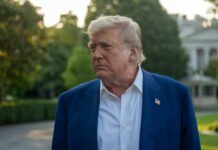
FIFA suspended a World Cup red-card ban for a U.S. striker after President Trump personally asked for a review — a break with decades of practice that ignited a global backlash.
Story Highlights
- FIFA paused Folarin Balogun’s automatic suspension under Article 27 for one year.
- President Trump said he called FIFA’s chief and hailed the reversal as “a great injustice” fixed.
- UEFA and Belgium’s federation condemned the move as against competition rules.
- No proof shows Trump’s call directly caused the change, and FIFA gave no detailed reasoning.
What FIFA Changed And Why It Matters
FIFA announced it would suspend the automatic one-match ban on United States forward Folarin Balogun for a year under Article 27 of its Disciplinary Code, making him available to face Belgium. The decision used a discretionary tool that delays punishment during a probation period. Reports describe this as the first World Cup red-card suspension lifted since 1962, which shows how rare this is. Such a step raises questions about rule consistency and fairness across teams when outcomes hinge on discretion.
President Trump said he called FIFA President Gianni Infantino to ask for a review, then praised FIFA for “reversing a great injustice”. He also claimed the foul “wasn’t a foul,” but no independent referee panel or official video analysis has confirmed that point. A White House line that he wanted to understand rules met public doubts about influence. The mix of pride for a key player’s return and concern about process fed a swift, polarized response.
The Clash Over Rules And Process
European soccer body UEFA and the Royal Belgian Football Association called the decision “incomprehensible” and said it contradicts World Cup regulations that mandate an automatic suspension after a red card. Their view sets up a rules fight: whether the competition rule on automatic bans should block Article 27 discretion. FIFA’s statement cited Article 27 but offered no deeper reasoning, which left room for suspicion and fueled claims of special treatment or politics over process.
The Associated Press and others reported the Trump call while noting the lack of proof that it directly drove FIFA’s choice. That gap matters. When leaders step into sports rulings, fans across the spectrum worry about a tilted field and backroom deals. Critics point to FIFA’s own history of guarding against political interference. Supporters note Article 27 exists for edge cases. Without a clear explanation from FIFA, both sides read the silence as support for their view.
What We Know, What We Don’t, And Why People Are Angry
We know FIFA used Article 27 to put the ban on hold for one year, and Balogun can play now. We know Trump said he called, thanked FIFA, and blasted the red card as unbelievable. We do not have FIFA’s internal reasoning, a formal review memo, or a ruling that the referee’s decision was wrong under the laws of the game. We also do not have evidence that the referee has a “suspect” past, a claim that lacks documented support in available reports.
FIFA rule: A player who receives a red card is suspended for the next match.
FIFA rule that kisses Trump’s ass: The previous rule doesn’t apply.
Conclusion: Trump even manages to ruin soccer
The world’s conclusion: Trump ruins everything he touches, including soccer— JC Gaulard 🇪🇺 🇫🇷 🇸🇰 European United States (@JCGaulard) July 6, 2026
For many readers, this story taps a deeper frustration: powerful people seem to get special doors opened while regular rules box in everyone else. Conservatives see global sports bodies as unaccountable elites. Liberals see unequal systems that reward access over merit. Both sides worry when decisions dodge sunlight. The fix is simple but hard: FIFA should publish a clear, sourced rationale for using Article 27 here and explain how it will apply the same standard for every team going forward.
Sources:
insiderpaper.com, bostonglobe.com, sports.yahoo.com, youtube.com