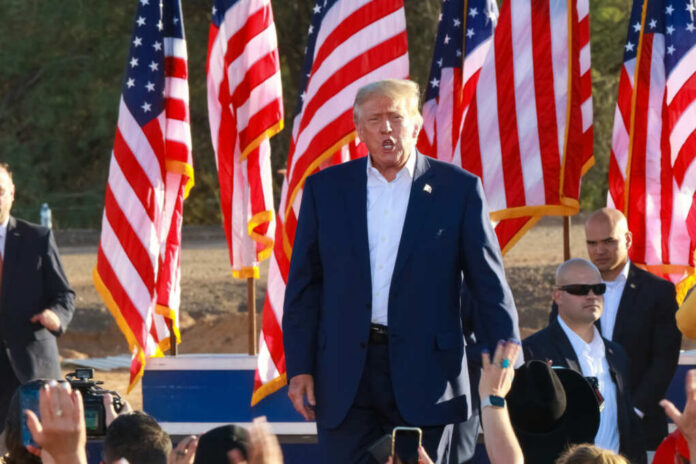
President Trump’s Mount Rushmore appearance on July 3 turned a patriotic fireworks night into a heavily controlled national event.
Quick Take
- Trump traveled to Mount Rushmore for a keynote address and fireworks tied to America’s 250th anniversary.
- The event included military honors, flyovers, and a fireworks show expected to use about 850,000 fireworks.
- Access was tightly limited, and the public ticket lottery had already closed.
- The event came during extreme heat and fire-risk concerns that shadowed the celebration.
What Happened at Mount Rushmore
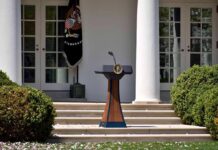
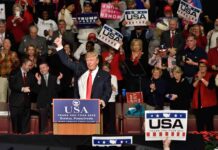
President Donald Trump went to Mount Rushmore on July 3, 2026, for a speech and fireworks marking the 250th anniversary of the United States. The event was part of a larger America 250 schedule in the Black Hills, with the National Park Service saying ticketed events would run through the evening and end around 10 p.m. The White House schedule placed Trump’s remarks at 8:30 p.m. Mountain Time.
Organizers said the celebration would include military honors and family activities, while news reports said the program also featured military flyovers and drill exhibitions. Coverage from multiple outlets said the fireworks display was unusually large, with one report citing about 850,000 fireworks. South Dakota officials and federal organizers framed the night as a major part of the semiquincentennial, or 250th birthday, festivities.
Access Was Limited and Public Interest Was High
The National Park Service said tickets were required for July 3, and that no additional tickets were available after the public lottery closed on April 12. Travel South Dakota said only lottery ticket recipients could enter the park that day. That restriction meant many people could watch only through the livestream, which added to the sense that the event was both a national spectacle and a tightly managed gathering rather than an open public celebration.
Reports from the region showed strong interest, but also frustration over changing plans and limited access. That mix matters because Mount Rushmore events often trigger the same split response: some see a rare patriotic moment, while others see a locked-down showcase shaped by politics, tourism, and security. The tension is not just about one night. It reflects a broader public distrust of who gets access, who gets invited, and who gets left outside the gate.
Heat, Fire Risk, and Political Theater
The celebration unfolded as the region faced extreme heat and drought conditions, and emergency officials warned about fire hazards. That made the fireworks display more than a holiday attraction. It became a test of planning and risk control at a place where weather, land use, and crowd safety can quickly collide. The event’s scale also raised the stakes, because large crowds and dry conditions leave little room for error.
President Donald Trump will kick off the Fourth of July weekend with a visit to Mount Rushmore, the South Dakota monument where he has previously suggested adding his own likeness alongside those of four former presidents. https://t.co/hAI9DMPr0s pic.twitter.com/nsh86HX8ka
— News 4 San Antonio (@News4SA) July 4, 2026
The political setting was just as important as the weather. Trump’s visit came after he dedicated the Theodore Roosevelt Presidential Library in Medora, North Dakota, on July 1, setting up the Mount Rushmore stop as part of a broader holiday tour. Coverage also noted that Interior Secretary Doug Burgum and South Dakota Governor Larry Rhoden spoke before Trump, underscoring how federal and state leaders used the event to project unity even as the monument remains tied to long-running disputes over symbolism and power.
Sources:
youtube.com, reuters.com, nytimes.com, usatoday.com, abcnews.com, travelsouthdakota.com