An Alaska bush pilot could permanently lose his $95,000 airplane because a passenger hid a six-pack of beer in her grocery bags, and now the U.S. Supreme Court will decide if that punishment breaks the Constitution.
Story Snapshot
- The Supreme Court agreed to hear Ken Jouppi’s challenge to Alaska’s forfeiture of his 1969 Cessna airplane.
- State troopers found a six-pack of Budweiser and other beer, nine gallons total, hidden among a passenger’s groceries in 2012.
- Jouppi was convicted of a misdemeanor and got three days in jail plus a $1,500 fine, yet the state still wants his plane.
- The case asks whether taking a $95,000 plane over a minor alcohol offense violates the Eighth Amendment’s ban on excessive fines.
A Routine Flight Turns Into a 13-Year Legal Fight
Ken Jouppi has flown planes in Alaska since the 1960s. In 2012, he flew a passenger and her groceries from Fairbanks to Beaver, a small village that bans alcohol. Troopers stopped the plane and searched it. Hidden among the groceries, they found a six-pack of Budweiser and more beer, nine gallons in total.
Beaver residents voted in 2004 to ban alcohol imports under a state law that lets communities choose “dry” status. Jouppi says he never knew the beer was there. Prosecutors disagreed, arguing he knew what his passenger carried aboard his aircraft that day.
A Misdemeanor Conviction, A Massive Penalty
A trial judge convicted Jouppi of a misdemeanor for illegally transporting alcohol into a dry community. His punishment: three days in jail and a $1,500 fine. But under Alaska law, any conviction like this also triggers automatic forfeiture of the vehicle used in the crime, in this case, his Cessna airplane worth roughly $95,000.
Jouppi sued to stop the seizure, arguing the forfeiture punishes him far more harshly than his actual crime deserves. The Alaska Supreme Court disagreed. In April 2025, it ruled unanimously that seizing the plane did not violate the Constitution’s ban on excessive fines, since Alaska framed the forfeiture as tied to the severity of Jouppi’s conduct.
The Constitutional Question Justices Will Answer
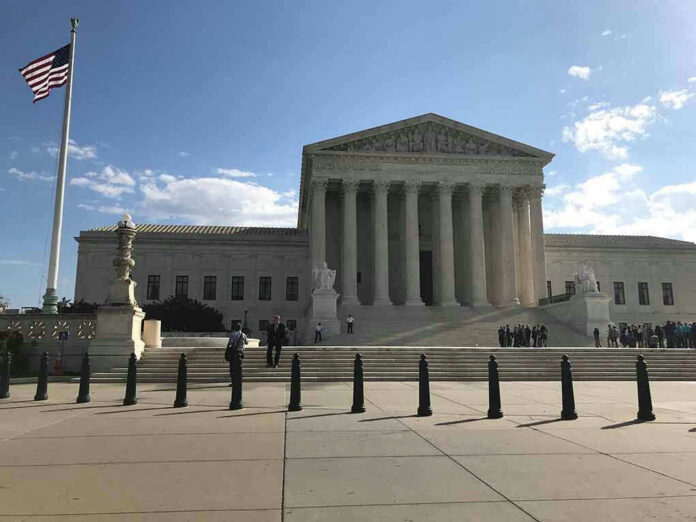
The U.S. Supreme Court will now decide whether that ruling holds up. The core legal question centers on the Eighth Amendment’s Excessive Fines Clause, which bars the government from imposing fines “grossly disproportional” to the crime committed, a standard the Court set in the 1998 case United States v. Bajakajian.
Jouppi’s case reached the Supreme Court through a petition filed in 2025, and the justices placed it on their argument calendar for the 2026-27 term during a routine summer order list. His legal team argues the Court has a duty to make sure constitutional protections like the Excessive Fines Clause “actually mean something” in real cases, not just in legal theory.
Part of a Larger Fight Over Government Seizures
This case does not stand alone. It fits into a fast-growing legal battle over how much power state and local governments have to seize private property. That fight took off in 2019, when the Supreme Court ruled in Timbs v. Indiana that the Excessive Fines Clause applies to states, not just the federal government.
Legal scholars predicted that ruling would trigger a wave of new challenges to state forfeiture laws, and cases like Jouppi’s show that prediction playing out. Advocacy groups focused on property rights argue forfeiture laws often let governments punish people financially far beyond what their actual offense warrants, hitting working people the hardest.
What’s At Stake for Property Owners Nationwide
For everyday Americans on both sides of the political divide, this case touches a nerve that goes beyond one pilot and one six-pack of beer. Many people, conservative and liberal alike, worry that government agencies use forfeiture laws to grab valuable property using minor offenses as justification, often without full trials or proportional consequences.
The U.S. Supreme Court is set to weigh in on whether Alaska can seize a pilot’s $95,000 airplane over a six-pack of beer unknowingly carried into a dry village.
In Jouppi v. Alaska, bush pilot Ken Jouppi faces civil asset forfeiture after a 2012 incident involving passenger… pic.twitter.com/63MbvJJjSf
— Matthew Vadum (@MattVadum) July 21, 2026
Jouppi’s case gives the Supreme Court a chance to set clearer limits on how far states can go. Oral arguments are expected during the Court’s 2026-27 term, with a ruling likely to shape forfeiture law nationwide, not just in Alaska’s dry villages, for years to come. The outcome could either affirm Alaska’s approach or force states to prove a much tighter link between an offense and the property seized as punishment.
Sources:
reason.com, supremecourt.gov, fortune.com, alaskabeacon.com, scotusblog.com, usatoday.com, armstrongandgetty.com, law.justia.com, yalelawjournal.org