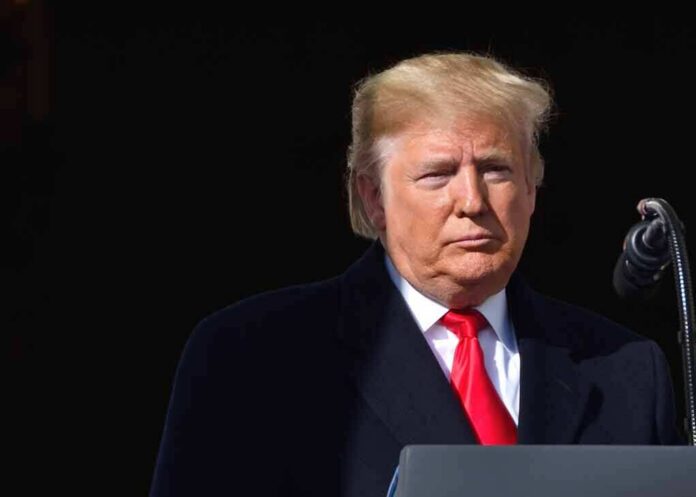
President Trump announced a new “AI Force” with an incoming “AI czar,” aiming to lock in U.S. dominance over artificial intelligence.
Story Snapshot
- Trump said he is forming an “AI Force” and will soon name an “AI czar.”
- The White House plan stresses fast growth over new rules on the industry.
- Trump framed the move as key to beating China in the AI race.
- Details on budget, structure, and timing were not released.
What Trump Announced And Why It Matters
President Trump said the United States will create an “AI Force” and appoint a single “AI czar” to coordinate policy. He compared it to the Space Force to signal the scale and urgency. He said the United States is leading China and he plans to keep it that way. He also said the government should support, not slow, artificial intelligence. He tied the move to jobs and growth, calling artificial intelligence a major driver of the economy.
Trump said the administration will let artificial intelligence develop while using current criminal and civil laws to deal with “bad” actors. That approach favors fast deployment with targeted enforcement. It also avoids building a broad new regulator from scratch. Supporters of this path say heavy rules could push innovation overseas. The message fits his “America First” theme on industry, supply chains, and national security risks from China.
What We Know And What We Do Not
News outlets report that Trump will soon name the “AI czar,” but no person was announced with the initial statement. The announcement did not list where the “AI Force” would sit inside the government. There was no budget, headcount, or timeline. Outlets described it as a task force or coordinating office rather than a new military branch. The plan’s legal authority and structure will become clear only when a formal directive appears.
The “AI Force” label is striking, but function will matter more than the name. A White House-led coordinator can drive agency action and set priorities across defense, commerce, and research. If the role is advisory, impact may be limited. If it has authority over funding, standards, or incident response, reach could be larger. Past technology czars and task forces shaped policy through guidance, cabinet meetings, and federal buying power rather than direct rules.
How This Fits The Bigger AI Policy Fight
The move tracks a long pattern in Washington. Presidents often set up central teams to show urgency while hammering out the details later. Artificial intelligence raises a core tension: move fast to win markets and deter rivals, or slow down to reduce harms like bias, job loss, and misuse. Trump placed his bet on speed, national strength, and existing law to police abuse. That keeps options open while industry and agencies keep building.
Trump launches 'Super Intelligence Force' as AI race heats up — Here's who will lead it https://t.co/eVaTFrQqBl #DonaldTrump #Trump #AI #ArtificialIntelligence #SuperIntelligence #SuperIntelligenceForce #JayClayton
— justearthnews (@justearthnews) October 4, 2026
For everyday Americans, the stakes are concrete. Clear leadership could mean better jobs, safer tools, and fewer federal delays. But a vague rollout can also fuel fears that elites will profit while workers and small firms lag. Both conservatives and liberals worry about concentrated power and weak oversight. A focused “AI Force” could push agencies to deliver real benefits. The test will be whether the White House backs the label with people, money, and measurable results.
Sources:
cnbc.com, nbcnews.com, newsweek.com, wbaltv.com, fortune.com