On the day America turns 250, a brutal heat wave is forcing cities to shut down parades and patriotic parties, raising hard questions about whether our leaders can keep people safe in a changing climate while still honoring the country’s founding ideals.
Story Snapshot
- Record heat has canceled or reshaped major America 250 events from Philadelphia to Washington, D.C., impacting millions of people.
- Officials cite public safety and rising heat-related illnesses, while gaps in data and planning fuel frustration and mistrust.
- The heat wave exposes how fragile big national celebrations are when weather, security, and politics all collide.
- Both conservatives and liberals see the disruptions as one more sign that the federal government is not ready for today’s risks.
Historic heat wave shuts down marquee America 250 celebrations
Philadelphia and much of the East Coast are facing what meteorologists describe as a potentially historic heat wave, with temperatures soaring into the triple digits and “feels like” readings above 105 to 110 degrees. City organizers responded by canceling the flagship **Salute to Independence Semiquincentennial Parade**, the largest planned July 4th march in the birthplace of the nation, citing extreme heat as the reason. Other key America 250 events in the region, including a high-profile U.S. Army concert, were also canceled for the same safety concerns.
In Washington, D.C., the Great American State Fair on the National Mall, a centerpiece of President Trump’s “Freedom 250” branding, was forced to temporarily close for several hours as temperatures reached 101 degrees. The National Park Service’s Independence Day Parade in the capital was canceled after forecasters projected heat index values as high as 115 degrees during the scheduled time. Across the broader America 250 calendar, some events were outright scrapped, while others were shortened, moved indoors, or delayed into the evening hours.
Safety concerns grow as heat-related illnesses spike
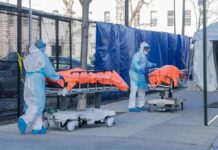
Public health officials have warned for years that extreme heat is the deadliest kind of weather, often causing more annual deaths than floods, storms, or hurricanes. During this America 250 stretch, national and local reports describe more than 100 people in Pennsylvania treated for heat-related illnesses at a 250th anniversary event, and a sharp rise in emergency room visits for heat stroke in affected regions. The Centers for Disease Control and Prevention highlights heat illness risks for older adults, people with heart conditions, and anyone without air conditioning, all common in many working-class neighborhoods.
City guidance stresses simple but critical steps: stay in air-conditioned spaces, avoid being outside at the hottest times, drink water often, and check on older neighbors. In response to the heat dome, New York City opened extra cooling centers, including turning the large Jacob Javits Convention Center into a public refuge through July 5. Philadelphia similarly pushed some America 250 programming indoors, such as events at the National Constitution Center, while canceling street parades and block parties that would have kept people in direct sun for hours.
Planning gaps, secrecy, and politics feed public distrust
Even as officials point to safety, some details around the decisions remain murky. National outlets note there is no publicly released medical log that directly ties specific injuries to particular canceled events, leaving a gap between broad health warnings and event-by-event justification. In Washington, a safety consultation reportedly led to canceling or reshaping parts of the Capitol’s July 4 concert schedule, yet the Office of the Attending Physician and United States Capitol Police have not shared those consultation reports, which frustrates citizens already skeptical of government transparency.
Inside the White House, at least one official questioned whether better timing or logistics could have reduced the risk without canceling daytime programs, suggesting poor planning may have played a role. At the same time, President Trump’s “Freedom 250” branding places him personally at the center of the anniversary, sidelining the congressionally created, bipartisan America 250 commission. This framing makes every safety change look political to some viewers: supporters blame “deep state” bureaucrats for overreacting, while critics see the disruptions as proof of mismanagement from the top. Both groups end up more angry at institutions than confident in the official explanations.
Heat, security, and the sense of a government out of touch
Security rules layered onto the heat have added to public frustration. For events on the National Mall, people faced road closures, anti-scale fencing, and long walks through secure zones in triple-digit temperatures. Many Americans already feel that big national events serve elites and television cameras more than everyday citizens. When those events become physically punishing just to attend, it reinforces the belief that leaders are not designing public life around the real needs and limits of ordinary people.
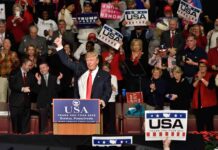
🎆 President Trump is speaking LIVE tonight on the National Mall for the "Salute to America 250 Celebration"!
🕒 Time: 9:45 PM EDT
📍 Location: Washington, D.C.
🔥 What to expect: A massive fireworks display and a major, extended address despite the historic D.C. heat wave.— Stephanie Starr (@StephanieStarrC) July 4, 2026
The broader pattern is clear: extreme weather now regularly disrupts mass gatherings, and festivals are among the most vulnerable event types worldwide. Studies show that climate change is making heat waves more frequent and intense, especially in cities like Philadelphia that are covered in concrete and lack enough shade and green space. For many on both the right and the left, the America 250 cancellations feel like a warning sign. The country can still hold fireworks and speeches, but without serious, transparent planning for heat, safety, and fairness, the promise of the American Dream—success through hard work and initiative—seems harder to chase on a crowded, overheated street than ever before.
Sources:
youtube.com, today.com, thehill.com, foxweather.com, nytimes.com, usatoday.com, facebook.com, yahoo.com, reddit.com, x.com, newsweek.com