

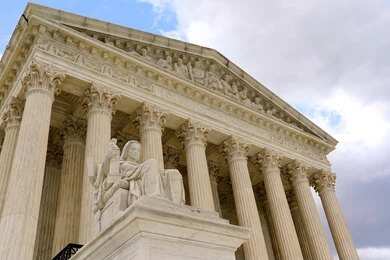
As the Supreme Court blesses state bans on transgender girls in sports, the few states that still allow them now face a wall of legal, political, and cultural pressure to fall in line.
Story Snapshot
- The Supreme Court said states may legally bar transgender girls and women from female school sports teams.
- About half the states already have bans; the ruling is expected to bolster and spread these laws.
- States that keep inclusive policies now stand out and are likely to face lawsuits and political attacks.
- Both sides claim to defend fairness and safety, but solid data on real-world impacts remains limited.
What The Supreme Court Actually Decided
The United States Supreme Court’s June 30, 2026 ruling in the Idaho and West Virginia cases said states may ban transgender girls and women from playing on female-designated school and college teams. The majority held that separating teams by sex assigned at birth does not violate Title IX or the Equal Protection Clause when justified by aims like safety and competitive fairness. Justice Brett Kavanaugh’s opinion stressed “inherent physical differences between the sexes” as a reasonable basis for keeping women’s sports reserved for biological females.
The Court’s conservative majority—six justices—backed the state laws, while three liberal justices dissented. The decision grew out of challenges brought by Becky Pepper-Jackson in West Virginia and Lindsay Hecox in Idaho, who argued that the bans wrongly shut them out of girls’ teams consistent with their gender identity. Lower courts had sided with these athletes, but the Supreme Court reversed course and allowed the bans to stand, reshaping the legal map on transgender participation in school sports.
How Many States Ban Trans Girls, And What Changes Now
By early 2026, 27 states had passed laws or rules that stop transgender girls and women from joining girls’ and women’s school sports teams based on their gender identity. Many of these laws define sex strictly by reproductive biology and genetics at birth and were adopted quickly after 2020. Legal analysts say the Supreme Court’s ruling now strengthens those existing bans and gives cover to other Republican-led states that may want to pass similar restrictions but were waiting to see how the Court would rule.
However, the Court did not order a nationwide ban. States still have the power to choose inclusive policies that let transgender athletes compete in line with their gender identity, so long as they do not violate federal law. That means roughly 21 states and several territories continue to operate without blanket bans. These states now sit in a legal minority. Their leaders may face growing pressure from lawmakers, national advocacy groups, and upset parents who point to the Court’s ruling as proof that transgender-inclusive policies are “unfair” to cisgender girls.
Pressure Points For States That Stay Inclusive
States that still allow transgender girls on girls’ teams are likely to see new bills introduced, lawsuits filed, and intense media campaigns demanding change. Supporters of bans argue that the Supreme Court has blessed “common sense” protections for female athletes and call on the remaining states to follow suit. They frame the issue as guarding hard-won opportunities for girls that grew under Title IX, warning that allowing athletes who went through male puberty will erase those gains over time.
Opponents of bans say the ruling is a serious setback for lesbian, gay, bisexual, transgender, and queer (LGBTQ) rights and paints transgender youth as threats rather than students who want to belong. Civil rights groups stress that the Court only said states may exclude transgender athletes, not that they must, and urge inclusive states to hold their ground. They note that about half of transgender teens already live in states where they cannot play on teams that match their gender identity and argue that further expansion of bans will deepen mental health struggles and feelings of isolation among these students.
Fairness, Safety, And A Lack Of Hard Data
The Supreme Court leaned on the idea that inherent physical differences between males and females justify sex-based separation in sports, especially for speed and strength. Many Americans across the political spectrum recognize that on average, males who went through puberty have physical advantages in sports like sprinting, swimming, and contact games. That fuels a shared concern about fairness for girls who train for years only to compete against someone with a different physical baseline.
Yet the ruling did not cite detailed medical or sports science studies comparing transgender and cisgender female athletes. Research is still limited, and some existing work suggests no clear, blanket athletic advantage for transgender women once hormone therapy is used to reduce testosterone. A major review of sport policies found that many rules about transgender participation are not grounded in strong evidence and that transgender athletes often face exclusion and hostile environments. This gap between strong feelings and thin data means both sides lean more on principle and fear than on long-term statistics.
Culture Wars, Deep-State Worries, And The American Dream
The fight over transgender athletes taps into deeper anger that many Americans feel toward the federal government and elites on both sides. Conservatives see years of “woke” policies that, in their view, ignored basic biological realities, hurt girls’ sports, and put ideology ahead of common sense. Liberals see this ruling as one more step in an “America First” agenda they believe targets vulnerable minorities and widens the gap between those with power and those without.
Today, the Supreme Court upheld West Virginia and Idaho state laws that bar transgender athletes from playing on girls’ and women’s sports teams, a decision with nationwide implications.
27 states have enacted restrictions on trans athletes competing within their borders. States…
— (((Orchid)))🌻 (@OrchidNYC) June 30, 2026
Behind those partisan scripts sits a shared worry: that decisions in Washington are driven more by political games and culture-war points than by careful facts and the real needs of kids. The transgender sports ruling fits a pattern where Congress, the White House, and courts chase viral battles while leaving bigger problems—like school funding, youth mental health, and economic opportunity—under-addressed. Whether states tighten or loosen their rules on transgender athletes, many families on both the left and right will keep asking why the government seems better at fighting over symbolism than at helping their children thrive.
Sources:
washingtontimes.com, npr.org, bbc.com, espn.com, youtube.com, constitutioncenter.org, foxnews.com, bestcolleges.com, nytimes.com