A man buried under a Venezuelan mall for eight days was pulled out alive, exposing both the power of international teamwork and the weakness of the systems that failed him in the first place.
Story Snapshot
- A 44-year-old former mall security guard survived eight days trapped under a collapsed shopping center parking garage in La Guaira, Venezuela.
- Rescue crews from several countries kept him alive for days by talking to him and sending water, food, and medicine through a hose.
- International teams, not Venezuelan authorities alone, led the complex rescue, feeding public anger over local government failures.
- Media focus on the “miracle rescue” risks hiding deeper questions about why the mall collapsed and why help took so long.
How Hernán Survived Eight Days Under a Collapsed Mall
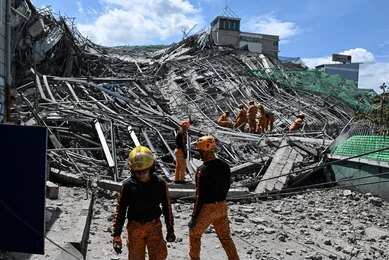
Hernán Alberto Gil Flores, a 44-year-old former security guard and father of two, was trapped when the Galerías Playa Grande mall’s parking structure collapsed after twin earthquakes in the coastal city of La Guaira. He was buried under several levels of concrete and about 29 feet of rubble, in a tight pocket of space that kept him alive but unable to move. International and local teams used sound and radar tools to find him and confirm he was still responding.
Rescuers first managed to reach his hand and then kept in contact with him for days, turning a death trap into a fragile lifeline. Video and social posts from teams in the field describe more than 13 approach maneuvers as workers tried to reach him without triggering more collapse. During that time, crews passed water, food, and medicine through hoses and syringes, which helped keep Hernán hydrated and stable despite his injuries and the crush of concrete around his body.
International Teams Step In Where Local Systems Struggle
Rescue efforts soon went far beyond Venezuela’s borders, showing how much the country needed outside help after its first major earthquake in decades. The Mexican Red Cross, Costa Rican Red Cross, Colombian crews, and others worked alongside Venezuelan responders to locate Hernán and start extraction. El Salvador sent a national rescue force, and its President Nayib Bukele publicly confirmed that his teams had reached Hernán and established direct contact with him under the rubble.
Salvadoran rescuers reported spending more than 28 hours inside the wreckage trying to free Hernán, describing one of the most difficult operations they had ever faced because of rain, aftershocks, and unstable concrete. Later reports credit Chile’s specialized urban search-and-rescue unit with leading the final extraction after about 70 hours of intense work from multiple nations. This mix of foreign uniforms at a Venezuelan disaster site has sparked a familiar worry in the region: if international teams are doing the hardest life-saving work, what does that say about the strength of the local state?
A Miracle Story That Hides Bigger Questions
News outlets and social media accounts quickly labeled Hernán’s rescue a “miracle,” replaying dramatic footage of crews reaching him and cheering as he was carried out. That emotional focus makes sense; a man surviving eight days under a mall is rare and gripping. But the miracle headline can push other questions into the background, such as why a commercial building in a known risk zone collapsed so completely, and whether builders or officials cut corners on safety rules.
Locals have used social media to complain about slow and uneven help, reporting shortages of food, water, and medical supplies and even showing looting at nearby stores. Many see Hernán’s story as proof that ordinary people and foreign teams will fight for every life, while political leaders and regulators are missing when it counts. Confusion over basic facts, like whether Hernán is 42 or 44 and whether the mall is listed under La Guaira city or Vargas state, feeds a sense that authorities are not even tracking the disaster clearly.
What This Rescue Reveals About Failing Systems
The rescue highlights a pattern that both conservatives and liberals in the United States know well: leaders talk about safety and growth, but systems fail when real stress hits. In Venezuela, decades of economic crisis, corruption, and weak oversight left buildings and emergency services vulnerable before the earthquakes ever struck. International crews were praised for their bravery, while Venezuelan institutions faced criticism for delayed response and poor preparation as families waited and scavenged for basic supplies.
For many watching from abroad, especially Americans who feel their own government often serves elites first, Hernán’s ordeal looks like another warning sign. When a mall collapses and a father spends eight days under concrete, the story should not end with a miracle clip. It should push hard questions about building codes, disaster planning, and who is held accountable. If those questions fade under feel-good headlines, then the “deep state” concern—that powerful people escape blame while regular families bear the risk—only grows stronger.
Sources:
youtube.com, unotv.com, teletica.com, instagram.com, facebook.com, upi.com, abc.net.au