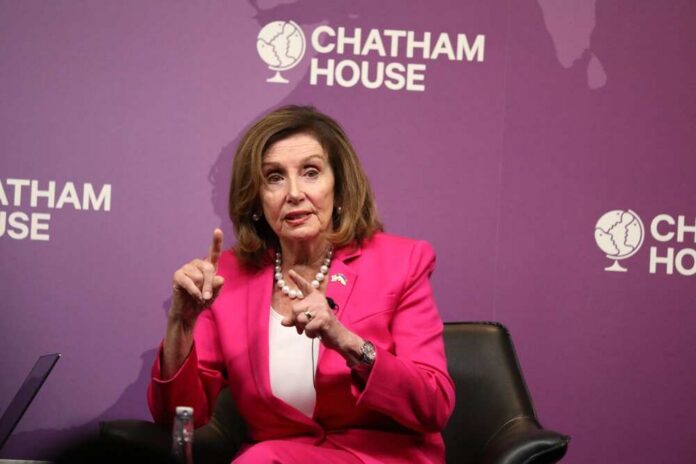
UC Berkeley just handed one of America’s most polarizing politicians a $35 million “nonpartisan” democracy institute, and many see it as one more sign that the elites are rewriting the rules in their own image.
Story Snapshot
- UC Berkeley is launching the Nancy Pelosi Institute for Representative Democracy as a “nonpartisan” hub to strengthen American democracy.
- The institute honors Pelosi’s legacy as the first female Speaker of the House, while funding research and teaching on issues like polarization and inequality.
- More than $35 million in donations are already committed toward a $50 million goal, raising questions about donor influence and elite power.
- Critics on the right and left argue that naming a “nonpartisan” democracy institute after a deeply partisan figure feeds public distrust of higher education and government.
What UC Berkeley Is Building With Pelosi’s Name
University of California, Berkeley says the Nancy Pelosi Institute for Representative Democracy will be a nonpartisan center inside its political science department. The institute is meant to be a hub for research, teaching, and civic engagement focused on how to strengthen American democracy and tackle major social and economic problems. Its official mission is to study obstacles to progress, from political polarization to the future of artificial intelligence, and to help students become the next generation of civic leaders. Supporters frame it as an investment in fixing a system many agree is badly broken.
Berkeley’s public materials stress four main areas of work for the institute. These include strengthening democratic institutions, facing big challenges in society and the economy, promoting human and civil rights, and ensuring political leaders represent a wide range of backgrounds and views. The plan is for the institute to sponsor faculty research, bring visiting fellows from politics and public policy, and offer courses open to undergraduates across majors. In other words, this is not a small program; it is designed to shape how future leaders think about government and power.
Pelosi’s Role, Legacy, and the Promise of “Nonpartisan” Debate
The institute is named for Nancy Pelosi, who made history as the first female Speaker of the United States House of Representatives. Berkeley leaders say they chose her because of that historic role and her long career in Congress, not just because she is a famous Democrat. Pelosi plans to be more than a symbol: she will co-teach a course on Congress with a Berkeley political scientist, connecting her real-world experience with classroom learning. The institute will also host a public exhibit on her nearly forty-year career, locking her story into the campus landscape for years to come.
Pelosi and Berkeley both insist the institute will welcome many viewpoints. Pelosi has spoken about creating a space where Republicans and Democrats, including people aligned with Donald Trump, can argue and learn together. The institute’s design—visiting fellows, broad research themes, and open courses—fits that promise on paper. For Americans who feel both parties are failing them, the idea of honest cross-party debate sounds good. But it also depends on whether people trust the host and namesake to keep the playing field fair.
Money, Power, and Why the Naming Sparks Distrust
Berkeley reports that the institute already has more than $35 million in philanthropic commitments toward a $50 million fundraising goal. That kind of money sends a clear message about who has the clout to shape “democracy” debates inside elite schools. Social media posts calling it “the $50 million Nancy Pelosi Institute” tap into a growing fear that big donors and powerful politicians are building tax-funded platforms to protect their own legacies instead of fixing daily problems like wages, housing, and healthcare. For many Americans, this looks less like civic renewal and more like elite self-preservation.
UC Berkeley is opening the Nancy Pelosi Institute for Representative Democracy! She will be teaching there! Take note of where NOT to send your kids! pic.twitter.com/sDJfLOjmja
— John K. Amanchukwu Sr. (@REVWUTRUTH) July 1, 2026
Critics argue that naming a supposedly nonpartisan democracy institute after a leader who spent years at the center of partisan warfare is tone-deaf at best. Pelosi has long been a target for Republican attacks, and even some Democrats have distanced themselves from her in campaigns, which makes her a symbol of the very division the institute claims to fight. A Yahoo News analysis notes that while Berkeley calls the institute nonpartisan, its focus on issues like climate change and wealth inequality gives its work “a liberal cast,” closely matching Pelosi’s political record. That gap between branding and reality feeds the sense that the system is rigged.
Campus Politics, “Indoctrination,” and a Deeper Crisis of Faith
This institute appears as many Americans, left and right, already doubt whether universities and the federal government still serve ordinary people. Berkeley has faced accusations from the Trump administration and conservative media that its campus leans hard to the left and silences other views. Now, giving Nancy Pelosi a large, permanent platform to “strengthen democracy” fits a larger pattern where universities partner with high-profile political figures to gain prestige and donations, even when those figures are deeply divisive. For citizens who feel shut out of power, it can look like elites patting themselves on the back while the country drifts further from its founding ideals.
Supporters see the institute as a chance to use Pelosi’s experience to teach hard lessons about governing in a rough age. Skeptics see a partisan brand stamped on the word “democracy” at a time when trust in government, media, and universities is near historic lows. Both sides share one worry: that the people who broke the system are now the ones writing the rules for how we talk about fixing it. Whether the Nancy Pelosi Institute lives up to its nonpartisan promise—or becomes another symbol of elite control—will depend on how it handles real debate, real diversity of thought, and real accountability.
Sources:
reason.com, localnewsmatters.org, news.berkeley.edu, facebook.com, polisci.berkeley.edu, usnews.com, higheredstrategy.com