
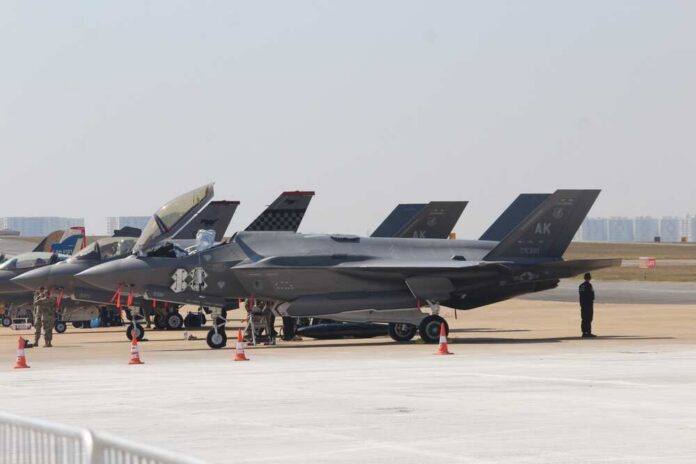
A pair of U.S. F-117 stealth jets hid under a tanker’s wing and still got caught by Austria’s vintage fighters — and the diplomatic fallout echoed for years.
Story Snapshot
- In 2002, Austria intercepted a U.S. tanker with two undeclared F-117s in tow during a permitted overflight.
- Austrian pilots visually identified the stealth jets, prompting a formal complaint and public images.
- U.S. officials said the flights were properly planned, while Austria cited confusion but stopped short of alleging a rule break.
- A defense study links the incident to later Austrian denials of U.S. transit tied to the Iraq buildup.
How Austria Exposed A Hidden Formation
On October 18, 2002, the United States filed a flight plan for a KC-10 tanker to cross Austrian airspace. Austrian air defense detected issues with the plan and launched two Saab Draken fighters. The pilots closed in and saw two Lockheed F-117 Nighthawks flying very close under the tanker’s wings. The formation spent about ten minutes in Austrian airspace, and the government lodged a complaint with the U.S. Embassy in Vienna after presenting photos to lawmakers.
According to reporting at the time, the U.S. Embassy in Vienna said the flights had been properly planned. Austria’s Defense Ministry pointed to confusion and did not formally accuse the United States of breaking rules. Austrian media and aviation writers described the Nighthawks as neither requested nor likely to be approved. The episode came during the buildup to the Iraq war, when the United States sought fast movement of forces across Europe to the Persian Gulf.
What International Law Requires In Neutral Airspace
The 1944 Convention on International Civil Aviation says military aircraft must secure explicit permission to fly over another country, without exception for wartime or intent. A defense analysis by the National Defense University recounts the 2002 Austrian episode as an example of trying to avoid a likely denial by masking additional aircraft within a permitted flight. The same study notes a diplomatic uproar followed the intercept and links it to later Austrian refusals for U.S. movements related to Iraq.
Neutrality law is clear and simple in principle. A state is either a belligerent or neutral, and neutral airspace is inviolable. Overflight approvals are narrow and specific. They do not grant a blank check to move troops or combat aircraft without disclosure. That clarity helps explain why even a short, ten-minute passage with undeclared jets sparked a response. The rules aim to keep neutral states out of others’ wars and reduce the risk of escalation.
Why This Old Case Matters In 2026
Recent reporting shows Austria remains quick to guard its airspace. In May 2026, Austrian Eurofighters scrambled two days in a row in response to approaching U.S. military flights. Officials later said no illegal entry occurred and blamed an administrative error, which the United States refiled and corrected. Even so, Vienna said the incidents would be handled through diplomatic channels, and journalists pointed back to the 2002 F-117 case as the standout precedent.
For readers worried that powerful actors bend rules when it suits them, this story cuts both ways. The United States sought speed and secrecy to move assets before a major war. Austria enforced its neutral status and demanded full transparency. The outcome shows how small states can still push back, especially when facts are documented in radar logs and cockpit photos. It also shows how even allies can clash when legal lines meet urgent plans.
What Both Sides Took From The Incident
U.S. planners likely saw a trade-off: operational security versus diplomatic risk. The stealth jets probably benefited from the tanker’s radar signature, but the plan failed once visual identification occurred. Austrian leaders gained a public example that neutrality is more than a slogan. The National Defense University analysis suggests the diplomatic cost was real and immediate, with denials that complicated U.S. logistics into the Iraq theater within a year. Choices had consequences on both timelines.
For citizens on the right and the left who feel elites play by different rules, the lesson is stark. International law only works when countries respect it, even in tense moments. When governments stretch rules, partners push back, and ordinary service members and taxpayers absorb the costs. Transparent agreements, clear paperwork, and honest flight plans may sound dull. But they protect neutral borders, reduce accidents, and keep small disputes from becoming big ones.
Sources:
19fortyfive.com, twz.com, popularmechanics.com, ndupress.ndu.edu