After a four-day, 102-hour search over the Arabian Sea, the U.S. Navy stopped looking for a missing sailor, raising hard questions about risk, transparency, and how the system treats the people it sends into danger.
Story Snapshot
- The Navy ended a 102-hour, 14,000–square-mile search for a sailor missing after a helicopter’s emergency water landing.
- Three of four crew members were rescued and are in stable condition aboard the USS George H.W. Bush.
- Officials say there is no sign of hostile action; the cause of the incident is still under investigation.
- The sailor’s name and key details are being withheld, feeding public frustration with military secrecy and elite decision-making.
What Happened Over the Arabian Sea
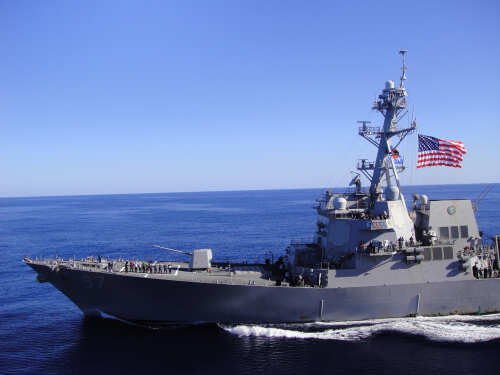
On July 1, a U.S. Navy MH-60S Sea Hawk helicopter flying from the aircraft carrier USS George H.W. Bush made an emergency water landing in the Arabian Sea at about 3:30 a.m. Eastern time. Four crew members were on board when the helicopter went down. Navy forces quickly recovered three of them, and officials say those sailors are in stable condition aboard the carrier. The fourth crew member could not be found, triggering a large search and rescue effort across a wide stretch of ocean.
Naval Forces Central Command and the Navy’s 5th Fleet say there is no indication the emergency was caused by hostile action. That statement matches reports from several outlets that cover defense and aviation, which also describe the event as an accident rather than an attack. The cause of the emergency landing remains under official investigation, and the Navy has not released details about exactly what went wrong on the helicopter before it hit the water.
Inside the 102-Hour Search and Sudden Stop
Following the ditching, the Navy and the United States Air Force launched what they call an extensive and coordinated search and rescue mission in the U.S. Central Command region. According to the Navy’s 5th Fleet, crews searched for more than 102 hours over roughly 14,000 square miles of sea, using ships and aircraft to try to find the missing sailor. Despite that effort, they found no trace of the crew member. After those four days, commanders suspended the active search and shifted the missing sailor’s status toward “duty status whereabouts unknown.”
This pattern is not new. In other recent cases, such as a sailor who went overboard from the USS George Washington near Australia in 2025, the Navy also suspended searches after a few days when no evidence was found. In earlier incidents off North Carolina and in the northern Arabian Sea, joint searches with the Coast Guard or partner ships covered tens of thousands of square miles before being halted. The official line is consistent: the Navy expresses sorrow, ends the search, opens an investigation, and keeps many details out of public view.
The Missing Details and Growing Public Frustration
While the Navy confirms the broad facts, many specifics remain unanswered. Officials have not publicly identified the missing sailor, citing a policy that requires waiting at least 24 hours after notifying the family. They also have not explained what mission the helicopter was flying, what systems may have failed, or whether the aircraft was recovered or lost. For families and citizens, that silence can feel less like “respect for privacy” and more like a familiar wall of government secrecy.
Media reports say the helicopter’s landing was “controlled” but that it began spinning once it touched the water, hinting at some kind of mechanical or control problem. However, there has been no public release of maintenance records, flight data, or cockpit recordings that might show what led to the emergency. In past cases when sailors vanished at sea, investigations were launched but often remained inside the Pentagon, leaving the public with only brief statements and no detailed accountability. For Americans who already suspect that the system protects itself first, that pattern is troubling.
Risk, Honor, and the Sense of a Distant Elite
This incident comes as U.S. forces keep a high level of readiness in the Middle East, even after a recent ceasefire with Iran. Helicopter crews are flying long hours over open water in a tense region, doing dangerous work that most citizens rarely see. When something goes wrong, the people at risk are young service members far from home, not the officials and political leaders who set the policy. That reality speaks directly to a growing belief on both left and right that everyday Americans pay the price while elites make the decisions.
The US Navy suspended its active search for a sailor missing in the Arabian Sea. The sailor was reported missing on July 1 after an MH-60S helicopter went down.
The search lasted more than 102 hours and covered over 14,000 square miles.#theuaetimes #USNavy #ArabianSea… pic.twitter.com/PuxOQWvOkn
— The UAE Times (@theuaetimes) July 6, 2026
At the same time, this case shows how tightly the official narrative can be managed. Mainstream outlets and aviation databases all repeat the Navy’s key points: no hostile action, three rescued, one missing, cause under investigation. Social media posts mostly echo those facts, with little space given to deeper questions about equipment, training, or judgment. There is no credible evidence that the Navy’s account is false. But the lack of outside scrutiny reinforces the sense that powerful institutions rarely face real challenge, even when a life is lost on their watch.
Sources:
navytimes.com, twz.com, reddit.com, facebook.com, aviation-safety.net, instagram.com, jpost.com