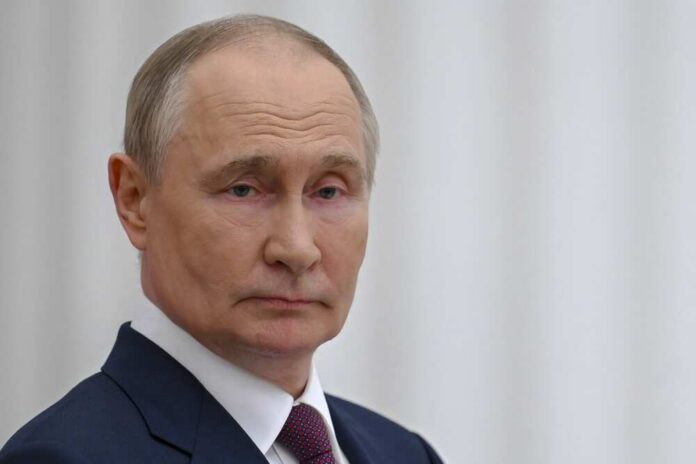
As Washington quietly debates Ukraine aid, a leading defense scholar now claims Putin has already lost the war in everything that matters most.
Story Snapshot
- Heritage Foundation strategist James Carafano argues Russia has already failed its core goals in Ukraine, even as trench fighting continues.
- He says Moscow missed its main objective: conquering Ukraine and breaking its NATO ties, while turning Russia into a wounded, isolated power.
- Other analysts counter that Russia still holds key territory and is grinding toward “strategic exhaustion” of Ukraine and the West.
- The clash shows how modern wars can “end” strategically without peace on the ground, leaving citizens on both sides to carry the costs.
What Carafano Means When He Says Putin ‘Already Lost’
James Carafano from the Heritage Foundation recently told Voice of America that the war in Ukraine is “strategically over” because Russia has failed at its main goals. He says the Kremlin wanted to conquer and destroy Ukraine as an independent state, but instead Ukraine’s government, army, and national identity are still intact and fighting. He also argues Russia hoped to break the North Atlantic Treaty Organization (NATO), yet NATO has stayed together and deepened its support for Kyiv.
Carafano claims Moscow has gained only “marginal” territory while paying an extreme price in soldiers, equipment, and long-term economic damage. He describes Russia’s army as “destroyed” and its economy as “crippled,” turning the country into a global outcast. In his view, a free and independent Ukraine that can defend itself against future attacks already exists today, which means Russia’s core strategic project has failed even if the front lines keep shifting.
The Hard Facts That Complicate ‘Russia Lost’
Carafano’s words resonate with many Americans who feel great powers start wars, then leave ordinary people to pay in taxes, inflation, and lost trust. But his statement has weak spots. He does not give clear numbers to back up claims that Russia’s army is “destroyed,” nor a timeline for when the war became “strategically over.” The fighting still rages, and Russia continues to occupy about one-fifth of Ukraine’s territory, including a land bridge to Crimea that many military experts see as a major gain, not a minor one.
An in-depth assessment from the Association of the United States Army concludes that “Russia is winning” for now because it holds what the authors call its “minimally acceptable outcome”: the Donbas region, the land bridge to Crimea, and Crimea itself. That study argues Russia is using a strategy of exhaustion, aiming to stretch the war long enough to drain Ukraine’s manpower and Western support. In other words, some analysts believe Moscow has already locked in enough territorial control to claim success if the West’s will cracks.
Modern Wars: ‘Strategic Defeat’ Without a Peace Treaty
The deeper issue is what “winning” even means in a modern war between nuclear-armed states. Strategic scholars note that large wars today rarely end with clear surrender; they slide into open-ended, managed conflict that mixes military force, economic pressure, and propaganda. One study argues that classic World War II-style victory — enemy capital captured, regime toppled, total defeat — is now rare, replaced by ongoing “continuous strategic competition” where both sides claim partial success.
Other research on modern wars says real victory needs more than battlefield gains; it must also resolve the political problems that caused the war. That bar is very high in Ukraine. Russia has not destroyed Ukrainian nationalism or fully broken its Western ties. Ukraine has not expelled Russian forces or forced Moscow to accept the 1991 borders. This half-finished state lets Western experts like Carafano call Putin a loser, while other strategists insist Russia is still on track if it can hold current lines and sap Western patience.
Why This Debate Matters to Americans on the Right and Left
For many Americans, this argument over whether Putin “already lost” feels like another case where elites play word games while families struggle with costs of war, aid, and higher prices. Conservatives suspicious of globalism worry that endless Ukraine funding serves defense contractors and foreign interests more than U.S. workers. Liberals angry about inequality see another faraway conflict where billions flow overseas while problems at home fester. Both sides suspect the permanent bureaucracy will drag the war on regardless of evidence of strategic failure.
While Zaluzhnyi provides a welcome reality check to ground public expectations, his refusal to admit Russia is actively losing exposes a flawed theory of victory potentially driven by political ambition rather than raw military analysis.
Zaluzhnyi’s op-ed in The Telegraph has… pic.twitter.com/XeFIm8XHFh
— Joni Askola (@joni_askola) July 8, 2026
If Carafano is right, then Washington is spending huge sums to fight a war whose main outcome is already set, propping up a system that cannot admit strategic closure. If his critics are right, elites are understating a long-term danger as Russia slowly bleeds Ukraine and tests Western will. Either way, citizens see the same pattern: leaders talk in abstract terms about “strategic defeat” or “exhaustion,” yet offer little clear plan for ending the conflict on honest, fair terms — and for many, that feels like one more sign the system serves itself first.
Sources:
19fortyfive.com, voanews.com, foreign.senate.gov, en.wikipedia.org, defense.gouv.fr, csis.org, brookings.edu