

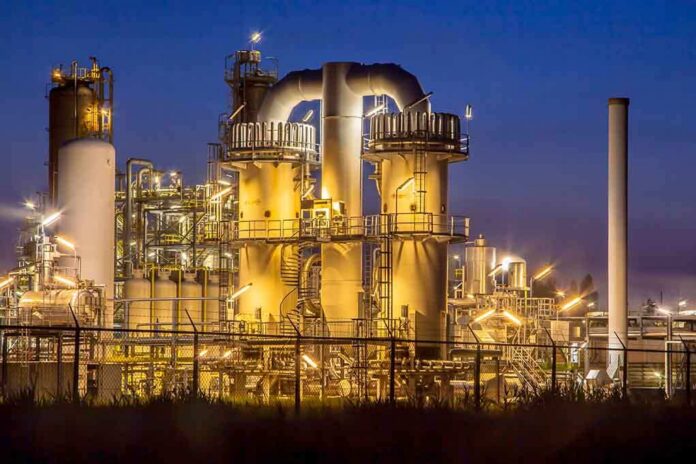
A sudden blast forced Thailand’s Bangchak refinery to shut every production unit as flames and black smoke rose over Bangkok.
Story Snapshot
- Bangchak shut all units at its Phra Khanong refinery after a fire and explosion.
- Officials and reports cited seven to nine injuries as counts evolved during the day.
- The fire started around 2:45 p.m. local time and was controlled within about 30 minutes.
- Authorities urged nearby residents to evacuate while crews secured the site.
What Happened at the Bangkok Refinery
Bangchak Corporation reported that a fire broke out at its Phra Khanong oil refinery in Bangkok on November 26, 2026, around 2:45 p.m. local time. The company shut down all production units as a safety step while responders moved to control the blaze. Officials said the fire was brought under control and extinguished in about 30 minutes. Early images showed tall flames and thick black smoke above the city’s east side as emergency crews arrived and set perimeters.
Injuries were reported as responders treated workers and bystanders. Early tallies from authorities and news outlets cited at least seven people hurt, with some in serious condition. Later reports said the company counted nine injured workers. The differing totals reflect how casualty numbers often change during the first hours after an incident, as hospitals and agencies confirm cases and update statuses. Local authorities urged evacuations near the site as a precaution due to smoke and the risk of further flare-ups.
Safety Actions and Shutdown Details
Company officials said all production units were shut to reduce risk and allow firefighters to isolate fuel sources. Reporters on scene and company statements were consistent that the shutdown covered the full facility, not a single line or unit. Shutting a refinery halts the processing of crude oil and the output of fuels until engineers clear equipment for restart. Bangchak said the cause of the blast and fire was under investigation, with no final finding released that day.
Officials did not publish a detailed damage assessment or a timeline for restart in the initial updates. That means the duration of the shutdown and any impact on fuel supply or prices remain unclear based on available records. In past industrial events, inspectors review valves, piping, sensors, and control systems before authorizing a phased restart. The same approach is likely here, but exact steps and timing were not disclosed in the initial reporting from Bangkok.
Why Early Numbers and Causes Often Change
Early reports often focus on the visible event—smoke, flames, and shutdown orders—while the deeper answers come later. Investigators typically examine maintenance logs, alarms, contractor work, and near-miss reports to trace the sequence that led to an ignition. Research on safety reporting shows that serious inquiries often uncover missed warning signs or unreported near misses that set the stage for a larger failure. This pattern explains why final answers require time and thorough records review.
🔴🇹🇭 Bangkok
An explosion and fire at an oil facility linked to the Bangchak refinery in the east of the Thai capital injured at least seven people and forced nearby residents to evacuate. The company shut down all its production units.#Thailand #Bangkok
— Siyaq | سياق (@SiyaqNewsAR) November 26, 2026
For people living near refineries or other high-risk sites, clear communication matters. Officials in Bangkok moved residents away from the area and worked to keep smoke exposure low while the fire was contained. These steps mirror standard practice in industrial cities worldwide. As the investigation proceeds, the key facts to watch are the confirmed injury count, the identified ignition source, the repair plan and restart schedule, and whether any public air monitoring detected harmful levels during the event.
Sources:
facebook.com, reuters.com, ca.marketscreener.com, anewz.tv