
Police say a planned ambush on a Dallas highway left a 35-year-old mother dead on her birthday, and her brother-in-law is now charged with murder.
Story Snapshot
- Dallas Police arrested Juan Antonio Gonzalez-Orduna, 29, on a murder charge in the Nov. 15 killing.
- Investigators say the victim, Stephanie Gonzalez, was shot after a crash on C.F. Hawn Freeway.
- Charging documents describe an ambush involving relatives, including an alleged gunman nephew.
- Texas “law of parties” can hold planners and drivers liable even if they did not fire.
Arrest After Deadly Highway Shooting
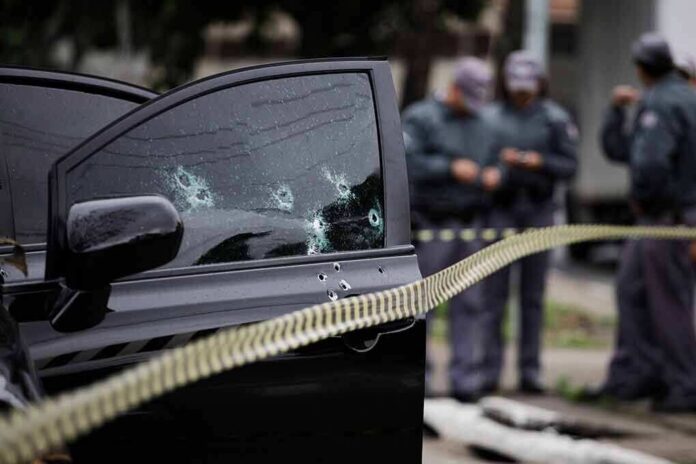
Dallas Police announced the arrest of Juan Antonio Gonzalez-Orduna on Nov. 22, one week after Stephanie Gonzalez was shot while driving home on C.F. Hawn Freeway. Police booked the 29-year-old into the Lew Sterrett Justice Center on a murder charge tied to the Nov. 15 attack. Dallas Fire-Rescue took Stephanie Gonzalez to a hospital, where she died. Police say the shooting followed a vehicle crash that drew the victim from her car before shots were fired.
CBS News Texas reported that investigators suspect Gonzalez-Orduna drove a vehicle involved in the crash that set up the ambush. The department identified him as the victim’s brother-in-law. Detectives say the collision and shooting were linked in one planned event, not a random road rage act. The arrest places Gonzalez-Orduna at the center of the case as police work to find and charge others who they believe took part in the plot surrounding the birthday killing.
Charging Records Outline an Alleged Family Plot
NBC 5 Dallas-Fort Worth reported details from charging documents that describe a coordinated attack by relatives. The records say Gonzalez-Orduna helped trap Stephanie Gonzalez’s car, and his nephew fired the fatal shots. The account places family conflict and planning at the heart of the crime. The affidavit frames the crash as a setup that forced the victim to stop on the freeway shoulder, where the shooting happened moments later.
Local outlets including Fox 4 Dallas-Fort Worth and The Dallas Morning News matched the core timeline. They reported the arrest date, the booking location, and the tie to the C.F. Hawn Freeway site. These reports also identified the victim as a mother of four. Together, the outlets present a consistent set of facts about who was arrested, when the shooting occurred, and how the crash and gunfire were linked by police in a single case.
How Texas Law Reaches Alleged Planners and Drivers
Texas courts and the United States Supreme Court have recognized the state’s “law of parties.” Under this rule, a person can be found criminally responsible for an offense another person commits if they helped plan, aided, or should have anticipated the crime that followed. That legal path lets prosecutors charge a driver or organizer with murder even if someone else pulled the trigger, if the evidence supports that theory of shared responsibility.
Dallas Mother of Four Stephanie Gonzalez Fatally Shot in Birthday Ambush; Brother-in-Law Charged
• Police allege Stephanie Gonzalez, 35, was boxed in on the C.F. Hawn Freeway and fatally shot while on the phone with 911 on Nov. 15.
• Dallas police arrested brother-in-law Juan…— Newstro (@Newstro) November 24, 2026
That framework matters here because police describe Gonzalez-Orduna as the suspected driver who helped stage the crash that led to the shooting. Prosecutors often use this rule in cases where a plan involves multiple roles, like lookout, driver, and shooter. The key issues usually include intent, planning, and what each person knew. Courts then decide whether the evidence shows the non-shooter helped cause the killing through actions that made the attack possible.
Why This Case Hits Public Nerves
This killing blends two flashpoints: family violence and freeway ambushes. People across the political spectrum worry about safety on the road and slow justice when groups plan violent acts. This case also feeds an old media habit of tying immigration status to crime coverage, which research shows can shape public fear beyond the facts of a single crime. Careful, fact-first reporting helps keep focus on evidence, not broad labels that can cloud judgment.
What Comes Next in the Investigation
Police must still prove who did what, when, and how they coordinated the attack. Prosecutors will likely lean on phone records, surveillance video, ballistics, and the crash scene to connect roles. Defense lawyers will probe eyewitness memory and challenge claims about planning and intent. A court will weigh the “law of parties” against the proof offered for each person’s mental state and actions in the minutes before and after the crash and gunfire.
Sources:
fox5atlanta.com, miamiherald.com, fox4news.com, independent.co.uk, ibtimes.sg, dallasnews.com