

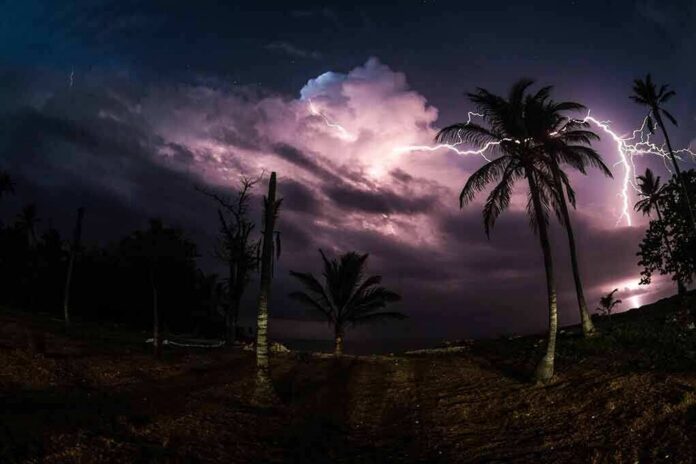
National Weather Service forecasts warn that a fast-strengthening Thanksgiving storm will pound the East Coast with heavy rain, strong winds, and dangerous coastal flooding.
Story Snapshot
- Forecasters expect heavy rain, strong winds, high surf, and coastal flooding from the Mid-Atlantic to New England.
- Coastal wind gusts could top 50 miles per hour, with 40-plus miles per hour possible along the Interstate 95 corridor.
- New York City could see one to two inches of rain from late Wednesday into Thursday, plus moderate coastal flooding at high tides.
- Meteorologists flagged rapid “cyclogenesis,” with some outlets discussing a possible “bomb cyclone” classification that is not yet confirmed.
Forecast Calls for Heavy Rain, High Winds, and Coastal Hazards
National Weather Service guidance issued ahead of the holiday detailed a large storm tracking up the East Coast. The agency projected heavy rain, strong winds, high surf, and marine hazards over a broad area from the Mid-Atlantic into New England. The outlook highlighted likely coastal flooding, beach erosion, and rough seas that would threaten travelers, boaters, and shore communities. The warning aimed to give families time to plan safer trips and protect property before peak impacts arrived late Wednesday into Thursday.
National Weather Service marine and public forecasts called for powerful wind gusts. Along the coast, gusts could exceed 50 miles per hour, with inland gusts above 40 miles per hour reaching into the Interstate 95 corridor. Those wind speeds raise concerns about downed limbs, spotty power outages, choppy waters, and balloon restrictions during outdoor events. The same storm would drive higher surf toward beaches, adding to the risk of minor to moderate tidal flooding in vulnerable zones.
New York City Rainfall and Tides in the Spotlight
Local reporting that cited National Weather Service forecasts said New York City should prepare for one to two inches of rain. The timing focused on late Wednesday through Thanksgiving Day. Multiple high-tide cycles could bring moderate coastal flooding to parts of the city and nearby shorelines. That pattern often floods low-lying roads and overwhelms storm drains. Commuters and visitors were urged to check transit alerts and allow extra time as the rain and wind peak during holiday travel windows.
National news coverage matched the official guidance. Reports described heavy rain, gusty winds, and coastal flooding for Thanksgiving week from the Mid-Atlantic into New England. Coverage also noted the chance of parade changes in New York City if wind thresholds were met. That alignment between local and national updates supported the core hazards message for both coastal and inland communities, even as exact totals vary by town and tide cycle.
What “Rapid Cyclogenesis” Means—and Why Labels Matter
National Weather Service forecasters signaled that the storm would intensify quickly through “rapid cyclogenesis.” Some outlets discussed the potential for a “bomb cyclone,” which is a storm that deepens fast enough to meet a precise pressure-drop rule. Officials had not confirmed that the system would reach that technical bar. The practical takeaway remained the same: strong winds, heavy rain, and coastal flooding were expected, and people near the coast faced the greatest risk window during high tides.
For many families, this is about safety, time, and cost. Holiday travelers hate last-minute changes and surprise delays. Shore towns worry about flooded streets, damaged dunes, and hit-or-miss cleanup help. Everyday people often feel leaders focus on headlines, not on fixing drainage, hardening grids, or keeping roads open. Clear, simple warnings help, but they work best when officials also invest in basics like pumps, power lines, and flood maps that match today’s risks—not last decade’s guesses.
Travel Timing, Practical Prep, and Public Services
Travelers were told to expect the worst conditions from late Wednesday into Thursday along the Northeast corridor. Drivers should slow down in heavy rain, watch for ponding on highways, and keep phones charged in case of outages. Coastal residents should move cars off flood-prone blocks, secure loose items, and avoid ocean piers and jetties during peak surf. Boaters should heed marine warnings and stay in port when seas are dangerous. These simple steps save time, money, and stress when storms ramp up.
Florida may miss the "bomb cyclone" poised to wallop the U.S. East Coast, that doesn't mean the weather will be perfect before Thanksgiving. https://t.co/tqHgL8rnZk
— TCPalm (@TCPalm) November 24, 2026
Public agencies and utilities play a key role when storms test aging systems. Crews must clear storm drains, stage repair teams, and share clear updates on closures and outages. People across the political spectrum agree on this point: government should deliver core services that work in bad weather, not only in sunny conditions. When alerts are accurate and the response is steady, families can protect their plans and get through the holiday with fewer surprises.
Sources:
youtube.com, thenewstribune.com, usatoday.com, gothamist.com, marine.weather.gov, nbcnews.com