

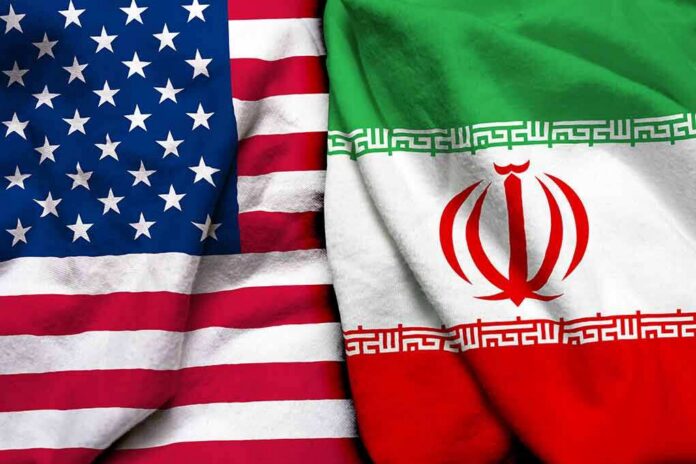
Iran says its courts have ordered the United States to pay $290 billion, a staggering sum with unclear legal force beyond Iran’s borders.
Story Snapshot
- Iranian judiciary official says domestic courts issued $290 billion in damages against the United States.
- Reports cite Iranian state television but provide no case files, rulings, or itemized amounts.
- The judgments’ enforceability abroad faces steep hurdles under sovereign-immunity laws.
- The move lands amid wider Iran–United States tensions at sea and in the region.
What Iran Announced And Why It Matters
Hassan Abdolianpour, who leads Iran’s Judiciary Center for Lawyers, said Iranian courts have issued rulings ordering about $290 billion in damages from the United States. Iranian state television carried the claim, and several outlets repeated the quote. The statement said the awards cover decades of alleged United States actions. The reports did not include case numbers, judgments, or a public breakdown of the total. The size of the claim makes headlines, but the documentation remains thin.
The announcement arrives during a tense period. Coverage links the claim to recent threats, attacks, and tanker incidents around the Strait of Hormuz. Reports describe the Gulf as on edge and note overlapping disputes over drones and sea mines. Against that backdrop, a giant court figure also works as a political signal. It raises pressure, hardens talking points, and seeks leverage in any future talks or asset fights.
What We Still Do Not Know From Public Reporting
Key facts are missing from the public record. Outlets have not published the rulings, parties, or the courts that issued them. There is no listing of which events Iran counted or how judges calculated damages. There is no sign of appeals or a final status in each case. Without that, outside readers cannot check the evidence, the legal basis, or whether awards are final or symbolic. These gaps limit how much weight outsiders can place on the $290 billion figure.
The lack of detail also affects any path to enforcement. To collect money, a party typically needs recognized judgments and assets within reach. That often means filing in foreign courts where assets sit. Judges then test jurisdiction, service, and immunity rules. When rulings are domestic to one country, other courts can decline to recognize them. That is especially true in sovereign cases and national security disputes.
The Sovereign-Immunity Wall Outside Iran
United States legal filings lay out why foreign judgments against a state face steep odds in United States courts. Under the Foreign Sovereign Immunities Act (FSIA), foreign-state property in the United States is immune from attachment and execution unless a narrow exception applies. United States briefs argue courts cannot order turnover of property not subject to a valid exception. That makes broad, foreign awards hard to enforce against United States assets.
United States submissions also distinguish between domestic claims and binding international awards. They state that decisions from the Iran–United States Claims Tribunal under the Algiers Accords are final and enforceable, but also argue the Accords do not waive United States sovereign immunity in United States courts, and that no damages were awarded for specific items in the cited matter. That framing underscores the gap between political claims and judgments that other courts will honor.
How Both Sides’ Frustrations Fit This Story
Americans on the right see a foreign court setting a huge bill while Washington struggles to secure borders, lower costs, and keep energy affordable. Americans on the left see another sign of global strain as working families fall behind. Both groups point to a federal system that seems reactive, lawyered-up, and slow to deliver results. A claim this large, with so few public details, feeds a sense that legal gamesmanship is replacing real problem-solving at home and abroad.
🇮🇷 JUST IN: Iranian courts have demanded that the United States pay $290 billion in damages, a judiciary official says.
The claim comes as Tehran condemns the US naval blockade of its ports as "military aggression" and vows to counter it with every available means.
🌐 TW pic.twitter.com/vWgUb7hx2m
— Tectonic Wire (@TectonicWire) November 23, 2026
For readers, two truths can stand together. First, an Iranian official did announce domestic rulings totaling $290 billion. Second, there is no public evidence yet that these rulings can be collected outside Iran. Until detailed judgments appear, the number functions more as pressure than as a payable bill. Watch for filings in third countries, asset seizures, or tribunal awards. Those concrete steps, not headlines, will show whether this claim has teeth.
Sources:
insiderpaper.com, english.alarabiya.net, newarab.com, dawn.com, 2009-2017.state.gov, state.gov