
A top Federal Bureau of Investigation (FBI) fugitive was seized in a dawn raid in Sinaloa after a deadly clash that showed both the reach and the risks of the drug war.
Story Highlights
- Mexican forces captured Fausto Isidro Meza-Flores in Guasave, Sinaloa, on November 20.
- United States agencies supported the operation with intelligence and case work.
- Mexico reported multiple deaths and arrests tied to the raid and its fallout.
- Experts say taking down leaders can spark more violence in cartel territory.
Who Was Captured And Why It Matters
Mexico’s Defense Ministry said troops detained Fausto Isidro Meza-Flores, known as “El Chapo Isidro,” in Guasave, Sinaloa, on November 20. The United States Department of Justice called him a senior leader of the Sinaloa Cartel and one of the FBI’s Ten Most Wanted fugitives. A federal grand jury in Washington, D.C., charged him with narcoterrorism, a continuing criminal enterprise, money laundering, and gun crimes. These are allegations, not convictions, but the charges show a major U.S. case.
The Drug Enforcement Administration said the arrest followed intelligence sharing and support from United States partners. The Justice Department said the capture came after a Homeland Security Task Force investigation and was carried out “with U.S. assistance.” Officials framed the result as proof that cross-border work can deliver outcomes against powerful criminal groups. That message aligns with past joint operations that focus on high-value targets at the top of cartel networks.
How The Operation Unfolded On The Ground
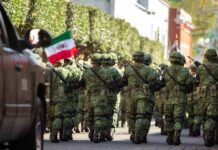
Mexico described a planned raid that used stealth and surprise to reach the target site. Authorities said they set a security ring, came under attack with guns and explosives, and then entered to detain Meza-Flores. Reporting linked the action to heavy fighting and road disruptions. Mexico said four soldiers died, seven attackers were killed, and eight alleged criminals were arrested. Officials moved Meza-Flores and another detainee to Mexico City by early morning for federal custody.
The scene in Guasave fit a pattern seen in past high-value arrests. Gunmen tried to block troops and create chaos to delay extraction. Residents woke to gunfire, burning vehicles, and reports of helicopters, as units worked to secure routes. Such tactics aim to force authorities to back off or trade leverage for hostages. This time, the transfer went forward, but the price included lives lost and damage across a busy area of northern Mexico.
The Bigger Picture: A Win With Real Tradeoffs
United States and Mexican leaders will point to a rare chance to remove a charged organizer who, they say, helped run a cross-border drug network. That is a real win for both governments’ duty to enforce the law and protect communities. Yet research on Mexico’s “kingpin strategy” shows a hard truth: taking down a boss can break order inside a group and lead to splits, turf fights, and more bloodshed in the near term across affected areas.
The capture in Mexico of a narc wanted by the FBI unleashes violence in
Sinaloa.
Gunfire, fires and attacks from helicopters sow chaos over the arrest of 'El Chapo Isidro' for whom Washington was offering a $5
million reward. pic.twitter.com/dafbq0BLVI— TruthWillCome2.0 (@SandyCee2400) November 22, 2026
Studies tracking arrests and killings of cartel leaders find that violence often rises after a takedown as lieutenants battle and new cells form. Analysts also see more groups enter the market when a dominant figure falls. That means this capture could shift who controls routes and neighborhoods but may not cut the flow of drugs by itself. Safer streets will depend on follow-through: steady policing, fair courts, and pressure on the money, guns, and local protection networks.
What This Means For Americans Watching The Border
Families on both sides of the aisle want fewer deadly drugs on U.S. streets and less cartel violence near the border. This operation shows that Mexico and the United States can act together and hit a high target. It also shows why the problem feels endless: cartels recruit fast, bribe local officials, and swap leaders when needed. Real gains will come when arrests are paired with border security, honest governance, and community recovery programs that shrink demand and replace cartel cash.
Key Facts And Open Questions
Authorities agree on the basics: the date, the place, the target, and the transfer after capture. The charges describe alleged crimes that United States prosecutors now aim to prove in court. Mexico’s account details a tough fight and the toll on soldiers and suspects. Some labels differ across reports about Meza-Flores’s exact faction, which is common in cartel coverage. Officials have not shared full operational files, which is standard in sensitive cases.
Sources:
nytimes.com, dea.gov, apnews.com, fox5atlanta.com, ijhpm.com, mwi.westpoint.edu