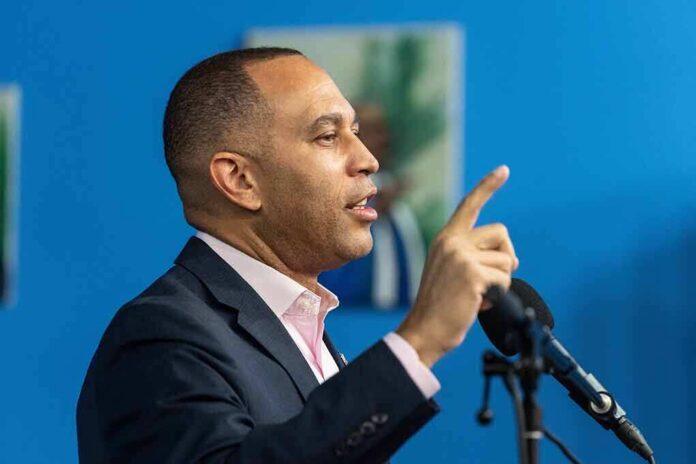
Democrats nominated Hakeem Jeffries for Speaker in a 251–11 closed-door vote, positioning him to make history while exposing fresh rifts over health care and Israel policy.
Story Snapshot
- Democrats backed Jeffries 251–11 in a secret caucus vote, with no rival candidates.
- If elected by the full House, Jeffries would be the first Black Speaker.
- Seven progressives said they voted “no” while seeking pledges on Medicare for All and Gaza policy.
- Jeffries still needs a majority on the House floor when the new Congress convenes.
What Democrats Decided Behind Closed Doors
House Democrats chose Hakeem Jeffries as their Speaker nominee by a 251–11 vote during a closed caucus meeting on November 18, 2026. Reports said Jeffries ran unopposed and has led House Democrats since 2023, after Nancy Pelosi stepped aside. The result shows strong internal support, but it was not a public roll call. The tally sets a clear party direction but does not guarantee a floor win. Jeffries must still reach a House majority to secure the gavel in January.
Jeffries had already declared his bid in a November 4 “Dear Colleague” letter, asking members to support him as the 57th Speaker. That letter set his formal case to govern a chamber Democrats expect to control in the new Congress. ABC News reported that Democrats won back both chambers in the midterms, creating a real path to advance their agenda. That political map raises expectations among voters tired of gridlock and party games on Capitol Hill.
Historic First Meets Ongoing Intraparty Disputes
If the House elects him, Jeffries would become the first Black Speaker in United States history, a milestone noted across major outlets. Yet the caucus vote revealed tensions on policy. Coverage said eleven Democrats dissented, with seven progressives stating they wanted commitments on Medicare for All and ending what they called the genocide in Gaza before backing him. They also said talks with Jeffries had made “meaningful progress” but were not finished.
Those pressures reached beyond the caucus room. Reuters reported that protesters demanded government-funded health care for all and an arms embargo on Israel during a Democratic conference where Jeffries appeared. Advocacy writers charged that Jeffries no longer backs Medicare for All and has not joined efforts to limit some weapons transfers to Israel. Those claims reflect opinion and activism, not caucus rules, but they frame the demands from the party’s left flank.
The Next Test: Winning the Floor Vote
The caucus vote sends a strong signal, but the only count that matters is on the House floor. Speaker elections require a majority of members present and voting. Recent history shows that floor dissent is now common, even when party leaders win caucus support. Research by the Congressional Research Service documents frequent defections in the modern era, unlike the decades after World War II when straying was rare.
House Democratic Leader Hakeem Jeffries secured his party’s nomination for speaker Wednesday in a 251–11 vote, despite some opposition from the far left. Now all eyes turn to January 3, when Jeffries could make history as the first Black speaker of the House.
— Margaret Chadbourn (@MLChadbourn) November 18, 2026
Democrats argue a unified majority can move bills on the economy, health costs, and oversight. Skeptics on both left and right doubt Congress will deliver. Many Americans see a Washington class that protects itself first while working families face rising costs and a widening gap between insiders and everyone else. The Jeffries vote mirrors that trust problem: big numbers in private, but public proof will come only when members cast their votes on the House floor.
Sources:
redstate.com, npr.org, abcnews.com, jeffries.house.gov, washingtonexaminer.com, nytimes.com, cbsnews.com, wfla.com, washingtonsun.com, bracingviews.com, cnn.com, stripes.com