President Trump will meet China’s Xi Jinping and Russia’s Vladimir Putin in China for talks on nuclear weapons alongside an Asia trade push, marking a rare three-leader summit with high stakes for security and the economy.
Story Highlights
- The White House confirmed a Trump–Xi meeting and a trilateral session with Xi and Putin in China.
- The trilateral talks will focus on nuclear weapons and possible arms reduction.
- Trade and commercial deals are on the agenda during stops in Manila and Shenzhen.
- Officials said there are no plans for a Kim Jong Un meeting during this trip.
What Is Officially Scheduled
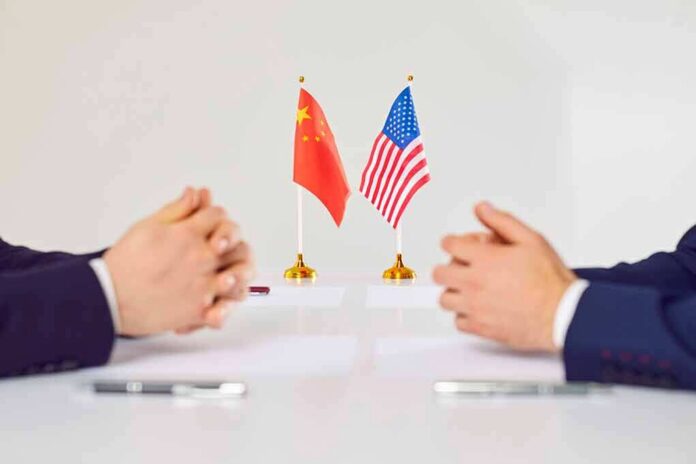
White House officials said President Trump will hold a bilateral meeting with Chinese leader Xi Jinping in Shenzhen, then take part in a three-way session with Xi and Russian President Vladimir Putin on the sidelines of the Asia-Pacific Economic Cooperation summit. ABC News reported that the Trump–Xi meeting comes before the trilateral session, and that no separate one-on-one meeting with Putin is planned. Bloomberg placed the joint meeting on November 19, citing the White House announcement.
Reporters from major outlets, including the Associated Press, the British Broadcasting Corporation, and Al Jazeera, described the same framework: leaders gathering in China tied to the Asia-Pacific Economic Cooperation schedule. These accounts align on the location, participants, and timing. That shared detail reduces confusion that often surrounds high-level summits. The Shenzhen setting puts China in the host’s chair, giving Beijing added control over optics and protocol while all three governments seek specific goals from the encounter.
Stated Goals: Nuclear Talk and Trade Deals
The White House and press guidance said the trilateral meeting will focus on nuclear weapons and potential global arms reduction, setting a narrow but weighty agenda for the three nuclear powers. The trip also includes an economic track. The Associated Press said Trump will look to sign a trade deal with Thailand in Manila and pursue commercial agreements during the Asia swing. APEC organizers separately highlighted work on trade integration that leaders will review during the week.
Officials framed talks with Xi around economic friction and long-term competition. A pre-summit read in the Associated Press linked the China stop to trade concerns and technology tensions that affect supply chains and prices at home. Those issues touch daily life in the United States, from factory orders to energy inputs. Concrete deliverables were not guaranteed before wheels up. That is normal in summit diplomacy, where signaling often comes first and detailed bargaining follows later.
The Kim Jong Un Question
President Trump told reporters that a meeting with North Korean leader Kim Jong Un might also happen. However, United States officials told ABC News there were no plans for a Kim meeting during this trip. That difference matters for expectations. A clear schedule exists for the Xi bilateral and the Xi–Putin–Trump session, but not for North Korea. Past United States–North Korea diplomacy has swung between high hopes and stalled talks, so caution about timelines is warranted based on history, not rumor.
**Trump leaves Washington Monday for Manila then Shenzhen, where the first Trump-Xi-Putin trilateral on nuclear arms control collides with APEC pageantry and fresh midterm bruises.**[[1]](https://t.co/V64L7QylWM)
[Take 11/15 · 𝕏-1]
### 1. The Frame
**What people think this is…— GrumpyNews, emotionally clean news. (@GrumpyNews_) November 16, 2026
Any contact with North Korea would likely focus on nuclear risk and regional stability. China’s role as host adds another layer, since Beijing influences Pyongyang’s choices and also manages its own interests with Washington and Moscow. For now, the confirmed meetings do not list North Korea as a formal agenda item. That keeps the core focus on nuclear stockpiles among the three powers, while the economic track runs in parallel through the Manila and Shenzhen events.
Why This Matters for Americans
Nuclear stability underpins the safety of every family and business. If the three leaders find even small areas of agreement, that can lower risk and reduce the chance of mistakes. On the economic side, trade decisions can shape prices for cars, phones, energy, and food. Many Americans feel the system favors the well connected. Big summits can look like theater. The test is whether the meetings yield clear steps that help workers, control costs, and protect national security without new burdens.
Politics Around the Trip
The Associated Press noted the trip follows midterm election losses and other domestic strains, which set a political backdrop for the White House. Leaders in both parties often use travel to show action on big issues. That can help at home but can also raise demands for results. The Shenzhen summit has unusual symbolism: three nuclear powers in one room. That image can overshadow the trade track if talks stall, or amplify success if the sides announce even limited nuclear risk steps.
What To Watch Next
Watch for official readouts after the Trump–Xi bilateral and the trilateral session. Look for numbers, timelines, or verification steps on nuclear matters. On trade, look for signed texts or firm commitments, not just warm language. Also watch China’s and Russia’s statements to see where their messages match or differ from the United States version. Alignment on facts usually signals progress, while gaps can point to sticking points that may slow any follow-up talks.
Sources:
nytimes.com, apnews.com, abcnews.com, aljazeera.com, afp.com, bbc.co.uk, apec.org