
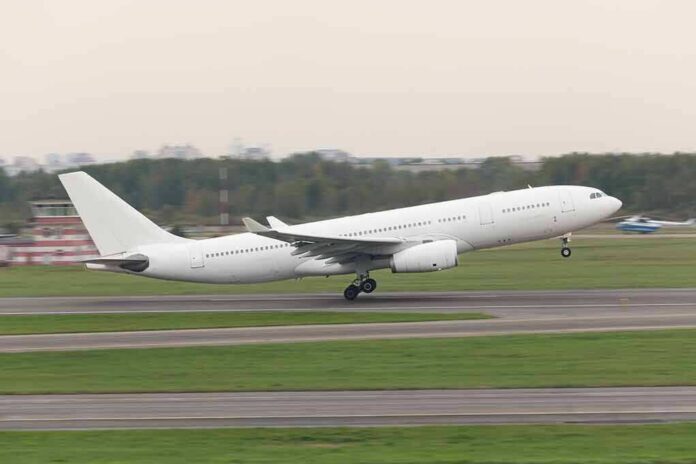
Two people were hurt when a Copa passenger jet and a UPS cargo plane hit each other while taxiing at Miami International Airport, after controllers told the UPS crew to yield to the Copa flight.
Story Snapshot
- Federal Aviation Administration said controllers told UPS to give way to the Copa aircraft.
- Copa’s Boeing 737 wingtip struck the nose of a UPS Boeing 767 while both were taxiing.
- Radio audio captured “Somebody hit us,” and a UPS pilot saying, “We went too far”.
- Airport officials placed the contact around 9:15 p.m. at a taxiway intersection.
What Happened On The Ground In Miami
Miami International Airport reported that an arriving aircraft and a departing aircraft made contact at about 9:15 p.m. at the intersection of two taxiways. The Federal Aviation Administration said air traffic controllers had instructed the UPS crew to give way to the Copa aircraft before the contact. Reporters said the Copa Boeing 737’s wingtip struck the nose of a UPS Boeing 767 as both planes taxied for their next steps. CNN reported two injuries from the event, which did not involve a runway.
Radio traffic shared by news outlets captured a short exchange around the moment of contact. A Copa pilot radioed, “Somebody hit us,” which signaled an immediate concern to ground control. A UPS pilot later said, “Yeah, we went too far, and then he, he clipped us with the wing,” suggesting the UPS jet had moved past a safe hold point. The Federal Aviation Administration said it was investigating. Reports did not cite a final cause from the National Transportation Safety Board.
Why This Matters For Travelers And Crews
Taxiway collisions are rare but serious because they happen in tight spaces with many moving parts. Large jets have long wings and limited side views while turning. Controllers juggle heavy radio traffic. Pilots track signs, lights, clearances, and checklists. When one step goes wrong, small errors can add up fast. Federal safety material shows pilot deviations are the largest share of surface incursions nationwide, though many events include design and workload factors too.
This case fits a broader pattern that regulators watch closely. The Department of Transportation has recorded thousands of surface incursions over time, including hundreds on taxiways rather than runways, showing risks do not stop after landing or before takeoff. Federal guidance links many serious events to human limits under stress and to confusing taxi routes at busy hubs. The Miami contact at a taxiway crossing reflects how a simple yield instruction can become hard in real-world traffic.
How Investigators Will Reconstruct The Event
Federal investigators will review ground radar, radio recordings, and controller logs to map each aircraft’s path. Airport video and photos will help confirm the first point of contact and any skid or stop marks. Crews and controllers will give statements on what they saw, heard, and read back. Weather, lighting, taxiway signs, and workload will be checked for added risk. This step-by-step method allows a clear timeline built from devices, not only from memory.
Miami plane collision: UPS cargo plane collides with Copa Airlines craft https://t.co/DL2KVmxnAS
— TexasAmerica (@TexasAmerica) November 15, 2026
For travelers, the process aims at fixes, not blame alone. If signs were hard to see, they can be improved. If radio calls were crowded, phraseology or frequency use can change. If a hold line felt unclear at night, paint, lights, or charts can be updated. The goal is the same across parties: keep people safe on the ground and in the air. That shared goal should rise above politics and profit when safety lessons are on the line.
What To Watch Next
The Federal Aviation Administration investigation will determine the key missteps and any rule violations. The National Transportation Safety Board may release findings that weigh human factors, procedures, and airport design. UPS said it will work with authorities to determine what happened, and Copa will review its own procedures as well. Expect recommended changes if investigators see gaps in training, taxiway layouts, or radio discipline that raised risk that night in Miami.
Sources:
mediaite.com, abcnews.com, cnn.com, cbsnews.com, wmur.com