
United Kingdom bishops say a new “conversion practices” bill could turn ordinary pastoral advice and family conversations into crimes, putting basic religious speech on uncertain legal ground.
Story Highlights
- Catholic bishops warn the draft bill’s broad definition could chill sermons, prayer, and parental guidance.
- The government says the offence only covers abusive conduct that causes serious harm or serious distress with real life impact.
- Officials claim the proposal respects parental rights and freedom of religion under human-rights law.
- Survivors told Parliament that prayer and counselling aimed at changing sexuality left them suicidal or hospitalized.
Bishops’ Warning Focuses on Speech, Faith, and Family Life
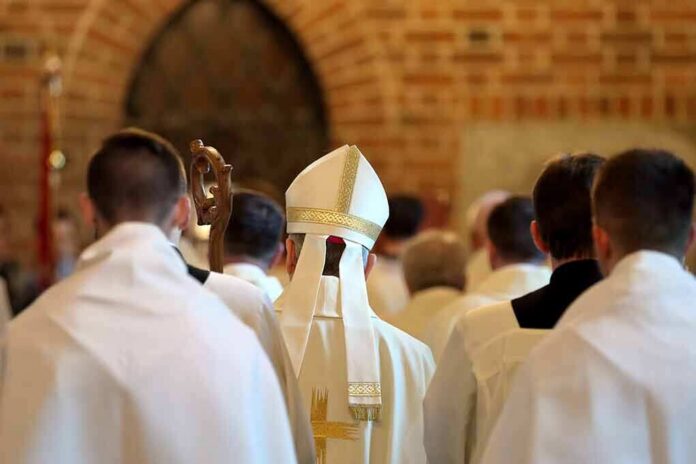
Archbishop John Sherrington, speaking for the bishops of England and Wales, warned that the draft bill would create uncertainty around lawful pastoral care, family life, and open conversations in many settings. He said the plan threatens freedom of religion or belief and freedom of expression. The bishops oppose abusive counseling in all cases, but argue the text reaches too far. They also stress that parents could face legal risks for well-intentioned advice to children about sex and gender.
The concern starts with the draft bill’s definition of “conversion practice.” The text covers any conduct intended to make someone have or not have, or believe they have or do not have, a sexual orientation, and also covers transgender identity. Critics say that intent-based wording can sweep in sermons, prayer, or private talks if authorities later infer an aim to change beliefs or behavior. The bishops say that kind of vagueness can chill normal church life and family guidance.
Government Frames Bill Around Abusive Harm and High Thresholds
The government says the offence applies only to abusive conversion practices that cause serious harm to physical or mental health, or serious alarm or distress with a substantial adverse effect on daily activities. The explanatory notes link harms to conditions like post-traumatic stress disorder or clinical depression. Ministers present the bill as a narrow tool for serious cases, not a speech code for churches or homes. They stress these thresholds to answer free-speech and parental-rights fears.
Officials also point to human-rights safeguards. The draft equality impact assessment says the approach seeks to protect children while upholding parental rights and respecting freedom of thought, conscience, and religion. The assessment references compatibility with European rights on private and family life and religion. Supporters argue these checks and the harm test prevent the law from punishing ordinary prayer, belief, or gentle advice that does not cross into abuse and serious harm.
Real Cases Drive Support; Lack of Test Cases Fuels Doubt
Survivors told Parliament that repeated pressure, prayer, and counselling intended to change or suppress sexuality caused deep psychological harm. One man said a decade of such efforts left him suicidal and in a psychiatric unit. Another described exorcisms and hypnosis over more than 20 years that led to self-hatred, self-harm, and hospital stays. Backers say these accounts show why a targeted criminal law is needed beyond existing offences.
The bishops’ case is more about scope risk than present prosecutions. Their statements use words like “uncertainty” and “could,” and they do not cite a clause-by-clause map of how a specific sermon, confession, or parental talk would meet the bill’s harm test. That leaves room for supporters to call the fears speculative. Yet opponents reply that once the state polices intent and identity-related speech, people self-censor long before any courtroom test happens, which is the chilling effect they fear.
What To Watch as Parliament Scrutinizes the Text
Parliament can still amend the draft. Lawmakers could sharpen definitions of “abusive,” “serious harm,” and “serious alarm or distress,” or add explicit protections for voluntary prayer, sermons, catechesis, and parental guidance. Clear guidance for police and prosecutors could also reduce guesswork. A tighter bill might keep penalties for coercive abuse while lowering the risk that normal religious speech or family advice gets treated as criminal conduct.
This fight reflects a wider pattern we see in many rights debates. Most people agree real abuse must stop. The clash comes over where the law draws the line and who decides what “intent” and “abuse” mean in private conversations. For readers on the right and the left, the shared worry is state overreach and elite rulemaking that misses life on the ground. Transparent drafting and precise limits, not slogans, will decide if the law protects the vulnerable without muzzling conscience.
Sources:
bbc.com, commonslibrary.parliament.uk, humanists.uk, researchbriefings.files.parliament.uk, gov.uk, bu.edu