

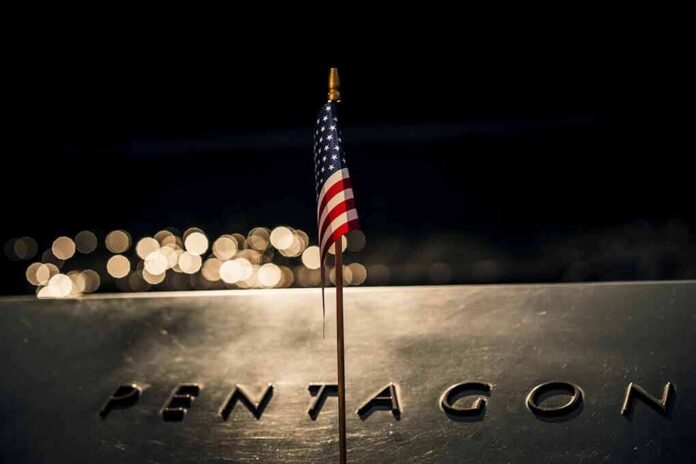
Nine straight failed audits at the Pentagon now put trillions in assets and big defense deals under fresh scrutiny.
Story Highlights
- The Department of Defense failed its fiscal 2026 audit for the ninth year in a row.
- Auditors reviewed about $4.9 trillion in assets and $5.2 trillion in liabilities.
- Fourteen of twenty-five Pentagon units received passing opinions, up from eleven.
- Leaders still target a clean, department-wide audit by 2028, but it is not yet achieved.
Ninth Straight Audit Failure And What That Means
On November 16, 2026, the Department of Defense received a “disclaimer of opinion” on its fiscal 2026 financial statements. That means auditors could not get enough reliable evidence to judge the books. Reuters reported this is the ninth straight year the department-wide audit failed, even as some parts improved. The department’s Chief Financial Officer, Jules Hurst, confirmed the result and the mixed picture across units. A disclaimer signals system and control gaps, not proven missing funds.
The scope was massive. Reports described about $4.9 trillion in assets and $5.2 trillion in liabilities under review. That scale explains why progress can be uneven and slow. It also explains why the result draws heat from both right and left. Taxpayers fund the force that defends the country, and they expect accurate books. Big numbers raise stakes for every contract, spare part, and program milestone tied to these accounts.
Component Progress Versus Department-Wide Results
Pentagon leaders point to gains inside the system. Fourteen of twenty-five standalone reporting entities earned passing opinions in fiscal 2026, up from eleven in the prior year. A department statement cited clean opinions now covering more than half of assets and over ninety percent of liabilities, based on its fiscal 2026 financial report totals. This shows pockets of success. But the consolidated statements still failed, which means gaps in records, systems, or consolidation remain at the top level.
Independent watchdogs place this in a long trend. The Government Accountability Office says the Department of Defense remains the only major federal agency that has never received a clean, department-wide audit opinion as of fiscal 2024. Full-scope, agency-wide audits began in 2018. Since then, auditors keep issuing disclaimers because evidence is not sufficient and controls are not strong in key areas. Some services have passed their own audits in certain years, proving progress is possible, but the whole enterprise has not yet met the mark.
What The 2028 Goal Promises—And What It Does Not
Defense officials say they are on a path to a clean opinion by 2028, and they reported five new or improved audit opinions this year. A clear deadline can focus leadership, budgets, and staff. It also gives Congress and the public a yardstick. Still, a target year is not a result. The ninth failure shows the work ahead. Leaders must fix controls, modernize data systems, and prove that records match real assets across the force, not only inside a few units.
Could this be one of the reasons why the Pentagon has flunked 8 audits?
Yesthe exact breakdown seen in Middletown is one of the primary systemic reasons the Pentagon has now flunked nine consecutive annual audits (most recently failing its FY 2026 audit on November 16–17,… https://t.co/bcV33ArwEk
— Bluegrass Fair Minded (@AkBluegrass3) November 26, 2026
Public claims that “trillions are missing” often reflect confusion about what a disclaimer means. A disclaimer shows auditors lacked enough evidence to issue a firm opinion. It does not by itself prove that a set amount vanished. Fact-checkers reviewing the current audit cycle stress this point while noting the huge totals involved. The department’s own fiscal 2026 report listed about $4.87 trillion in assets, a figure used to compute coverage shares for clean opinions.
Why This Matters Across The Political Spectrum
Conservatives see nine failed audits and worry about waste, weak oversight, and bad incentives in defense contracts. Liberals see the same record and worry about fairness, accountability, and whether funds match real needs. Both sides agree on one thing: the government must track every dollar. A military this large must prove it can account for gear, property, and payments. Clear books support strong defense, lower waste, and better deals for troops and taxpayers alike.
What To Watch Next
Watch for a component-by-component scorecard that shows where controls improved and how that affects total assets and liabilities. Look for explanations of the exact causes of the disclaimer: systems, documentation, valuation, transaction timing, or consolidation errors. Expect lawmakers to demand milestone charts, budgeted fixes, and quarterly updates tied to the 2028 promise. Independent reports from the Government Accountability Office will signal whether fixes drive real, department-wide change.
Sources:
redstate.com, thehill.com, breakingdefense.com, gao.gov