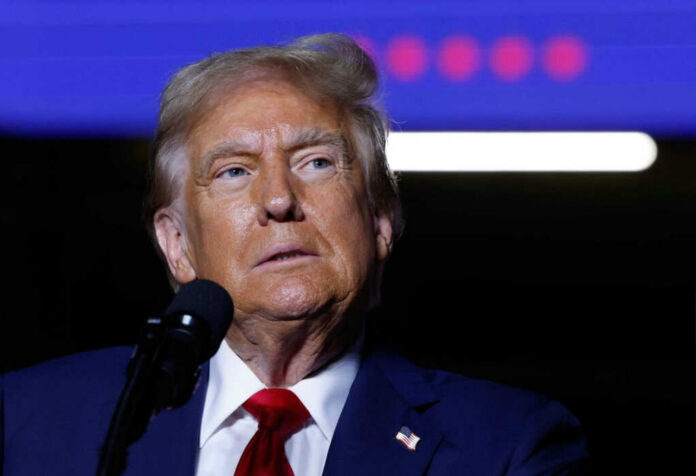
MSNBC’s latest Trump segment didn’t just criticize his inflation record—it tried to brand him as worse than Jimmy Carter, the modern shorthand for economic misery.
Quick Take
- MSNBC host Chris Hayes mocked President Trump on-air, citing polling that shows deeply negative public approval on inflation and cost of living.
- Pollster G. Elliot Morris’s data showed Trump at roughly -40 net approval on inflation; CNN’s Harry Enten cited an Ipsos measure around -49 net.
- Hayes highlighted that the numbers appear lower than Carter-era readings, despite today’s inflation being well below the 2022 peak.
- The episode underscores how polling, media framing, and economic anxiety are colliding in 2026 politics—even with Republicans controlling Congress.
MSNBC’s Carter Comparison Becomes the New Talking Point
Thursday on MSNBC’s All In, host Chris Hayes aired charts and openly laughed while arguing that President Donald Trump is now less popular on inflation than former President Jimmy Carter. Hayes leaned on figures attributed to pollster G. Elliot Morris, putting Trump at about -40 net approval on inflation and cost of living. The segment framed the result as historically shocking by tying it to Carter’s stagflation-era reputation and the 1979 energy crisis.
Hayes’ framing mattered as much as the numbers. By choosing Carter—often remembered for “malaise” and economic pain—MSNBC used a cultural reference point that instantly signals failure to older voters. The research provided indicates Hayes said Trump’s line on the chart dropped “off the chart” low. That kind of presentation is designed for a shareable clip, but it also reflects something real: inflation sentiment remains politically potent even when inflation levels ease.
What the Data Claims—and What It Doesn’t Explain
The research cites two data points that drove the coverage: Morris’s net approval figure and CNN analyst Harry Enten’s separate discussion of an Ipsos reading around -49 net approval on inflation. Enten’s key observation, as summarized in the research, was that Trump’s current inflation standing is lower than President Biden’s worst point—even though inflation is described as far below the 2022 high (about one-third of peak levels). Those claims, however, do not include precise dates, sample details, or question wording.
That limitation matters because “approval on inflation” can capture more than month-to-month CPI changes. Voters often answer based on grocery bills, rent renewals, insurance, and whether pay raises feel real after taxes. Without seeing the underlying questionnaires, it is hard to separate views on inflation itself from broader judgments about competence, trust, or general economic direction. The research also does not provide Carter-era polling methodology for a strict apples-to-apples comparison, only the narrative contrast.
Why Inflation Still Hurts Politically Even When It Cools
The research points out the political irony at the center of Enten’s commentary: Trump’s numbers look worse even with lower inflation than the post-pandemic surge. That tracks with how households experience price levels, not just inflation rates. When prices jump and then stabilize, families don’t “get it back”; the new baseline becomes the daily reality. For conservatives, that is a reminder that Washington’s fiscal and monetary choices can linger long after headlines claim the crisis is easing.
It also speaks to a broader anti-establishment mood that cuts across parties. When voters feel squeezed, they tend to conclude that leaders are managing for insiders—Wall Street, contractors, bureaucracies—while normal people absorb the costs. The research shows MSNBC using the polling slide as a cudgel against Trump, but the deeper warning for any governing party is that cost-of-living frustration does not reliably map to partisan talking points. It maps to trust, and trust is scarce.
Media Incentives, Opposition Politics, and the 2026 Governance Test
The episode illustrates a well-worn dynamic: opposition media weaponizes a poll, supporters dismiss it, and the public keeps asking why life is still so expensive. Hayes’ mockery is consistent with a Democratic media ecosystem intent on portraying Trump as incompetent, while the research also notes Drudge amplified a Trump-versus-Carter comparison through visuals. With Republicans controlling both chambers of Congress, Democrats’ main leverage is narrative pressure—especially on economic competence, where elections are often won or lost.
VIDEO – Chris Hayes Laughs at Trump Polling Lower Than Jimmy Carter: ‘The Guy Who Oversaw Stagflation!’ https://t.co/Bl2YMes8Di
— Grabien (@GrabienMedia) May 1, 2026
For the administration and congressional Republicans, the practical takeaway is straightforward: winning policy fights is not enough if voters do not feel relief. If polling on inflation is truly collapsing as depicted, the governing majority will need clearer accountability, measurable results, and communication that respects what people see at the gas pump and checkout line. The research provided is limited to one primary report, but it captures a political reality: economic perception can outrun economic statistics.
Sources:
Chris Hayes Laughs at Trump Polling Lower Than Jimmy Carter: ‘The Guy Who Oversaw Stagflation!’