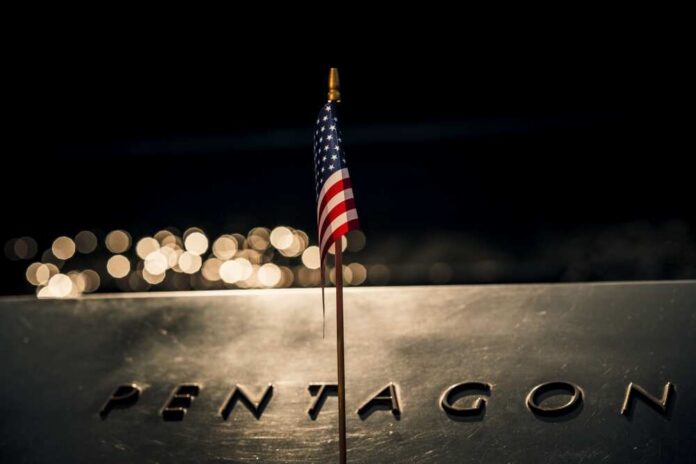
Defense Secretary Pete Hegseth defended a staggering $961 billion Pentagon budget request before Congress as Middle East tensions escalate and Americans question whether endless military spending serves national interests or perpetuates a cycle of foreign entanglements benefiting defense contractors over taxpayers.
Story Snapshot
- Hegseth testified on a $961 billion FY2026 defense budget amid rising Iran nuclear tensions and U.S. embassy evacuations in the Middle East
- Pentagon claims $30 billion in savings from cutting Biden-era programs, reinvested into nuclear modernization, shipbuilding, and the F-47 fighter
- Watchdog groups criticize a reported $200 billion supplemental request for potential Iran operations as unauthorized and lacking clear objectives
- Congressional oversight reveals frustration over budget delays, opaque 8% cuts, and continued reliance on temporary spending measures
Budget Testimony Comes Amid Middle East Crisis
Secretary of Defense Pete Hegseth appeared before the House Armed Services Committee in June 2025 to defend the Trump administration’s $961 billion defense budget request for fiscal year 2026, totaling over $1 trillion when including broader national security expenditures. The testimony occurred as State Department officials evacuated U.S. embassies across the Middle East and reports surfaced of Israeli military planning against Iran’s nuclear facilities. Hegseth framed the massive budget as essential to reversing what he termed “chronic underinvestment” from the previous administration, emphasizing a “peace through strength” doctrine aimed at deterring adversaries like Iran and China while restoring military readiness.
Reallocation of Taxpayer Dollars Raises Transparency Questions
The Defense Secretary highlighted $30 billion identified through cuts to programs he characterized as wasteful Biden-era priorities, redirecting those funds toward nuclear force modernization at $62 billion, the new F-47 fighter program at $3.5 billion, and expanded shipbuilding totaling $47 billion. Hegseth also announced investments in the “Golden Dome” missile defense system at $25 billion and border security initiatives, aligning with President Trump’s America First agenda. However, congressional committee members from both parties expressed frustration over the administration’s delayed budget submission and lack of specificity regarding the claimed 8% spending cuts executed across the Department of Defense, demanding greater transparency on how taxpayer funds are being reallocated during a period of fiscal uncertainty.
Watchdogs Challenge Unchecked War Spending
Beyond the base budget request, Pentagon officials reportedly seek an additional $200 billion in supplemental funding for potential military operations related to Iran, a claim that has drawn sharp criticism from fiscal accountability organizations. Taxpayers for Common Sense, a nonpartisan watchdog group, condemned the request as unauthorized spending lacking congressional approval or clearly defined strategic objectives. Gabe Murphy from the organization argued that such open-ended funding requests epitomize the Washington establishment’s willingness to commit American resources and potentially lives to conflicts without proper oversight or accountability to the people footing the bill. This pattern raises fundamental questions about whether the government prioritizes genuine national defense or sustains a military-industrial complex where profits outweigh prudent strategy.
Political Theater Obscures Accountability Deficit
Hegseth’s second testimony on June 18, 2025, expanded beyond budget matters to address controversies over his use of the Signal messaging app for discussing sensitive military plans, National Guard deployments during Los Angeles protests, and the conversion of a Qatari jet into Air Force One. While the Secretary promised quality-of-life improvements for military families including barracks upgrades and healthcare reforms, critics noted these pledges came alongside requests for historic spending increases with minimal detail on outcomes or success metrics. The fiscal year 2026 budget process risks defaulting to another continuing resolution, perpetuating the cycle of short-term funding patches that defense officials themselves acknowledge undermines long-term planning and readiness, yet seems to suit a political class more focused on appearing tough than demanding results.
The fundamental disconnect between escalating defense budgets and tangible improvements in national security reflects a broader erosion of government accountability that frustrates Americans across the political spectrum. Whether one supports robust military investment or questions foreign interventionism, the pattern of trillion-dollar requests submitted late, detailed inadequately, and potentially supplemented by hundreds of billions for undefined conflicts suggests a system serving entrenched interests rather than citizens who bear the financial and human costs of these decisions.
Sources:
Hegseth to push for Pentagon’s $1.5 trillion budget in front …
Pentagon Claims It Needs Additional $200 Billion to Pay for War on Iran – Taxpayers for Common Sense