
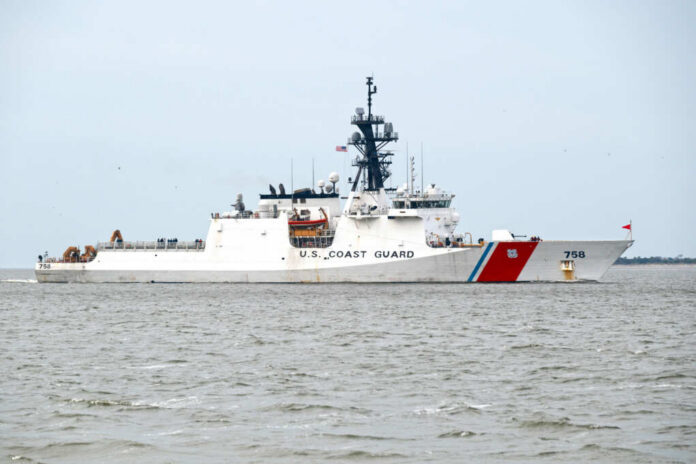
A lethal U.S. strike that vaporized a small boat in the Eastern Pacific is being hailed as a blow against narco‑terrorists—and questioned by critics who say Washington has not yet shown the proof.
Story Snapshot
- U.S. Southern Command says a December 29 strike destroyed a narco‑terrorist vessel on a known trafficking route in international waters.
- The mission was ordered by Secretary of War Pete Hegseth under President Trump’s second‑term security posture.[1][2]
- Critics argue the Pentagon has not publicly produced evidence that the boat was actually carrying drugs.[2]
- The case highlights a wider fight over how far America should go in using lethal force against cartels at sea.[1][2]
Strike Details: What The Military Says Happened
U.S. Southern Command reported that on December 29 Joint Task Force Southern Spear carried out a “lethal kinetic strike” on a vessel in the Eastern Pacific, killing two men it labeled “narco‑terrorists.”[1][2] The command said intelligence showed the craft was a “low‑profile vessel” operating in international waters along a known narco‑trafficking route and “engaged in narco‑trafficking operations.”[1] Officials stressed that no American forces were harmed and described the target as operated by designated terrorist organizations.[1][2]
According to Southern Command, the mission was conducted “at the direction of Secretary of War Pete Hegseth,” underscoring that this was not a rogue tactical call but a strike approved up the national‑security chain.[1][2] That language mirrors other recent press releases on February 9, April 26, May 5, and May 8, where commanders likewise framed similar Eastern Pacific strikes as precision actions against vessels tied to designated terrorist groups and cartel networks. Together, these announcements signal a sustained maritime offensive against cartel logistics far from U.S. shores.
Questions From Skeptics: Where Is The Public Evidence?
While the military’s statements are detailed about routes, international waters, and command authorization, outside observers note that public proof of actual narcotics on board has not been released.[2] Reporting based on international video coverage states that the military “has not presented evidence confirming that the targeted vessels were carrying drugs,” a point critics say matters when lethal force is used instead of boarding and seizure.[2] Another foreign outlet emphasized that the exact location and timing of at least one related attack had not been independently verified, highlighting the information gap.
Those concerns echo a broader pattern in American counter‑drug operations at sea, where the government leans on classified surveillance and post‑strike press releases rather than open evidentiary showings. In this model, the state controls most of the intelligence, while citizens and allies see only carefully curated clips, short videos, or brief written statements. For civil‑liberties advocates, that raises questions about how suspects are effectively treated as wartime targets, and what legal framework governs lethal strikes outside declared traditional battlefields.[2]
Trump‑Era Doctrine: Taking The Fight To Narco‑Terror At Sea
For many conservatives, the emphasis on “narco‑terrorists” and “designated terrorist organizations” reflects a long‑overdue shift away from treating cartels as mere criminal gangs and toward recognizing them as national‑security threats.[1] Recent Southern Command releases describe multiple lethal strikes in early and mid‑2026 against similar Eastern Pacific vessels, portraying them as part of an integrated campaign to cut cartel supply lines before poison reaches American communities. That approach aligns with calls from border‑state citizens who have watched fentanyl and cartel violence ravage families for years.
At the same time, conservatives who care about the Constitution and limited government have reason to demand clear rules and accountability even when the targets are hardened traffickers. The recurring use of precision munitions against small boats, far from U.S. territory, raises hard questions about how Congress has authorized force, how innocent fishermen are protected, and how Americans can verify that deadly power is used carefully rather than casually.[2] A strong presidency still has to operate within transparent legal guardrails.
Sources:
[1] YouTube – lethal kinetic strike on a vessel in the Eastern Pacific
[2] Web – Lethal Kinetic Strike, Jan. 23, 2026 – southcom