
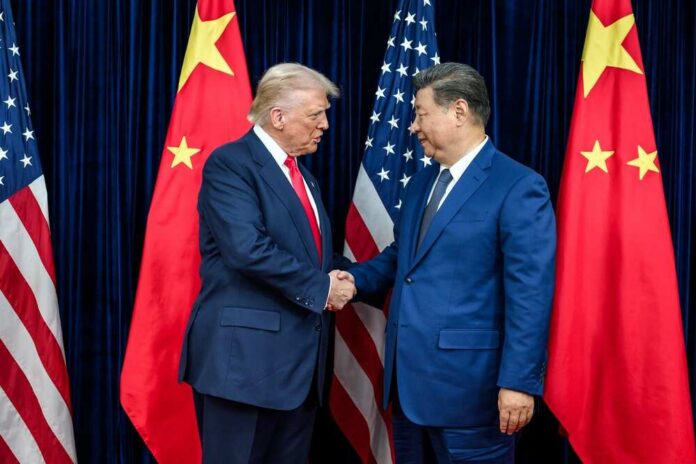
President Trump is landing in Beijing with two powder kegs on the table—Taiwan and Iran—and any “quick” trade win will come with strings the American middle class can’t afford to ignore.
Quick Take
- Trump departed May 12 for a rare U.S. presidential trip to China, with meetings expected May 13–15.
- Trade talks come after the 2025 tariff fight cooled, but analysts expect limited, narrow deliverables rather than a sweeping reset.
- The Iran war and Strait of Hormuz disruptions are now central to talks because China’s oil supply chain runs through the Gulf.
- Taiwan remains Beijing’s red line, and the summit carries escalation risk if messaging is misread on either side.
Why This Beijing Trip Matters More Than a Photo-Op
President Donald Trump left Washington on Tuesday, May 12, for a summit in Beijing with Chinese leader Xi Jinping, marking the first U.S. presidential visit to China in nearly a decade. The trip was delayed by the Iran war, which has rippled through global shipping and energy markets. Trump has publicly listed Iran, trade, energy, and Taiwan as the central agenda items—an unusually broad set of problems for a short visit spanning parts of three days.
For many Americans, U.S.-China diplomacy can feel abstract, but the stakes hit home fast through prices and security. When supply chains seize up or energy routes are threatened, households see it at the gas pump and in everyday goods. Conservatives who have watched years of “globalism first” policy are right to ask whether any agreement protects U.S. workers and industrial capacity—or just stabilizes a system that keeps critical manufacturing and leverage overseas.
Trade After the 2025 Tariff Fight: “Narrow Deals,” Not a Reset
Reporting around the summit describes a calmer posture after the 2025 trade-war peak, but not a return to trust. The expectation from experts cited in coverage is high fanfare with limited concrete outcomes, meaning the likely deliverables are targeted commercial agreements rather than a grand bargain. That matters politically because Beijing is described as planning around U.S. electoral cycles, while Trump is motivated to demonstrate progress quickly ahead of domestic political fights.
Business leaders have been reported as potential members of the U.S. delegation, including Elon Musk, Tim Cook, Larry Fink, and David Solomon, though coverage also notes uncertainty over who will ultimately attend. Their presence signals that market access and supply-chain stability are part of the conversation, especially in sectors where China remains central to production or sales. For Americans skeptical of corporate influence in Washington, the key question is whether any deal strengthens U.S. leverage—or deepens reliance on a strategic competitor.
Iran, the Strait of Hormuz, and the Energy Pressure Point
The Iran war has turned this summit into an energy-and-shipping negotiation as much as a trade meeting. The Strait of Hormuz is a chokepoint for Persian Gulf traffic, and disruptions there directly threaten China’s oil imports. Coverage points to U.S. interest in stabilizing the situation, with discussion around reopening or securing shipping routes. If progress reduces risk premiums in energy markets, U.S. consumers could benefit; if talks fail, volatility and higher costs remain a threat.
At the same time, the Iran dimension exposes a hard reality: China’s relationship with Tehran is a major variable in any regional de-escalation. Trump has described Xi as “very nice” on Iran, but public optimism is not the same as verifiable commitments, and some claims about the state of any ceasefire have been described as uncertain in pre-summit reporting. With limited public details, outside observers should treat sweeping promises cautiously until outcomes are documented.
Taiwan: The Security Issue That Can Blow Up Everything Else
Taiwan is the clearest example of why a “trade-first” framing can be misleading. Xi has long emphasized reunification, and reporting characterizes Taiwan as Beijing’s red line, particularly any move perceived as U.S. interference. Trump has said Taiwan will be discussed, and separate coverage warns the issue can trigger a crisis if either side tests boundaries. Even if trade and energy discussions appear productive, Taiwan remains a potential flashpoint that can override economics overnight.
#Trump heads to #China today for high-stakes meeting with #Xi
— ALI IMRAN BANGASH (@aibangash) May 12, 2026
For Americans across the political spectrum who believe Washington too often drifts into expensive, open-ended commitments, the Taiwan question forces clarity: deterrence requires credibility, but credibility also requires strategy, not slogans. The most responsible takeaway before results are known is that expectations should be disciplined. The trip may produce symbolic stability and a few narrow agreements, but the structural rivalry—on security, technology, and sovereignty—does not disappear because leaders shake hands.
Sources:
Trump heads to China today for high-stakes meeting with Xi
China Trump Xi meeting trade deal Iran war midterm elections
Foreign Ministry Spokesperson’s Remarks on China-U.S. Leaders’ Meeting in Busan
What happened when Trump met Xi
President Donald Trump participates in a bilateral meeting with Chinese President Xi Jinping