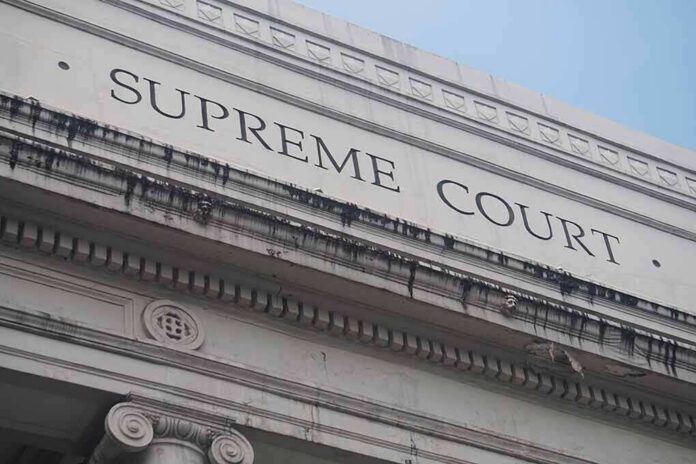
The Supreme Court’s 6-3 ruling in Louisiana v. Callais reset the rules for political maps just months before voters choose who controls Congress.
Story Snapshot
- The Court narrowed when the Voting Rights Act can force new majority-minority districts.
- States now have more leeway to redraw maps that could shift House seats before November.
- Analysts say the ruling may modestly boost Republicans in 2026, with bigger effects later.
- Democratic leaders called the decision a devastating blow to civil rights protections.
What The Court Decided And Why It Matters
On April 29, the Supreme Court ruled that Louisiana’s map adding a second majority-Black district was an unconstitutional racial gerrymander. The majority said the Voting Rights Act’s Section 2 is violated only when there is strong evidence the state intended to reduce minority voting power because of race. That standard narrows when courts can force maps that prioritize racial composition over other factors like compactness and communities of interest.
The ruling gives states more discretion in how they draw lines, especially in the South where race and party often overlap. The decision also sparked a fast response in other states. Reporters and court trackers noted a scramble to revise maps as midterms near, with lawmakers testing how far they can go under the new guidance. The Court’s language signals fewer successful Section 2 challenges unless plaintiffs can show clear racial intent, not just racial effect.
How The Decision Could Shape The 2026 Midterms
Election analysts describe the near-term impact as real but uneven. The New York Times said Republicans could gain a modest edge, with changes likely adding a few winnable seats in some states but arriving late in the cycle for large-scale shifts. Longer term, the new standard could lock in advantages as more maps are redrawn and defended under the Court’s tighter test for racial dilution claims.
News coverage highlighted specific states where redistricting moved quickly after the ruling. Some legislatures advanced maps that reduce or reconfigure districts with many Black or Latino voters. These steps could convert close statewide vote shares into a bigger seat edge. Reuters reported the ruling could enable Republican lawmakers to dismantle several such districts across the South, shifting the House balance in tight cycles.
Why Both Sides See High Stakes For Representation And Power
Democratic leaders framed the decision as a major retreat from civil rights-era protections. House Democratic Leader Hakeem Jeffries called it a “despicable” ruling that gutted Section 2, while also arguing the late timing may yield only one or two extra Republican seats this year. He said Democrats would still push for a free and fair election in November under the new rules.
Advocates and scholars warn that fewer majority-minority districts could weaken minority voters’ ability to elect candidates of their choice. Supporters of the ruling counter that maps should avoid explicit race-based engineering unless clearly required by law. The Court’s opinion stresses intent over impact, which raises the bar for lawsuits and leaves more choices to state lawmakers. The Congressional Research Service summarized this shift as a significant narrowing of Section 2 claims.
What This Signals About Institutions And Voter Trust
Many voters in both parties already doubt that Washington plays by fair rules. This ruling will feed those worries. For conservatives, it reins in what they see as court-ordered race-driven maps. For liberals, it cuts a safeguard they view as vital to equal voice. Either way, the message is clear: power over maps has moved back to state capitols, where partisan majorities, consultants, and lawyers will now shape who has a fair shot to win.
What To Watch Next
Watch filing deadlines, candidate switches, and quick legal challenges as new maps roll out. Look for how courts apply the “intent” standard when plaintiffs seek to block lines they say dilute minority votes. Track whether national parties shift funds to chase newly competitive seats or defend eroding ones. The midterm map is not fully set, but this ruling set the rules that could decide who holds the gavel in the next Congress.
Sources:
theguardian.com, nytimes.com, ap.org, reuters.com