
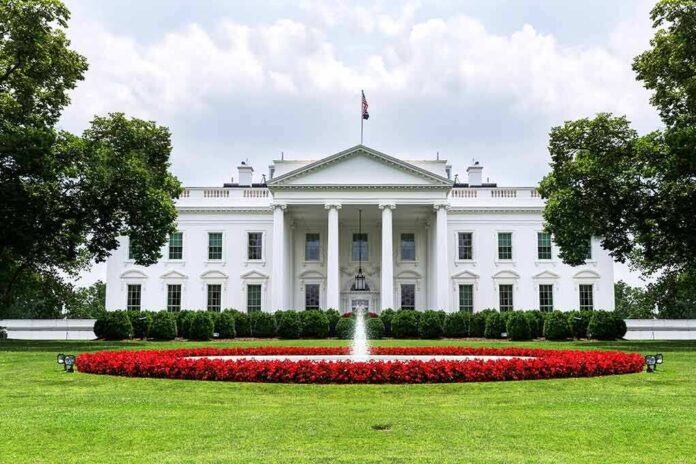
After President Trump announced an immediate White House ban on CNN, MS NOW, and Politico, MS NOW’s White House reporter said her badge was disabled at the gate and confiscated by security.
Story Snapshot
- Trump said the White House ban was effective right away and tied it to “fake news.”
- MS NOW said its reporter and a photographer were denied entry; a producer got in.
- The scope of the ban and written rules remain unclear, raising legal questions.
- Past court fights over press passes suggest due process standards apply.
What Happened And What Was Enforced
On September 18, President Trump said he was banning CNN, MS NOW, and Politico from the White House because of “fake news,” and said the move was effective immediately. Major outlets reported the statement and its broad framing as a White House-wide restriction. The next morning, MS NOW said a reporter and a photographer were denied access, and their badges were taken. The network said a producer did enter, showing uneven enforcement on the ground.
MS NOW White House correspondent Akayla Gardner said a security officer told her that her badge was disabled and that the decision was “above him.” She described being stopped after initial screening and asked to hand over her credential. Coverage from multiple outlets matched that account. Reports also noted that one MS NOW producer still entered the grounds with a working badge, which adds confusion over the policy’s scope and execution at the gates that morning.
What We Do Not Know Yet
Reporters asked whether the ban covered the entire White House campus, only certain rooms, or specific events. The public record did not include a written policy, credential notice, or standard for how agencies should enforce the order. Local reporting said the initial post from President Trump did not define the scope. Without a formal directive, it is hard to confirm if this was a full credential revocation or a selective denial tied to particular spaces or events that day.
The administration framed the action as a response to “dishonest” or negative coverage. The reporting so far did not identify a documented rule violation by the named outlets. That leaves a key gap between the stated rationale and any enforceable standard. Critics warned that viewpoint-based actions invite court review. Supporters argued the White House controls its physical space. The legal balance often turns on process, not rhetoric, when judges look at access fights.
Why The Stakes Are Bigger Than One Gate Check
Past court rulings during the Jim Acosta dispute said that once the White House opens press facilities to reporters, it creates a protected liberty interest. That means the government must give fair notice and a reasoned process before pulling access. A federal judge ordered Acosta’s hard pass restored, and the White House later set written rules. Those steps show how fast actions can shift if process is weak or unclear at the start.
Trump denies @CNN, @MSNBC, and @politico access to the White House.
The least sign of solidarity from other media outlets would be to refuse to cover Trump's White House shows.
Given my understanding of professional solidarity, that won't happen!— Olivier Biffaud (@bif_o) September 19, 2026
Americans across politics see a deeper problem here. Many believe elites in government protect their own power, while everyday people face rising costs and fewer chances to be heard. When a president moves to block entire outlets, critics on the left and right fear a tilt away from open government. When media miss the mark, critics also want accountability. Clear, public rules for access help both aims: firm standards and real transparency that do not shift with anger at coverage.
Sources:
aljazeera.com, reuters.com, nytimes.com, forbes.com, timesofindia.indiatimes.com