
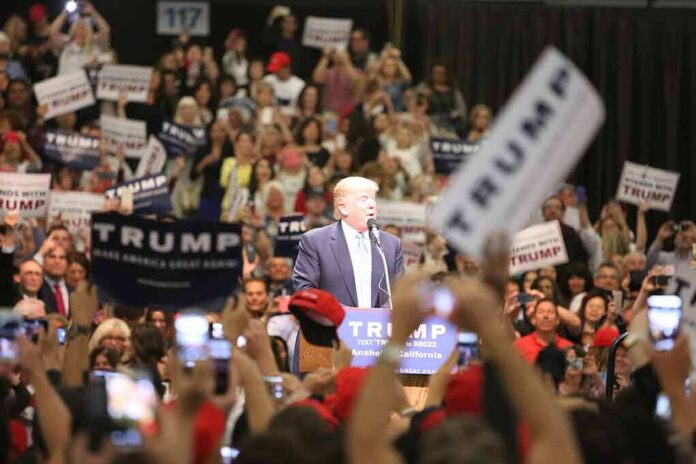
President Trump told Republicans to “pretend I’m on the ballot,” turning the midterms into a personal turnout test that both parties say could reshape control of Congress.
Story Highlights
- Trump urged voters to act as if he is on the ballot to boost turnout.
- Reporters say the strategy risks making the midterms a referendum on Trump.
- Republican ads rarely feature Trump despite his plea, signaling caution.
- The debate reflects a wider fight over what moves low-turnout voters.
Trump’s Message: Make the Midterms About Me
President Trump asked supporters to vote this fall as if his own name were on every ballot. He said the party does best when he is literally on the ticket and wants that same energy now. He framed the line as a simple fix for the midterm drop-off that often hurts the party in power. NBC News quoted him saying, “pretend, please, that I’m on the ballot. Just come and vote”.
The Hill reported Trump’s claim that Republicans win when he is on the ballot, but that some of his voters stay home when he is not. He told voters to treat the midterms like a national vote on his agenda and record. The goal is clear: pull loyal but low-propensity supporters into polling places. That matches a long pattern in politics where parties lean on a well-known figure to solve turnout gaps.
Risk Calculus Inside the Republican Party
Reuters reported that some Republican loyalists and strategists worry the approach is risky. They said making the election about Trump could turn swing races into a referendum on him instead of local issues and the economy. Earlier reporting found party professionals tried to feature Trump’s policies, but downplay his persona, to avoid backlash in close districts with many independent voters.
CNN’s ad analysis showed what that caution looks like on screen. From September 1 to September 15, Republican advertisers aired just a dozen television ads that even mentioned Trump, spending about one million dollars. That gap between the message on stage and the message on television suggests a split in tactics. Candidates want the base, but still fear pushback from moderates.
How Both Sides See the Stakes
Supporters see the pitch as a straight turnout play that cuts through noise. They argue midterms reward energy and discipline, and Trump can deliver both with a tight script and a clear ask to vote. They point to past cycles where his name drew new voters and changed the map. They also note that many Americans think the federal government protects insiders over citizens, and want a clearer voice to fight that pattern.
Critics inside the party see a different risk. They say tying every contest to Trump could drown out local economic plans on jobs, prices, and energy. They fear that voters angry about Washington gridlock, rising costs, and culture fights may punish anyone linked too closely to national drama. They worry that a brand-first push helps in safe places, but costs close races the party needs to keep control.
Why This Matters Beyond One Slogan
This clash shows a core truth about today’s politics. The same figure who fires up the base can also push away swing voters. Campaigns then split their message: loud rallies for energy, careful ads for persuasion. That tension is sharper when many voters think elites in both parties serve themselves first. Voters want results on wages, immigration, and safety, not just rallies and slogans.
The next weeks will show which bet pays off. If turnout surges in Republican areas, Trump’s line may help save close seats. If swing voters in suburbs and small cities recoil, Democrats could gain ground. Either way, the fight over this tactic reveals a deeper problem both right and left now admit: Washington often feels more focused on power games than on fixing daily life. Voters will judge which side heard them.
This week from The Winston Group:
–@dhwinston looks at whether pretending Trump is on the ballot will help Republicans in his latest column for @rollcall.https://t.co/fOQefUyfFy
–@myramiller and @dhwinston discuss the impact Trump may have on Republican candidates in the… pic.twitter.com/wYrZxvALsk
— The Winston Group (@TheWinstonGroup) September 18, 2026
Sources:
youtube.com, theguardian.com, cnn.com, thehill.com, ibtimes.co.uk