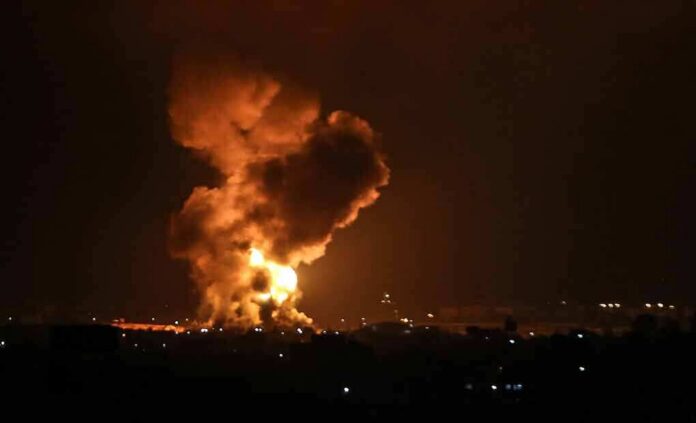
Flames and a tall plume of black smoke rose beside Riyadh’s main airport after overnight air-raid alerts warned residents of a hostile aerial threat.
Story Highlights
- Smoke and fire appeared near King Khalid International Airport after alerts and booms in Riyadh.
- Images showed smoke near fuel storage facilities and major flight disruptions were reported.
- The incident follows weeks of stepped-up Houthi threats and strikes on Saudi targets.
- Officials gave an all-clear but had not detailed the cause when first reports ran.
What Happened Near Riyadh’s Main Airport
Residents in Riyadh reported booms overnight. Saudi alerts warned of possible danger across the capital. By morning, a large column of black smoke rose near King Khalid International Airport. Video and photos captured the scene, with airport buildings and roadways in the foreground, and a dark plume rising behind what appeared to be fuel storage areas. News outlets said flights faced major delays and cancellations as crews responded to the fire and authorities assessed the risk.
Saudi civil defense later sent an all-clear, signaling the immediate danger had passed. Officials did not immediately give a cause. Early reporting stressed that smoke and flames were visible and that the timing followed the alerts and the loud booms heard overnight. Multiple international outlets relayed similar eyewitness accounts. Some reports described a blaze involving a fuel tank linked to Saudi Aramco, though formal confirmation of the exact site and trigger was not yet available when the first wave of stories ran.
Why Tensions With the Houthis Matter Right Now
The incident came amid a sharp rise in attacks claimed by Yemen’s Houthi movement, which has targeted airports, air bases, and energy facilities inside Saudi Arabia in recent weeks. In July, a Houthi spokesman threatened Saudi oil facilities if the conflict escalated, following strikes and counterstrikes that broke a fragile four-year lull. In mid-September, Reuters reported renewed Houthi attacks and delayed regional talks, adding to worries about wider spillover and pressure on global oil flows.
Recent clashes showed the range and reach of Houthi weapons. Reports described drones and missiles used against military and energy targets across several Saudi cities. Analysts warned that the group aims to stress Saudi defenses and raise the economic cost of conflict. Even short disruptions at airports or fuel depots can ripple through travel and energy markets, lifting risk premiums and feeding the sense that key infrastructure is exposed to low-cost, long-range strikes.
Impact on Travel, Energy, and Regional Stability
Airports depend on steady fuel supply and predictable operations. Fire near fuel storage can halt refueling, divert flights, and strand crews. That appeared to happen in Riyadh, where reports cited major disruptions and cancellations as responders moved in. If damage touched fuel assets tied to Saudi Aramco, even briefly, the symbolism would be strong. Energy hubs are national lifelines, and repeated strikes or scares can push insurers to raise rates and airlines to add buffers to flight plans.
Regional talks have already been strained. Gulf states postponed meetings with Iran as attacks involving the Houthis picked up again this month, adding uncertainty to diplomacy that aims to cap risks in vital shipping lanes and air routes. Each incident at or near high-profile sites, like a capital city airport, tightens that knot. Markets can absorb a single shock, but a pattern of hits and near-hits forces leaders to choose between costly defense upgrades and escalatory responses that invite more blowback.
What This Signals for Ordinary People and Policymakers
For travelers, days like this mean missed flights, longer routes, and higher fares. For workers in aviation and energy, it means tighter security drills and stress that does not show up on a balance sheet. For families, it reinforces a basic fear: critical systems seem fragile, and leaders often react after damage is done. That feeling spans politics in the United States and abroad, where many worry that distant conflicts can still raise prices and unsettle daily life.
Air attack hits jet fuel depot at #Riyadh airport, sparking firehttps://t.co/H2NdBTkFuP
— Euro Times يورو تايمز (@Eurotimesarabia) September 19, 2026
For policymakers, the message is blunt. Adversaries with cheap drones can threaten expensive targets far from front lines. Defenses must track, jam, or intercept those systems before they reach fuel tanks, power lines, or crowded terminals. Clear public communication also matters. People will fill gaps with rumor if officials do not share timely facts. Swift, plain updates about what burned, what was protected, and what is next can steady nerves and deter copycats who feed on chaos.
Sources:
thegatewaypundit.com, independent.co.uk, english.ahram.org.eg, ua.news, reuters.com, acleddata.com