
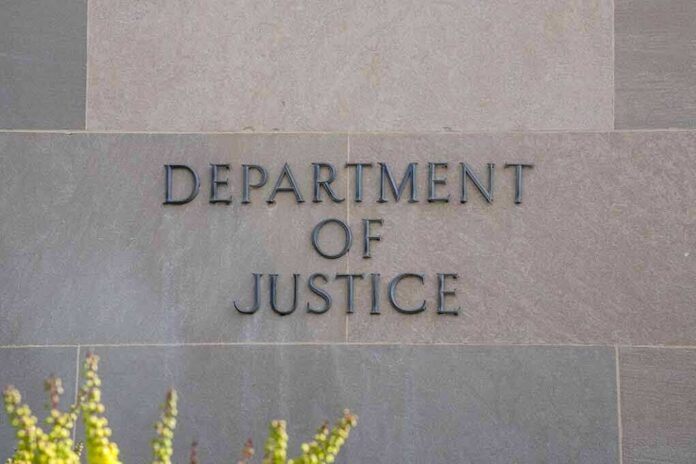
A federal judge approved a record nationwide deployment of Justice Department election monitors but barred guns, badges, and arrests to prevent intimidation.
Story Snapshot
- A judge allowed federal election monitors with strict limits: no weapons, arrests, or uniforms.
- Justice officials plan about 1,000 monitors across all 50 states, the largest effort to date.
- The Department says monitors only observe and report possible voting-rights issues after Election Day.
- NAACP leaders warn any law-enforcement tie can chill voting, especially for Black voters.
What The Court Authorized And Forbid
Judge Reggie Walton cleared the Justice Department to send election monitors, but only under tight rules. The order, as reported, said monitors could not carry firearms, make arrests, or wear uniforms or federal insignia. The court relied on the Department’s assurance that monitors would be clerical staff rather than sworn officers. These limits aim to cut the cues that can feel coercive at a polling place, while still allowing observation for federal voting-rights compliance.
The Department of Justice said the monitors’ job is narrow. Officials said they will watch for compliance with federal voting-rights laws and then report any concerns for review after Election Day. They also said monitors will follow state and local rules on polling-place access. That matters because some states limit who can enter polling places, which can push monitors to observe from outside rather than inside the room where ballots are cast.
How Big This Deployment Is And Why Scale Raises Eyebrows
The Department announced plans to send about 1,000 monitors to all 50 states, the largest operation on record. By comparison, the 2022 midterm effort used 289 personnel across 24 states. The scale alone makes the program far more visible to voters, poll workers, and local officials. That visibility can spark questions about who picks the locations, how the staff is trained, and whether the same rules work in very different local settings.
Officials did not publish the full list of monitored sites ahead of Election Day. The list was set to appear on Election Day instead. Supporters say that avoids confusion and last-minute conflicts at the local level. Critics say it reduces public oversight and prevents communities from checking why their precincts were chosen. That secrecy claim feeds a wider worry that government choices often happen out of public view.
Why Some Civil-Rights Groups Object
The National Association for the Advancement of Colored People said any tie to federal law enforcement near the polls can intimidate voters, especially Black voters. The group argued that heavy federal presence risks fear and confusion. It also said voters should feel free from any contact that seems official or investigative. The organization urged people to know they do not have to talk to monitors if approached, underscoring concerns about a chilling effect.
DOJ DEPLOYS 1,000 ELECTION MONITORS NATIONWIDE: THEIR AUTHORITY AND LEGAL LIMITS
On November 3, the Department of Justice announced plans to deploy approximately 1,000 election monitors and observers across all 50 states for the 2026 midterm elections.
DOJ calls it the largest…
— Receipts Matter (@ReceiptsMatter) November 3, 2026
Those concerns carry weight because many voters distrust federal institutions. Recent years brought bitter fights over election rules, policing, and federal power. Even if monitors are unarmed and in plain clothes, some people will still see the government watching and feel pressure. Others will welcome a neutral set of eyes to deter discrimination and protect access. This split shows how fragile trust is, and how process choices can shape public confidence in the count.
What To Watch For On Election Day
Local rules will shape what voters actually see. Some jurisdictions may keep federal personnel outside polling rooms, while others may allow quiet observation inside. Monitors are not allowed to stop voting, check identification, or direct poll workers, based on the Department’s description. They can take notes, flag possible problems, and forward issues for later review. If disputes arise at a site, expect them to center on where monitors can stand and how they identify themselves.
After polls close, the important questions will be practical. Did monitors follow the judge’s limits? Did their presence lead to complaints or ease them? Did the Department explain why each site was chosen? Clear reporting on these points could calm both right and left. Without that, the scale and secrecy concerns could overshadow the safeguards. In today’s climate, transparency and restraint are not just ideals. They are the only way to shore up trust in close elections.
Sources:
facebook.com, justice.gov, axios.com, newsobserver.com, rawstory.com, signalscv.com, chronline.com, pbs.org, yahoo.com