Pope Leo XIV just became the first pope in history to cast a ballot in a U.S. election.
Quick Take
- The Vatican confirmed Pope Leo XIV submitted a mail-in ballot for the 2026 midterm elections.
- He mailed the ballot to Chicago, where he remains a registered voter in Will County, Illinois.
- The Vatican says the pope sees voting as both a right and a duty of citizenship.
- The Vatican did not reveal how he voted or on which candidates or issues.
Vatican Confirms The Pope’s Mail-In Ballot
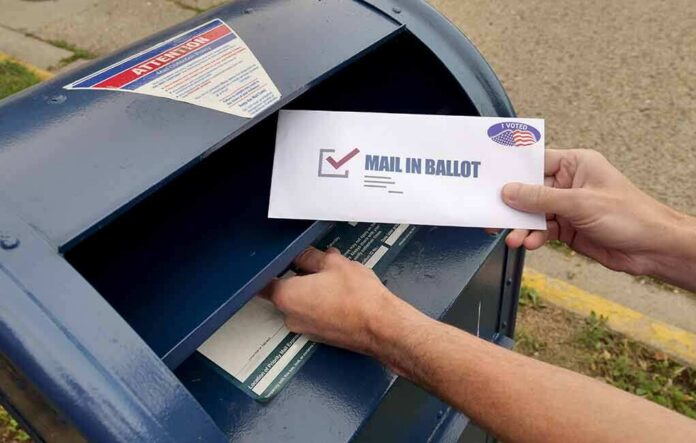
The Holy See Press Office announced Friday that Pope Leo XIV voted in the 2026 U.S. midterm elections. The statement said the pope “has exercised his right to vote as a United States citizen, whenever he was eligible to do so,” and confirmed he “submitted his mail-in ballot in Chicago.” This marks the first time a sitting pope has participated in a U.S. election of any kind.
Pope Leo, born Robert Prevost in Chicago, became the first American-born pope when he was elected in May. He requested his absentee ballot through the Will County clerk’s office in October, directing it to his home state ahead of the November vote. The Vatican framed the vote as routine for him, not a special event tied to his new role.
A Longstanding Habit, Not A New Statement
Vatican officials described the ballot as part of an “established practice of civic participation” rather than a one-time gesture. Records show Pope Leo voted many times in Will County before becoming pope, including in Republican primaries in past years. Illinois does not require voters to register by party, so a primary ballot does not reveal a voter’s full political leanings or how someone votes in a general election.
The Vatican gave no details on which candidates or measures the pope supported. Officials have not said whether he plans to keep voting in future U.S. elections now that he leads the Catholic Church from Rome. That silence on the substance of his vote leaves the headline fact — that he voted at all — as the only confirmed detail.
Why This Small Act Draws Big Attention
A single mail-in ballot from a global religious leader has triggered outsized coverage and speculation, with outlets and social media users quickly asking whether the vote hints at the pope’s political leanings. That reaction reflects a broader pattern where even narrow, low-information events get stretched into proxies for someone’s full ideology, often without enough facts to support the leap.
Research on media and polarization suggests this kind of coverage can shape public perception on its own. Studies show that heavy coverage of political conflict and division tends to make audiences believe the country is more polarized than it actually is, regardless of how small the underlying event really was. A papal ballot fits that pattern closely.
@pontifex Pope Leo XIV has cast a mail-in ballot in the U.S. midterms, the first pope to vote in a U.S. election.
— American Princess 💋🇺🇸 (@toninobologny) October 30, 2026
For many Americans worn down by partisan noise, the pope’s vote is a reminder that citizens across backgrounds and beliefs still value a basic democratic act. Whether people see it as reassuring or as fuel for more speculation may say more about today’s media climate than about the pope’s own political views, which remain unknown to the public.
Sources:
cbsnews.com, latimes.com, vaticannews.va, washingtonpost.com, tandfonline.com