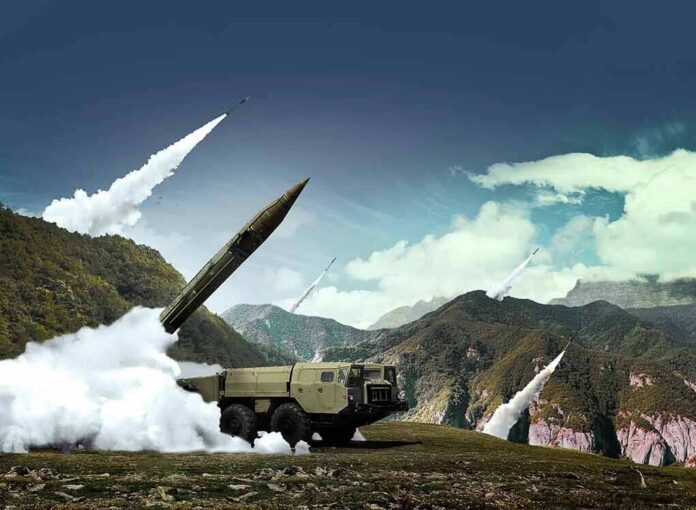
Lockheed Martin says it redirected a rocket in flight to hit a moving target during a U.S. Army test at White Sands Missile Range.
Story Snapshot
- Company reports a Guided Multiple Launch Rocket System hit a moving target after a mid-course update.
- Test used a High Mobility Artillery Rocket System launcher at White Sands Missile Range.
- Demonstration shows technical feasibility but not full combat readiness or reliability.
- Success aligns with Army efforts to extend range and precision for rockets and launchers.
What Lockheed Martin And The Army Tested
Lockheed Martin reported a successful test of a Guided Multiple Launch Rocket System rocket that struck a moving target after its flight path was updated in the air. The test took place at White Sands Missile Range in New Mexico with U.S. Army participation. The rocket launched from a High Mobility Artillery Rocket System truck. The company described the result as a first for this rocket type in an Army event. The core claim is the mid-course update and moving target hit.
Company and financial news outlets echoed the description. They said the rocket received a new trajectory and then destroyed a moving target. These reports also placed the event at White Sands and tied it to Army testing. The framing emphasized the ability to redirect the rocket after launch, rather than only precise aim at a fixed point. This reflects a push to hit time‑sensitive or relocating threats on land or at sea.
Why The Test Matters For U.S. Forces
U.S. forces rely on rockets and missiles to strike quickly from long range. The Army has been testing Extended‑Range Guided Multiple Launch Rocket System upgrades at White Sands to reach beyond 100 kilometers and still hit area targets. Those tests aimed to prove range and warhead options. The moving‑target success, if repeatable, would add a new layer: adjusting in flight to track changing aim points. That could help against vehicles that try to move during an attack.
Faster kill chains matter in today’s wars. Adversaries use drones, mobile launchers, and decoys. They move often to avoid return fire. A rocket that can accept updates while flying can react to last‑second moves. That reduces wasted shots and saves time for crews under fire. It also expands the jobs a High Mobility Artillery Rocket System truck can handle without calling in costlier, longer‑range missiles reserved for special targets.
What The Test Does Not Prove Yet
Defense testing follows clear steps. Developmental tests show a design can work. Operational tests show troops can use it in combat‑like conditions. Government Accountability Office reports say developmental success does not guarantee combat suitability. Key data like trial count, weather, target speed, and miss distance were not in the public summaries. That means the result shows feasibility, not fielding status, reliability, or tactics for regular units yet.
The Army’s separate work on Extended‑Range Guided Multiple Launch Rocket System shows how programs move from lab to field. Army releases described flights beyond 100 kilometers and work to qualify warheads at White Sands. Those steps aim to meet training, logistics, and safety needs for real units. The moving‑target test appears aligned with that pathway, but it is one event. More trials and formal evaluations would be needed before troops get this exact feature at scale.
The Bigger Picture: Capability, Cost, And Control
Precision rockets promise faster wins and fewer civilian harms. They also raise hard questions most voters share. Who sets the requirements? Who checks the claims? Government Accountability Office reviews stress that independent test oversight protects troops and taxpayers by separating lab wins from field reality. Clear data on performance and limits helps Congress manage budgets and keep programs honest, especially when big contractors lead the work.
📌Lockheed Martin (@LockheedMartin) announced a successful test in which a HIMARS-launched GMLRS rocket was redirected in flight.
📌The company said the rocket received updated targeting data and struck a moving target.https://t.co/0Rg6JCYjC9
— Defensehere (@defensehere_en) October 28, 2026
For many Americans, this is about trust and results. People want strong defense at a fair price, not buzzwords. If the Army can show this update works with soldiers, in bad weather, and over many shots, it could change the fight. If not, leaders must adjust fast. The test is a welcome sign of progress. The next step is transparent reporting, tough trials, and proof that this tool helps the warfighter on day one.
Sources:
insidedefense.com, army.mil, vermoegenszentrum.ch