

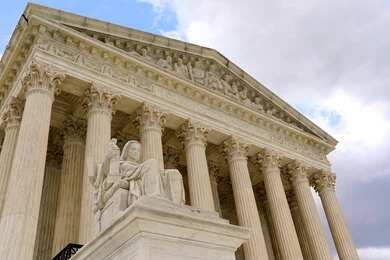
When a Supreme Court justice says she was sent home in a bulletproof vest and her family is getting bomb threats and fake shooting calls, it signals a justice system under real-world siege, not just political debate.
Story Snapshot
- Justice Amy Coney Barrett’s Virginia home was hit by a confirmed “swatting” call reporting fake gunshots.
- Barrett told Congress she once left the court wearing a bulletproof vest and has received disturbing deliveries.
- Her sister in South Carolina faced a bomb threat with a political message, and pizzas were sent as intimidation.
- Threats against judges have risen sharply over the past decade, and the Court now seeks $920 million for security.
A fake shooting call at a Supreme Court justice’s home
On May 27, 2026, police in Fairfax County, Virginia, received a call to their non-emergency line claiming gunshots at Justice Amy Coney Barrett’s home. Officers quickly coordinated with the Supreme Court Police already guarding the residence and confirmed the report was false within minutes. No extra police units were sent, and no one was hurt, but authorities treated the incident as a suspected “swatting” attempt, a hoax meant to trigger a heavy armed response at a target’s address.
Dispatch audio reviewed by reporters shows the call raised red flags right away. The dispatcher noted they could not reach the original caller and said “it’s uncertain if this will be a swatting situation or not,” while stressing the home’s high security status. Because Supreme Court Police were already on site, they were able to confirm quickly that there was no shooting, which prevented officers with rifles from storming a home where Barrett’s children live. Even with the fast resolution, police are still investigating who made the false report.
A pattern of threats reaching Barrett’s extended family
The swatting call was not the first time people close to Barrett were dragged into danger for political reasons. In March 2025, her sister, lawyer Amanda Coney Williams, received a bomb threat at her home in Charleston, South Carolina. Police said an email claimed that a bomb had been placed in her mailbox and would explode when opened, ending with the phrase “Free Palestine!” Officers searched the home and found no device, but they opened an investigation and publicly said the threat was politically motivated.
That same weekend, Williams’ family told police that pizzas were sent to “households related” to Barrett, even though no one there had ordered them. Authorities said these surprise deliveries were seen as a message that hostile actors knew where her relatives lived. Reuters later reported similar pizza incidents aimed at other federal judges, suggesting this is becoming a low-level intimidation tactic. In public remarks, Barrett has described how these types of threats and protests have turned security into a constant factor in her family’s daily life.
Bulletproof vests, death threats, and a rising tide of judicial harassment
Barrett’s recent testimony to Congress pulled back the curtain on how far things have gone. She recounted being sent home from the Supreme Court with a bulletproof vest during the tense period around the leaked draft decision that overturned Roe v. Wade. She said protesters at her home have become routine and that she has endured death threats, lewd packages, and “ugly” confrontations in public. She stressed that she can “take it,” but made clear that her seven children now carry the burden of being known as the justice’s kids wherever they go.
Her experience fits into a broader trend that does not stop at conservative justices. Data from the United States Marshals Service obtained by CBS News shows threats against federal judges have climbed every year since 2019, rising from under 200 incidents to 564 in the last fiscal year. A CBS investigation found at least 126 people were federally charged in 2025 for threatening government figures across all branches, more than triple the number a decade ago. Legal experts say cheap technology, online doxxing, and deep political anger are making it easier to target officials at home.
Swatting and doxxing as tools of political pressure
National reports describe swatting as a form of harassment where a person lies to emergency services to send armed officers to another person’s home or workplace. The Anti-Defamation League calls it “deliberate and malicious,” meant to scare or punish the victim. Since 2024, incidents of swatting and doxxing—posting someone’s private address or contact details online—have “increased significantly,” according to a journal from state attorneys general. False emergency calls have hit judges, lawmakers, and local officials from both parties.
Federal prosecutors recently charged two foreign nationals with running a years-long swatting and bomb threat scheme that hit senior government officials and private citizens. Separate reports detail swatting attacks on members of Congress, state governors, and judges overseeing politically charged cases, including those involving former President Trump. In Colorado, several state supreme court justices were targeted with swatting incidents after a major ruling about Trump’s eligibility, in one case leading nine officers with weapons drawn into a justice’s home. Barrett’s case sits squarely inside this pattern.
Congress, security money, and public distrust of the “deep state”
Against this backdrop, Barrett and fellow Justice Elena Kagan appeared before lawmakers to ask for about $920 million in security funding for the courts, including officers, home protection, and efforts to scrub judges’ personal details from the internet. Kagan cited a 25 percent jump in threats last year and a projected 38 percent rise in 2026. Some critics worry that building a larger, more insulated Supreme Court Police force could reduce outside oversight, especially if the Court prefers its own security over United States Marshals.
For many Americans, these stories land in a climate where trust in the federal government is already low. People on the right see conservative judges and officials under siege for opposing “woke” agendas, while people on the left see growing violence and harassment tied to hardline “America First” politics. At the same time, threats are rising against judges of all ideologies. The picture that emerges is not a clean partisan narrative, but a system where powerful institutions struggle to protect frontline officials, even as they seek more money and authority in a way that fuels fear of an unaccountable “deep state.”
Sources:
facebook.com, fox5dc.com, fairfaxgop.org, civicintelligence.news, news.bloomberglaw.com, foxnews.com, youtube.com, wsj.com, bronx.com, thefederalist.com, ladd.law.wisc.edu, en.wikipedia.org, businessinsider.com