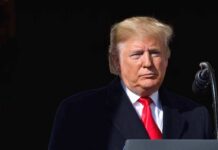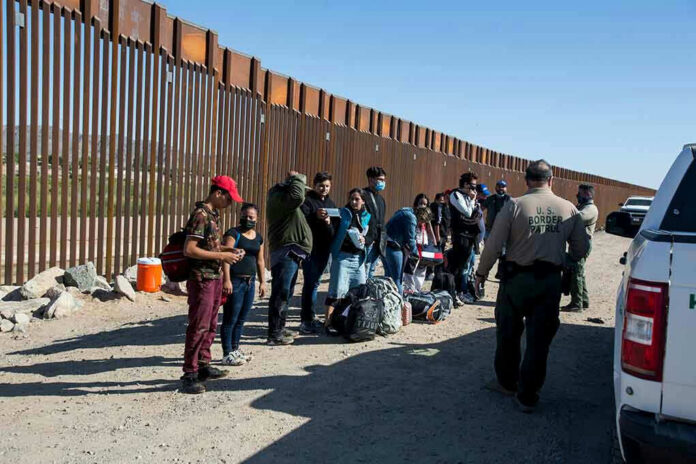
President Trump is warning that if Republicans lose power, the United States will face a migrant “invasion” even worse than the crisis he says is now hitting Spain.
Story Snapshot
- President Trump used Spain’s migrant surge as a warning of what he says could soon hit the U.S. if Republicans are ousted.
- He claimed the U.S. would be “invaded at levels that made Spain look small time,” tying the risk to “very liberal law” and weak border policies.
- Trump’s “invasion” language is now central to his governing strategy, including executive orders and legal theories to expand deportations.
- Courts and fact-checkers say current migration does not meet the constitutional definition of “invasion,” even as many Americans feel the system is failing.
Trump links Spain’s migrant crisis to a warning for the U.S.
President Trump’s latest warning came as he talked about video of large numbers of migrants entering Spain’s North African enclave of Ceuta from Morocco. He told his Cabinet at Camp David that what he saw “looked like an invasion of a country by hundreds of thousands of people.” Trump said that if Republicans are not “in office, our country will be invaded at levels that made Spain look small time,” calling Spain’s situation a “catastrophe” caused by weak and liberal migration laws. For many Americans watching their own border worries grow, his words tap into a sense that leaders have lost control.
Trump’s Spain comments fit years of framing migration as a kind of attack on national sovereignty. In past speeches, he has called Central American migrant caravans “an invasion of our country” and described border crossers as people who “violently overran the Mexican border.” He often links this language to crime and social breakdown, warning that migrant flows “crushed wages” and “brought crime, drugs, and death.” Supporters say he is finally treating border security like the national emergency it is. Critics say he is stoking fear and anger instead of fixing a broken system.
From campaign slogan to governing doctrine: ‘invasion’ in law and policy
Trump’s warning is not just rhetoric; it now shapes how his administration uses power. On his first day of this term, he signed Proclamation 10888, formally declaring that the situation at the southern border “qualifies as an invasion” under the Constitution and using that to justify tougher entry bans and faster removals. A detailed investigation by ProPublica describes how Trump allies spent years building a fringe legal theory that undocumented migration counts as “invasion,” which they now use to argue for suspending normal court rights and expanding mass deportation tools. This shift worries many civil-liberties advocates, but it also reflects how deeply the border debate has hardened.
Legal experts and federal judges have pushed back on this “invasion” theory. On several occasions when the administration tried to defend extreme enforcement steps by claiming the United States is under invasion, courts have said the facts do not match the constitutional meaning of that word. Four federal judges, including one appointed by Trump, have ruled that current migration levels and patterns are serious but not the kind of armed attack the framers of the Constitution had in mind. That gap between how politicians talk and how the law reads fuels public confusion and feeds the belief that elites play word games while local communities absorb the real strain.
Fact-checks, fear, and a public that feels unprotected
Independent fact-checkers say Trump regularly exaggerates migrant numbers and crime to support his invasion message. The Associated Press found he overstated the number of people in the country illegally by more than double in one speech, claiming “25 million to 30 million” when research shows closer to 11 million. Education-focused reporting from PBS says his claim of the “greatest invasion in history” at the southern border was incorrect and overstated his past record on trafficking and immigration enforcement. These checks do not erase real border challenges, but they show how charged language can pull far ahead of the data.
At the same time, many Americans across party lines feel their leaders have failed to build a fair, working immigration system. Conservatives see images from Spain or Texas and think globalist elites have opened the gates to endless, unvetted migration while communities struggle with housing, schools, and wages. Liberals see talk of “invaders” tied to calls for mass deportation and fear civil rights and basic dignity are at risk. ProPublica notes that by 2022, “invasion” rhetoric had become so common in Republican ads that most of the public agreed an invasion was underway at the southern border. That shared sense of crisis, even when facts are disputed, reflects deeper distrust of Washington itself.
Spain, America, and a system under strain
Spain’s current pressure, focused on its Ceuta enclave, is real and serious, with tens of thousands of people trying to enter in short windows of time. Trump points to that surge to argue that “very liberal law” and “bad management” invite chaos, then warns U.S. voters that a similar wave will slam into American communities if Democrats regain power. His message plays directly to long-running fears about global migration, economic insecurity, and a political class seen as more worried about rules and rhetoric than about everyday citizens. Whether one agrees with his “invasion” label or not, his Spain comparison resonates because many people already feel overrun by problems their government will not solve.
………. President Trump explicitly discussed what he called the "Spain invasion" during his Cabinet meeting at Camp David today (July 31, 2026).
He used a sudden, massive migration crisis unfolding in Europe to warn Americans about the future of U.S. border security.
The…
— JV (@joveg8) July 31, 2026
The core struggle is bigger than one speech or one country. Trump’s warning highlights an uncomfortable truth: the United States has not reached broad agreement on what secure borders should look like, what level of migration is sustainable, or how to enforce laws without betraying American values of fairness and human dignity. As leaders on both sides trade extreme phrases—“invasion” on the right, “racist crackdown” on the left—millions of citizens watch costs rise, services strain, and trust in institutions fall. For those Americans, Spain is not just a distant crisis; it is a mirror of what they fear Washington could allow here at home.
Sources:
facebook.com, nytimes.com, pbs.org, bbc.com, immpolicytracking.org, wsws.org, theatlantic.com, euronews.com, youtube.com, motherjones.com, business-standard.com