

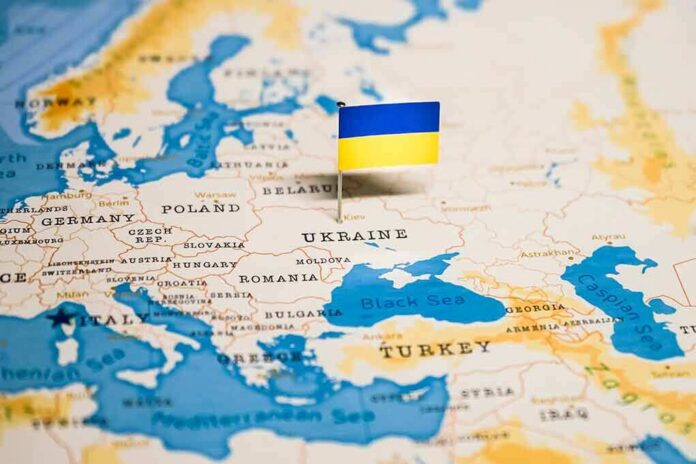
Russian missiles and drones killed at least 21 people in Kyiv in an 11-hour attack, the latest strike in a war that keeps hitting Ukrainian civilians, including passengers waiting at train stations.
Story Snapshot
- An 11-hour Russian drone and missile attack on Kyiv killed at least 21 civilians, and a separate strike this year killed around 30 people and damaged 130 buildings.
- Russian strikes have repeatedly hit train stations, including one in Kramatorsk that killed dozens of civilians trying to flee the war.
- President Volodymyr Zelenskyy and Human Rights Watch have called some of these strikes deliberate attacks on civilians and war crimes.
- Russia denies targeting civilians and says some Kyiv strikes were payback for Ukrainian attacks on Russian oil sites.
- Ukraine’s suffering under Moscow’s rule goes back decades, including the 1930s famine that killed millions of Ukrainians.
Deadly Strikes Hit Ukraine’s Capital
Russia launched an 11-hour drone and missile attack on Kyiv that killed at least 21 civilians, the Associated Press reported. Reuters later reported an even deadlier strike on the capital this year, with around 30 people killed and about 130 buildings damaged. Fires broke out at a central district hotel, and people sheltered in subway stations as explosions rocked the city.
These attacks are not isolated events. Ukrainian officials and international news outlets have documented a steady stream of strikes on Kyiv and other cities since Russia’s full-scale invasion began in 2022. Each new attack adds to a growing list of civilian deaths that Ukrainian leaders say Moscow keeps choosing to inflict, even as peace talks and diplomatic pressure continue elsewhere.
Passenger Trains Become Repeated Targets
Russian strikes have hit passenger trains and train stations multiple times during the war. A rocket attack on the Chaplyne railway station killed 22 people on Ukraine’s Independence Day, according to the Associated Press. An earlier strike on the Kramatorsk train station killed at least 50 civilians who were trying to flee fighting in eastern Ukraine, CBC and the Associated Press reported.
More recent attacks show the pattern has continued. The Moscow Times reported a strike that killed eight people and hit a passenger train in March 2026. Other outlets, including DW and CBS, have documented separate train strikes in 2025 and 2026 with death tolls ranging from five to dozens of people.
Officials Call the Strikes War Crimes
President Zelenskyy called the Kramatorsk strike a deliberate attack on civilians and later described another train strike as an act of terrorism. Regional and national Ukrainian officials have repeated that characterization after nearly every major civilian strike since the war began, according to contemporaneous statements collected by multiple news organizations.
Human Rights Watch went further, saying the missile that hit the Kramatorsk station strongly appeared to have launched from Russian-controlled territory. The group called the attack an apparent war crime, adding weight to Ukraine’s claims that these are not accidental hits on infrastructure but attacks aimed at people.
Moscow’s Response and Its Limits
Russia has pushed back against some of these accusations. Its Defense Ministry denied responsibility for the Kramatorsk station strike, directly disputing Ukraine’s claim. For the Kyiv attack that killed at least 21 people, Moscow offered a different explanation, telling the Associated Press the strike was retaliation for Ukrainian attacks on Russian oil facilities rather than an admission of targeting civilians.
That retaliation claim does not address the civilian death toll or the damaged apartment buildings directly. Russia has not released detailed forensic findings to counter Human Rights Watch’s conclusions about the Kramatorsk strike. Without that evidence, the denial stands as a categorical rejection rather than a point-by-point rebuttal of what happened on the ground.
A Pattern That Predates This War
Ukraine’s history with Moscow includes suffering that goes back nearly a century. The Holodomor, a man-made famine engineered by Joseph Stalin’s Soviet government in 1932 and 1933, killed millions of Ukrainians through forced starvation. Historians and museums in Ukraine describe it as an act of genocide against the Ukrainian nation, separate from the current war but part of a longer, painful history between the two countries.
The current strikes on Kyiv and Ukrainian rail lines do not by themselves prove a single, unbroken policy stretching from Stalin’s era to today. But for many Ukrainians living through nightly air raid sirens, the connection between past and present suffering under Moscow’s actions feels less like a historical argument and more like a lived reality that keeps repeating itself, year after year.
Sources:
thegatewaypundit.com, youtube.com, arabnews.com, apnews.com, yahoo.com, bbc.com