

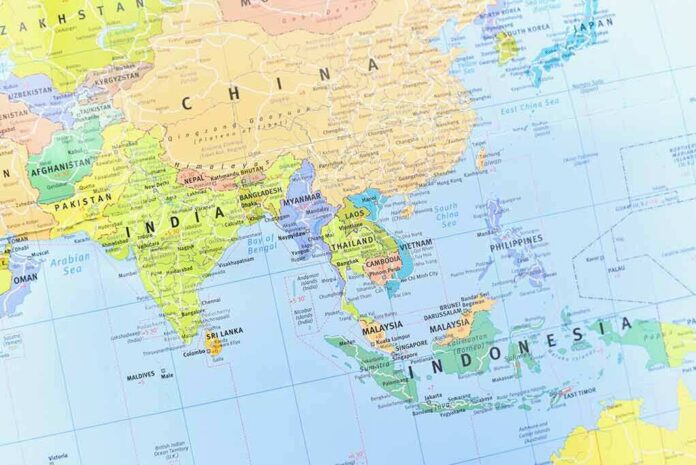
China just proved it can drill nearly three miles down in the South China Sea, tightening its grip on future critical minerals and maritime power.
Story Snapshot
- China’s Mengxiang drilling ship hit about 4,929 meters water depth and brought up basalt.
- State-backed teams earlier lifted seabed nodules in a South China Sea test.
- Studies show cobalt, nickel, and rare earths sit in regional seabed deposits.
- Commercial mining is not yet proven viable, but strategic leverage is growing.
China’s Breakthrough: Deep Drilling Trial and What It Shows
China’s Ministry of Natural Resources said the domestically built Mengxiang finished a 30-day scientific drilling trial in the South China Sea in 2026. The crew reached about 4,929 meters of water depth and recovered basalt samples, confirming stable operations in extreme conditions. The mission followed the vessel’s 2024 commissioning. The State-owned Assets Supervision and Administration Commission describes Mengxiang as supporting deep-sea resource exploration, equipment research, and ocean drilling, with a maximum drilling capability listed at up to 11,000 meters.
Chinese agencies and state-owned partners also tested an integrated mining system in 2021. That effort reportedly recovered 1.2 tonnes of polymetallic nodules from a depth near 1.3 kilometers in the South China Sea. While small, that haul showed working hardware, lift systems, and deck handling at real depths. Together, the drilling trial and the earlier nodule recovery indicate growing skill across core steps: locating targets, operating in deep water, and bringing material to the surface for study and testing.
Minerals in Play: Why the Seabed Matters for Industry and Security
Scientific studies and reporting point to cobalt, nickel, rare-earth elements, and yttrium in South China Sea ferromanganese crusts and polymetallic nodules. These materials are central to magnets, batteries, motors, and electronics. The Diplomat notes that China’s rare-earth edge today comes mostly from refining, separation, and magnet making, plus export controls rolled out in 2025. Seabed finds add a long-term option. They also give Beijing data, practice, and presence in a waterway where access and information are forms of power.
China has built the legal and institutional base for deep-sea work. It passed a national law on deep-seabed resource activity in 2016 and sponsors exploration contracts at the International Seabed Authority for nodules, sulphides, and cobalt-rich crusts. China also fields a sizable research fleet. Outlets have tracked several Chinese vessels active across the South China Sea and other key regions in recent years. This mix of ships, rules, and research supports both science and state strategy, which often blend at sea.
Strategic Presence: Dual-Use Research and Growing Leverage
Reports show Chinese research vessels working in strategic waters, sometimes with tracking signals off, and on routes near important sea lanes. The same tools that study geology also map the seabed, currents, and hazards. That knowledge helps any state operate longer and safer in blue water. The CNN analysis highlights how deep-sea activity can expand national reach while building know-how linked to mining and maritime operations. The result is leverage before any mine opens.
Global rules also set the outer lanes. The International Seabed Authority says there is no commercial exploitation yet in areas beyond national waters because exploitation rules are not finished. Exploration contracts cover sampling and studies, not mining production. That global baseline means most deep-sea work today, including China’s, remains exploratory. That status does not reduce its strategic value. It only marks where the legal line stands while countries race to be ready.
Limits, Stakes, and Why This Matters to Americans
Analysts are clear on one limit. Finding minerals does not prove a working mine. The Diplomat reports that no public data yet show the South China Sea is commercially viable for rare-earth production at scale. Costs, grades, and environmental impacts remain unsettled. Still, the Mengxiang trial and the 2021 recovery test reduce technical risk. They also signal intent. Nations that cut risk early gain options later, in markets and in geopolitics.
The rise of seabed mining will add new complexity to the South China Sea disputes. https://t.co/TJOsZkw4Xo pic.twitter.com/HdvlqnyhAk
— The Diplomat (@Diplomat_APAC) October 17, 2026
For Americans, the stakes are close to home. Critical minerals feed defense supply chains, electric motors, and medical gear. When one country controls more steps, it can set terms. That pattern has hurt U.S. factories and families before. People on the right see supply chains leaving our shores. People on the left see power tilt to elites and away from workers. Both see a federal government that reacts late. China’s steady push at sea is another warning to plan, invest, and act now.
Sources:
globaltimes.cn, ground.news, us.headtopics.com, english.news.cn, eco-business.com, rfa.org