
President Trump, Russia’s Vladimir Putin, and China’s Xi Jinping met in Shenzhen, spotlighting war-and-peace stakes with no clear deal announced.
Story Highlights
- Trump met Putin one-on-one and then joined a trilateral session with Xi in China.
- Leaders discussed Ukraine, nuclear risks, Iran, and global stability, according to outlets on the ground.
- Trump called his relationship with Putin “great,” while reports noted no concrete agreements.
- The gathering was described as unprecedented among the top nuclear powers.
Leaders Convene at APEC Amid Global Conflicts
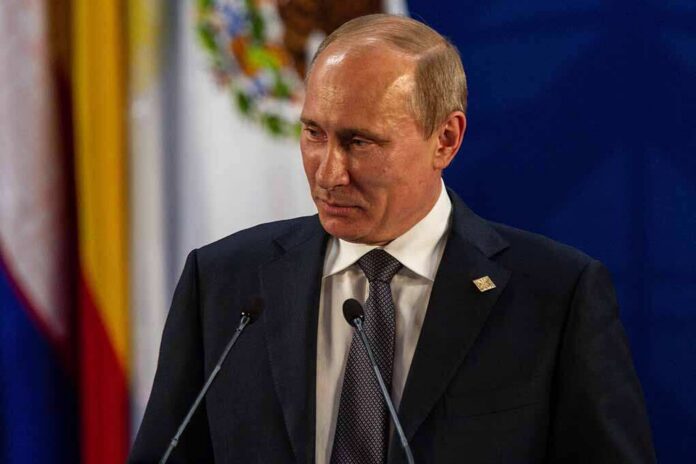
President Trump met Russian President Vladimir Putin in Shenzhen and later joined Chinese President Xi Jinping for a three-leader session during the Asia-Pacific meetings. Outlets on site said Trump held bilateral talks with Putin and a separate trilateral meeting that included Xi. Reporters described the gathering as a first-of-its-kind encounter among the leaders of the United States, Russia, and China at a moment when the war in Ukraine and nuclear risks weighed on the agenda.
Coverage signaled weighty topics on the table. Reports cited expected discussions on Ukraine, nuclear arms, Iran’s role in the region, and broader strategic stability. Trump publicly praised his rapport with Putin after their meeting, calling it a “great relationship,” while media tracking the events did not report a signed agreement or measurable outcome following the talks. That absence of a deal does not erase the meeting’s stakes; it sets a bar for what comes next.
What Was Said, What Was Not Agreed
CNBC reported that Trump emphasized a positive tone with Putin as the Ukraine war took center stage. The Financial Times described the trilateral as historic but did not point to any concrete deliverables, and outlets framed the summit’s value as symbolic contact at the top level rather than policy change on the spot. The Associated Press earlier called the planned session unprecedented among the world’s largest nuclear powers, underscoring why even a photo-op can matter when missiles and armies are in play.
ABC News and NBC News both noted that the schedule included bilateral and trilateral formats, which indicates more than a hallway chat. That structure can create room to test ideas, signal red lines, and probe for off-ramps in conflict. But without a joint statement that sets timelines or verification steps, the meetings remain diplomatic groundwork. One sentence sums it up: leaders talked, tensions remain, and follow-through will decide the value.
Why This Matters Beyond the Optics
Past United States–Russia talks show how meetings can swing between symbolism and substance. Major accords like the Intermediate-Range Nuclear Forces Treaty and later Strategic Arms Reduction deals shaped real weapons cuts, but other summits only promised future talks without solving core disputes. Today’s Shenzhen meetings fit the early stage of that spectrum. The pattern is familiar: leaders test messages, outline issues, and see if a pathway to a written deal exists.
**Three nuclear powers just issued a four-point “peace declaration” that names no wars, sets no deadlines, and protects the signatories from their own courts.**[[1]](https://t.co/3aWi1kMNir)
[Take 1/15 · G-1]
### 1. The Frame
**What people think this is about:** A historic…— GrumpyNews, emotionally clean news. (@GrumpyNews_) November 19, 2026
For Americans across party lines, the stakes are close to home. Energy prices, defense costs, and the risk of a wider European war all hinge on choices made by these leaders. Conservatives worry about globalism and endless conflicts. Liberals fear widening gaps at home if wars drain resources. Many agree the “system” often serves the few, not the many. A high-profile summit that yields talk but not action feeds that concern. The proof, if any, will be measured by steps taken after Shenzhen.
Sources:
youtube.com, cnbc.com, euronews.com, nbcnews.com, chinaglobalsouth.com, 1997-2001.state.gov