A rare six-day ceasefire let Kherson residents step back into streets once too dangerous, even to check their own homes.
Story Highlights
- Residents used the pause to inspect damage and collect belongings in areas usually empty from shelling.
- A 64-year-old woman entered her apartment for the first time since last year, showing the ceasefire’s impact on daily life.
- The truce began at 3 a.m. Tuesday to support aid and evacuations around nearby Oleshky, but it also eased fear in Kherson.
- Streets grew busier as people ran errands and reached parts of the city they rarely visited under attacks.
Ceasefire Opens A Narrow Window For Civilians
Associated Press reporting said a planned six-day pause began at 3 a.m. Tuesday. The arrangement aimed to move medicine, food, and water into Russian-occupied Oleshky and to start evacuations later in the week. The quiet stretched across the river into Ukrainian-held Kherson. That calm let people leave shelters, enter damaged blocks, and check on homes that had sat exposed to strikes for months.
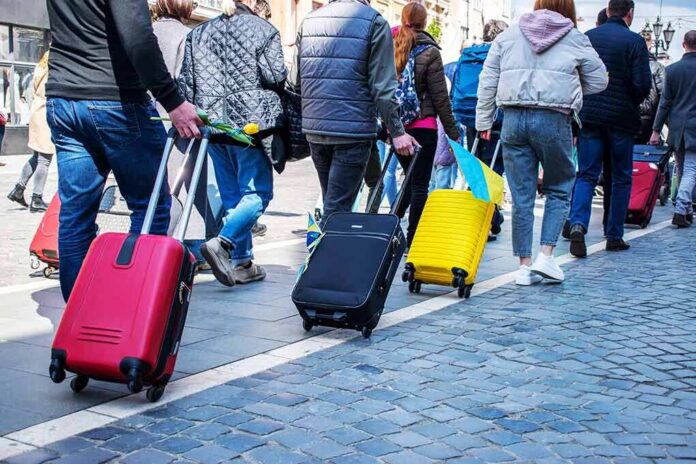
Reporters described a city that felt different for a moment. Kherson streets were busier than in recent weeks, with people using the lull to visit shops and cross usually risky routes. Some reached parts of the city they almost never visited during constant attacks. Others used the time to assess broken windows, cracked walls, and ruined stairwells near the front. The visible movement marked how a short pause can change civilian choices fast.
Residents Return Briefly To Damaged Homes
One report said areas that were normally empty, because they were too dangerous, filled with people checking property and collecting belongings. That activity matched local accounts of quick trips to grab documents, heirlooms, or warm clothes before fire might resume. These short visits did not signal a permanent return. They showed that a pause, even a fragile one, can reopen daily life for a few hours or days at a time.
Video shared by outlets identified a 64-year-old Kherson resident, Liudmyla Orhovska. She entered her apartment for the first time since last year. Her visit captured both hope and risk. She could see damage for herself and take what she needed. She also moved through a place many still call a “kill zone,” a reminder that safety remained uncertain if the ceasefire ended or drones returned.
Focus On Oleshky, But Effects Felt In Kherson
The truce focused on Oleshky, a city still under Russian control on the east bank of the Dnipro River. Aid deliveries were planned first. Evacuation corridors were set to open later in the week. Yet the same pause reduced pressure on Kherson across the river, which Ukraine holds. That spillover effect let people walk, line up for goods, and test routes that had felt off-limits for months.
Local coverage said some Kherson residents also returned home to inspect damage and recover personal items. These brief returns reflected a hard pattern seen in wars worldwide. Short lulls can allow checks on property, quick repairs, or retrieval of documents, without meaning an area is safe for long. People seize the chance because the next window might not come soon.
Why This Moment Matters For Everyday People
Ceasefires can help vulnerable people move, gather supplies, or evacuate. They can also let fighters shift positions. That dual nature is why families act fast when guns fall quiet. The Kherson lull showed how a few days can change real lives. People saw homes again, grabbed essentials, and shared news with neighbors. It did not end the danger. It did show how even a short pause can bring dignity and control back, if only for a moment.
Ukrainians stood by the road welcoming fellow citizens evacuated from Oleshky today.
Oleshky is a Ukrainian town in Kherson occupied by Russia and isolated by Russia with mines on the road. There has been a shortage of food and the Russians did not provide any.
Today the…
— Cat Dylan (@CatDylanNews) October 31, 2026
The larger story reaches far beyond one city block. When war grinds on, normal tasks become high risk. A truce that holds for a day can mean medicine gets in, or a grandmother finds her passport. The reports from Kherson and Oleshky underline a simple truth. Good policy must measure success by what people can safely do, not just by lines on a map or claims from officials.