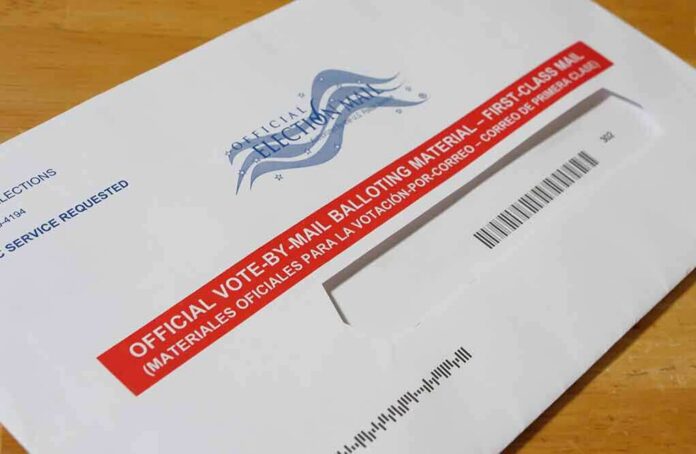
Mysterious mailers in South Carolina’s 1st District are shaping a key race while keeping voters in the dark about who paid for them.
Story Snapshot
- Outside groups are spending in SC-01 while disputed mailers flood voters’ mailboxes.
- Townhall named “Stand Your Ground” but did not show a mailer or disclosure tying it to the pieces.
- Jenny Costa Honeycutt praised data centers as national infrastructure in an October debate.
- Opposition pages claim broader positions on taxes and benefits, but key records are missing.
What We Know About The Mailers And Who Is Behind Them
Townhall reported that mailers in South Carolina’s 1st District targeted Republican nominee Jenny Costa Honeycutt and linked them to a group called Stand Your Ground. The report did not include an image of the mailers, the disclaimer text, or any filing that proves the sponsor. It also did not show funding sources or a registration for the named group, leaving the sender unconfirmed for now. Bankrolled, a spending tracker, shows several outside groups active in the race.
Independent spending in this contest includes support and opposition for both major candidates. Bankrolled lists groups like American Liberty Foundation, WFW Action Fund, Conservatives for American Excellence, Secure Tomorrow PAC, and VoteVets. These filings prove that outside money is engaged, but they do not match a specific committee to the disputed mailers. That gap matters because disclosure rules require clear “paid for by” lines on ads, and voters need those lines to judge the message.
What Honeycutt Has Actually Said On Data Centers And Costs
Live 5 News reported that Honeycutt said “data centers provide an important service” and are “part of the national infrastructure,” adding that the United States must keep building them or risk ceding ground to China. Those remarks give a real basis to say she views data centers as important. They do not show a promise of any specific subsidy or local siting decision. Claims about exact tax breaks go beyond the quoted debate record.
South Carolina Public Radio reported that both Honeycutt and Democrat Nancy Lacore framed data-center development as a decision for communities, with guardrails. Honeycutt also said healthcare programs deserve a “hard look,” which is not the same as endorsing cuts. These statements show caution and process on big issues, rather than blanket yes-or-no pledges. They also show why selective quotes in mail can overstate a candidate’s stand.
Where The Attacks Stretch Beyond The Available Evidence
Opposition materials say Honeycutt backs enormous tax benefits for data-center developers and would risk Medicaid coverage for tens of thousands. These pages argue that she would also force “difficult decisions” on Social Security and Medicare. The pages do not supply original videos, transcripts, or bill text that tie her to a specific number, vote, or policy detail. Without those source documents, the claims remain assertions, not verified facts.
There is a public House candidate financial-disclosure file for Honeycutt, which could answer questions about any stock holdings. The document’s existence is clear, but the available research does not quote its contents. It does not list any issuer names or amounts that would prove a direct link to data-center developers. Until the file is examined, stock-conflict claims are unproven by the record at hand.
Why Dark-Money Style Tactics Thrive And How Voters Can Respond
Research shows that groups that hide donors tend to run more negative ads. Both left and right use these tactics. After the Citizens United era, anonymous spending became a steady share of independent expenditures. That trend helps explain why vague mailers, thin disclaimers, and recycled talking points appear close to Election Day, when fact-checking is hardest for the public.
Voters can demand receipts. Look for a clear “paid for by” line and a mailing permit. Compare bold claims to debate footage and official documents. Ask campaigns to post full-source links, not cropped quotes. Outside money is legal, but a message without proof deserves extra scrutiny. In a season when both parties say the other is lying, the best defense is primary records and a simple rule: if it is not sourced, treat it as marketing, not fact.
Sources:
townhall.com, bankrolled.org, nancylacore.com, dccc.org, live5news.com, disclosures-clerk.house.gov, southcarolinapublicradio.org, cambridge.org, congress.gov