
Several hundred students briefly pushed into Rome’s Colosseum to protest the Gaza war, igniting a fresh fight over free speech versus public safety.
Story Snapshot
- Students and young demonstrators briefly occupied the Colosseum, waving Palestinian flags.
- Italian outlets reported a forced side entry, brief clashes with security, and one staff injury.
- Police presence surged around the monument; no structural damage was reported.
- The action spotlights a wider European protest wave and a debate over rights and order.
What Happened at the Colosseum
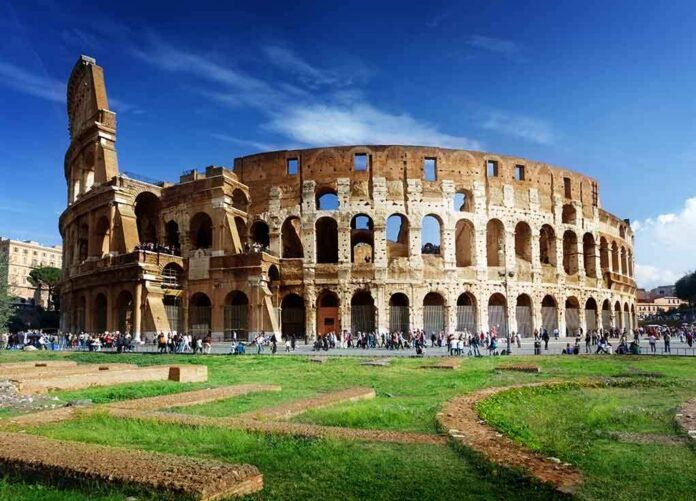
Associated Press video reporting said several hundred students and young demonstrators briefly occupied the Colosseum on Saturday. The crowd waved Palestinian flags and protested the war in Gaza and the Italian government. The event lasted minutes but drew global attention because of the site’s fame and the charged cause. The protest formed part of a broader day of actions in Italy’s cities and campuses, where youth groups have pushed leaders to change course on war and spending.
Italian newspapers described a sharper edge than a simple sit-in. One report said about twenty youths forced a side entrance after being pushed back from their route. The same account said an employee of the Archaeological Park was injured during the entry and that entrants were identified and taken to police headquarters. Those details frame the action as a physical breach, not normal access, and explain the swift security response on site.
Security Response and Damage Assessment
Coverage from a major Italian daily said masked students and social-center activists reached the Colosseum entrance and came into contact with security staff. The report said there was no damage to the monument, but tension rose as police and financial police gathered around the amphitheater. That mix of confrontation without reported structural harm is common in flash protests that aim for maximum visibility at protected heritage sites.
Another outlet said about fifty masked entrants briefly occupied the interior and frightened tourists before being moved out. That account underscores the risk to public safety and visitor experience when demonstrations spill into crowded landmarks. It also shows why authorities treat heritage sites as high-stakes zones, even when the event is brief. Tourists and staff can be caught in the middle, which raises legal and political pressure for quick control.
Why This Touches a Nerve Across Politics
Protests at iconic places turn a cause into a headline, which is the point. Research on movements shows visible, nonviolent action can rally support, while disruptive tactics can force debate among reluctant leaders. That tradeoff is now familiar in Europe’s protest calendar. Marchers in Italy also pushed messages about rising costs and government priorities, showing how anger over war links with daily strain on families’ budgets across the continent.
Italy’s leaders have signaled a hard line on violent or coercive tactics. Days earlier, the Education Minister called similar student conduct an attack on institutions and political hooliganism, not democratic dissent. That framing matters because it shapes police posture and legal follow-up. Protesters say the system ignores them unless they disrupt. Officials say public order and the safety of workers and visitors must come first at sensitive sites.
Rights, Limits, and the Heritage Question
European rights guidance protects peaceful assembly but allows limits to prevent disorder or crime. Courts have also recognized that even nonviolent obstruction can fall within protected assembly, while still facing proportionate restrictions. That balance gets tighter at heritage sites, where security rules are strict and crowds are heavy. The Colosseum incident tests that line again: expressive politics met the duty to protect people and an irreplaceable monument.
FFS! On 24 October 2026, pro-Palestine student protesters waving Palestinian flags forced entry into the Colosseum during a Rome march against the Gaza war and Italian government, but Italian officials confirmed no damage occurred after police intervention.
You frame the incident…— Max Sky (@MaxSky44342795) October 25, 2026
For readers in the United States, the lesson tracks with a wider frustration. Citizens on the left and right see leaders who answer late and manage by crisis. When people feel shut out, they escalate. When institutions feel threatened, they crack down. The Rome flashpoint shows both impulses at once. No damage was reported, but fear and injury were. That is a warning: when trust erodes, even a short protest can shake public faith in basic order.
Sources:
youtube.com, apnews.com, en.ilsole24ore.com, yahoo.com, roma.corriere.it, ansa.it, hrlc.org.au, academia.edu