
As Hamas digs for the body of the last Israeli hostage in Gaza, Americans are reminded how appeasement and weakness toward terrorists always come back to haunt the free world.
Story Snapshot
- Hamas and the Red Cross are conducting joint searches in Gaza City’s Zeitoun neighborhood for the body of Staff‑Sergeant Major Ran Gvili, believed to be the last Israeli hostage in Gaza.
- The search, enabled through negotiated arrangements, highlights how terrorist groups retain leverage long after their initial atrocities.
- Closing the “last hostage” case carries huge symbolic weight inside Israel and shapes future ceasefire and reconstruction talks.
- The operation underscores the high cost of past Western leniency toward Hamas and similar groups.
Hamas and Red Cross Begin Joint Search for Last Israeli Hostage’s Body
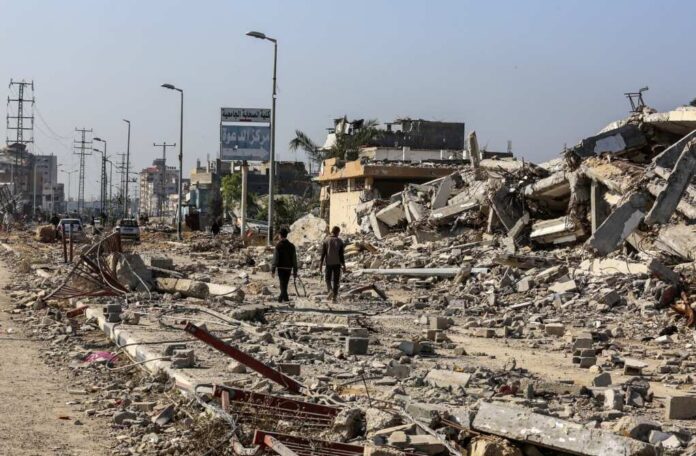
Israeli and international outlets report that Hamas and the International Committee of the Red Cross are now conducting coordinated digging operations in Gaza City’s Zeitoun neighborhood to locate the body of Staff‑Sergeant Major Ran Gvili, described as the last Israeli hostage still in Gaza. Reports say Hamas fighters are escorting Red Cross personnel and local diggers into a marked security zone in the devastated area, where intense ground combat, airstrikes, and tunnel warfare left massive rubble fields that complicate any recovery effort.
According to these accounts, the search is not a routine prisoner swap but a focused hunt for a single body in the ruins of an active war zone and its tunnels. The same group that kidnapped Gvili is now guiding international staff toward suspected burial or collapse sites. This bizarre arrangement shows how, even after large‑scale fighting subsides, Hamas still wields leverage through its control of terrain, tunnel knowledge, and information about hostages and remains.
How the “Last Hostage” Case Emerged from the Gaza War
The effort to find Gvili’s remains grows out of the broader war that began with Hamas’s October 7, 2023 massacre, when terrorists killed about 1,200 people in Israel and dragged roughly 240 hostages into Gaza. In the months that followed, complex negotiations mediated by Qatar, Egypt, the United States, and others produced staggered hostage releases and prisoner exchanges. Over time, Israel confirmed more deaths, recovered remains, and narrowed the list until Gvili was identified as the last hostage still unreturned.
As Israeli forces ground down Hamas infrastructure and exposed extensive tunnel networks, attention gradually shifted from live rescues to locating the dead. Earlier operations had revealed long underground passages where previous hostages, such as Lt. Hadar Goldin, were held, underscoring how systematically Hamas built tunnels for kidnappings and bargaining. With major combat easing in parts of Gaza City, international organizations gained more room to operate, and mediators pushed for arrangements that would allow searches for missing Israelis, starting with the most symbolically powerful case.
Why Zeitoun Matters: Terrain, Tunnels, and Leverage
The neighborhood of Zeitoun in southern Gaza City has become a grim focal point for this search. Israeli operations treated it as a key Hamas stronghold, with tunnel systems, weapons depots, and fighting positions dug under civilian buildings. The result is a landscape of shattered structures and unstable rubble that now must be excavated for clues to Gvili’s fate. Humanitarian teams entering the area must navigate unexploded ordnance, booby traps, and the remains of underground passages used to hide abducted Israelis.
Control of this terrain gives Hamas bargaining power despite its battlefield losses. The group controls access routes, local labor, and much of the knowledge about where hostages were held or buried. The Red Cross, bound by neutrality and humanitarian law, can only move with consent from both sides. That means even a basic recovery mission for one fallen soldier depends on Hamas permission and cooperation, a stark illustration of how terrorists can trade on human suffering for diplomatic relevance long after their original crimes.
Humanitarian Closure and Political Stakes for Israel
For Israelis, bringing home the bodies of soldiers is not just tradition but a deeply rooted national commitment. Families of the fallen expect the state to do everything possible to recover remains so that proper burial and mourning can occur. The Gvili case carries even greater symbolic weight because officials describe him as the last hostage in Gaza. Once his fate is formally resolved, Israeli leaders can claim they have closed the hostage chapter of this war, for better or worse.
That closure would ease some of the intense domestic pressure created by hostage families, who have driven protests and shaped political debate. It would also free the Israeli government to refocus on longer‑term questions: security arrangements for Gaza, the role of regional players, and how to prevent Hamas or similar groups from rebuilding. At the same time, many Israelis view Hamas’s current cooperation as far too little and far too late, given that the group created the hostage crisis in the first place.
What This Search Reveals About Western Policy and Future Risks
The spectacle of Hamas escorting Red Cross teams in search of a body they effectively hold as political capital is a sobering reminder for American readers. Years of Western attempts to “manage” Hamas, fund international agencies in Gaza with minimal accountability, and pressure Israel to show restraint did not eliminate terrorism; they helped entrench it. The hostage saga, culminating in this final search, shows how terrorists exploit international humanitarian norms while shielding themselves behind civilians and foreign intermediaries.
The Red Cross are helping Hamas find the body of hostage Ran Gvili. They’re doing more now to ‘help’ the dead than they ever did for the living. Shameful and useless. pic.twitter.com/n7koXeIq5n
— Heidi Bachram 🎗️ (@HeidiBachram) December 8, 2025
For conservatives watching from the United States, the lesson is clear: when Washington tolerates or excuses terror‑linked actors abroad, it undermines our allies and invites similar tactics against us. Recovering the body of one Israeli soldier may bring a measure of comfort to his family and nation, but the long trail of appeasement that enabled Hamas’s rise should serve as a warning. Strong borders, clear red lines, and unwavering support for allies confronting terror are not optional; they are the price of security.
Sources:
Hamas and the Red Cross resume search for the body of the last hostage – live blog (i24NEWS)
Hamas, Red Cross digging in Gaza’s Zeitoun for remains of last Israeli hostage Ran Gvili (Jerusalem Post)