After decades of socialist control that drove Venezuela’s oil industry into the ground, the country’s new leadership just opened the door to privatization—right as Washington loosens the screws on sanctions.
Story Snapshot
- Acting President Delcy Rodríguez signed a law on Jan. 29, 2026, restructuring Venezuela’s oil sector and allowing private companies to control production and sales.
- The measure caps royalties at 30% and allows independent arbitration for disputes, a major shift away from PDVSA’s state-run monopoly.
- Venezuela’s National Assembly approved the bill quickly after two discussions, with some opposition lawmakers pressing for transparency provisions.
- The U.S. Treasury moved to ease oil sanctions the same day, aligning with plans outlined by Secretary of State Marco Rubio.
What the New Oil Law Changes—and Why It Matters
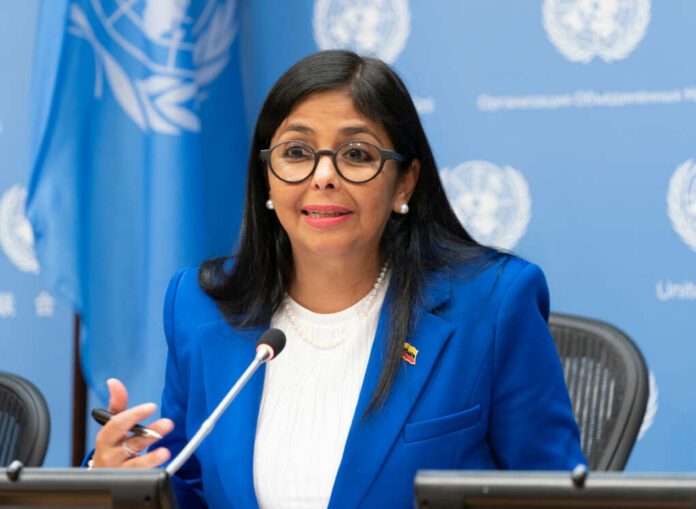
Delcy Rodríguez, serving as Venezuela’s acting president after the late-2025 upheaval, signed an oil-industry overhaul designed to attract foreign capital and restart production. The law permits private companies to take control of oil production and sales, limits royalties to a 30% cap, and enables independent arbitration rather than forcing disputes into Venezuelan courts. For international investors burned by past expropriations, those arbitration and tax terms are the core “security” provisions.
The speed of the rollout also stands out. Venezuela’s National Assembly approved the bill the same day it was signed, after two rounds of debate. Reports indicated the ruling-party bloc drove the process, while some opposition lawmakers pushed for transparency-related changes. The immediate question for Americans watching energy markets is whether this is a real structural break from Chavismo economics or simply an emergency measure meant to keep cash flowing in a transition period.
Venezuela’s interim President Delcy Rodriguez has signed into law a reform bill that will pave the way for increased privatisation in the country’s nationalised oil sector, fulfilling a key demand from US President Donald Trump. pic.twitter.com/PKHkXDD5r6
— Al Jazeera English (@AJEnglish) January 30, 2026
A Reversal of Chavismo’s Model After PDVSA Decline
Venezuela’s oil policy has been dominated since Hugo Chávez’s rise in 1999 by an expanding state role that culminated in strong PDVSA control and a climate hostile to outside operators. The 2001 hydrocarbons framework and subsequent nationalizations deterred many investors, while later years combined alleged corruption and chronic underinvestment with U.S. sanctions pressure. Oil remains the country’s economic engine and represents the overwhelming share of exports, which helps explain why Caracas is prioritizing a rapid reset.
Production history underscores why the government is making a dramatic change now. Reports describe output collapsing from around 3 million barrels per day in 2000 to under 1 million by 2025, a plunge that tracks with years of mismanagement, sanctions constraints, and decaying infrastructure. Even prior partial openings—such as limited arrangements involving Chevron—were narrow and politically sensitive. This law goes further by explicitly setting the terms for private control and dispute resolution, signaling that ideology is no longer the guiding principle.
U.S. Sanctions Easing: A Practical Leverage Point, Not a Free Pass
The law did not land in a vacuum. On the same date Rodríguez signed the overhaul, the U.S. Treasury eased oil sanctions, and Secretary of State Marco Rubio had outlined plans tied to expanded activity for U.S. firms. For a conservative audience skeptical of globalist entanglements, the key is remembering how sanctions function as leverage: relief can encourage reforms, but it can also create moral hazard if it becomes unconditional. The reporting available describes coordination in timing, but limited details on enforcement benchmarks.
What Investors Want: Arbitration, Predictable Taxes, and Control
The law’s specific design appears tailored to investor priorities. A royalty cap at 30% and the ability to set project-specific rates aim to make Venezuela competitive with other oil jurisdictions. Allowing independent arbitration reduces the fear that disputes will be decided inside a politicized court system. For U.S. and other international producers that previously suffered expropriation losses, those provisions matter more than press statements. The reform’s success will depend on whether contracts are honored consistently, not merely signed.
Risks for Venezuelans—and What to Watch Next
Privatization can create jobs and rebuild production, but it can also trigger social backlash and workforce turmoil inside PDVSA, which stands to lose its monopoly role. The reporting acknowledges a political risk: reversing Chavismo’s model may stabilize a post-Maduro transition, but it can also provoke resistance from socialist factions. With only a small set of sources available so far, unanswered questions remain about how transparency rules will be enforced, who will win the first bids, and how quickly exports can rise.
For Americans, the broader takeaway is that energy policy always has downstream consequences—prices, geopolitics, and leverage over hostile regimes. Venezuela’s move is a reminder that socialist control over critical industries tends to end the same way: collapse, then a scramble back toward markets. Whether this shift becomes a durable reform or a temporary stopgap will be measured by one thing conservatives understand well: accountability—clear rules, enforceable contracts, and leaders restrained by institutions rather than ideology.
https://youtu.be/EU0MLT7W1lQ?si=LcHASvLyCW6GOuDK
Sources:
Venezuela’s acting leader signs oil industry revamp