Colombia’s leftist president is asking President Trump to step in after claiming Ecuador crossed the line from anti-cartel raids to bombs on Colombian soil.
Story Snapshot
- Colombian President Gustavo Petro says authorities found an explosive device near the Ecuador border and alleges an aircraft dropped a bomb on Colombian territory.
- Ecuadorian President Daniel Noboa flatly denies any cross-border strike, insisting operations are limited to Ecuadorian territory against cartel-linked camps.
- The dispute lands amid a spiraling Colombia–Ecuador trade fight and a broader regional crackdown on narco-groups along a porous 590-kilometer border.
- Reports of “27 charred bodies” cited by Petro remain unverified publicly, with no independent confirmation presented in the reporting summarized here.
Petro’s Bomb Claim Puts Trump in the Middle
Colombian President Gustavo Petro publicly accused Ecuador of bombing near the shared border after saying Colombian authorities discovered an active explosive device and had evidence of an aircraft dropping a bomb. Petro framed the incident as a sovereignty violation and appealed directly to U.S. President Donald Trump to help prevent a wider conflict. The allegation arrived in a tense moment when both governments are already trading accusations over security and border control.
Petro escalated his claims the next day by referencing “bombings on the Ecuador border” and reporting 27 charred bodies, while also saying he did not order any such action. Ecuador’s government rejected Petro’s account and maintained that Ecuador’s security operations are aimed at criminal groups inside Ecuador. As of the reporting provided, there is no confirmed independent verification that Ecuador struck targets inside Colombia.
Ecuador’s Denial—and What’s Known vs. What’s Not
Ecuadorian President Daniel Noboa responded publicly that Petro’s declarations were false and said Ecuador is acting within its own territory. Ecuador has faced a sharp deterioration in public security, including a homicide rate that has surged over recent years and emergency measures such as curfews in multiple provinces. That domestic pressure helps explain why Quito is emphasizing aggressive enforcement, even as it rejects any suggestion of crossing into Colombia.
The key factual gap is evidence. Petro’s accusation centers on an alleged aircraft-dropped munition and an explosive device found near the border, but the available research summary indicates he did not present publicly verifiable proof of a cross-border strike in the cited reporting. Ecuador, for its part, has not confirmed any operation on Colombian soil. Until investigators establish the origin of the device and any blast location, the most consequential claims remain disputed and politically charged.
The Narco-Reality Driving Escalation on a Porous Border
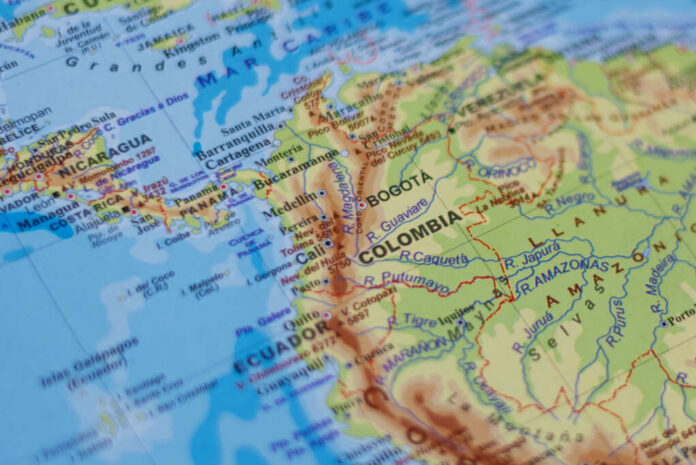
Colombia and Ecuador share a long, porous border where trafficking networks and armed groups exploit weak state presence. The research notes that a large share of Colombian and Peruvian cocaine moves through Ecuador, and that dissident factions tied to former FARC structures have fought to control routes and territory. One group named in the reporting, Comandos de la Frontera, has been a target in operations near the border region.
Those security pressures have collided with politics. Ecuador has blamed Colombia for inadequate border control, while Colombia’s internal strategy—described in the research as “total peace” talks—has drawn criticism for potentially allowing armed groups time and space to consolidate. With Colombia heading toward elections, both leaders have incentives to look tough: Petro by portraying Colombia as a victim of aggression, and Noboa by showcasing relentless action against cartels.
Trade War, Military Operations, and the Risk of Miscalculation
The accusations did not emerge in a vacuum. Ecuador imposed steep tariffs on Colombian imports described as a security-related measure, and Colombia retaliated with duties of its own. That economic conflict raises the temperature and shrinks political room for compromise. When trade disputes merge with border security incidents, leaders can find themselves cornered—especially when public fear and anger are already high.
The research also points to recent U.S.-Ecuador cooperation against traffickers near the border, including strikes on camps in Ecuador. That backdrop makes Petro’s appeal to President Trump particularly significant: Washington has security ties with Ecuador while also maintaining diplomatic channels with Colombia. For American readers who value clear sovereignty lines and accountability, the priority is simple—verify the facts, deter cross-border adventurism, and prevent narco-groups from exploiting a government-to-government rupture.Limited public detail in the cited reporting means key questions remain unresolved: where exactly the device was found, who placed it, whether any aircraft crossed the border, and whether casualties cited by Petro can be independently corroborated. What is clear is that a fast-moving information war is now layered on top of a real cartel war. That combination can trigger escalation even when leaders claim they want to avoid it.
Sources:
Colombia’s Petro Accuses Ecuador of Bombing Near Border
Colombia’s Petro says bombings on Ecuador border left 27 charred bodies
Ecuador’s president rejects allegations that his government is bombing targets inside Colombia
Ecuador-Colombia: Colombia Alleges Ecuador Bombed Group on Colombian Side of Border
Colombia being bombarded from Ecuador: Petro
Colombia says ‘bomb’ found near its border with Ecuador
US, Ecuador bomb drug trafficker camp near Colombia border, militaries say