

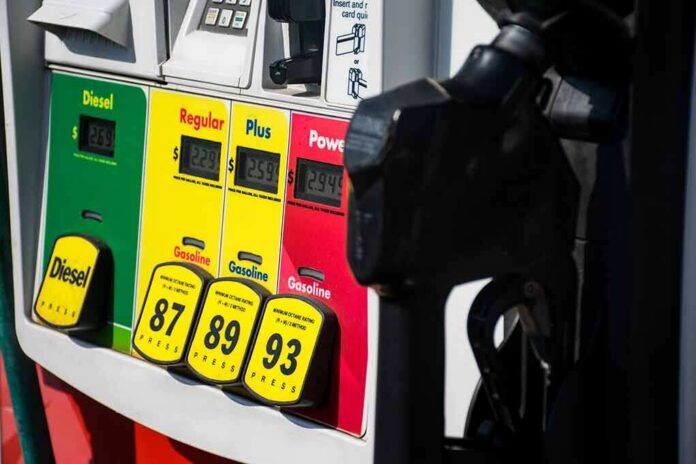
With gasoline above $4 a gallon during the Iran war, President Trump is bringing U.S. refining and fuel retail chiefs to the White House to press for more supply and lower prices.
Story Highlights
- Trump is set to meet refiners and retailers to spotlight efforts to cut pump prices.
- Expected attendees include Valero, Marathon Petroleum, and PBF Energy, plus major retailers.
- The White House says the focus is expanding U.S. refining capacity and easing consumer pain.
- Average regular gasoline tops $4.06 per gallon amid war-driven disruptions.
White House Push to Tackle High Gas Prices
Reuters reported that President Trump plans to meet U.S. refiners and fuel retailers to highlight steps to lower gasoline prices as the Iran war strains supply lines and keeps costs high. The White House has framed the talks around expanding domestic refining capacity and reducing consumer pressure at the pump. Administration aides have also discussed actions to help refineries produce more fuel, linking policy moves to near-term relief for drivers facing four-dollar gasoline. The timing lands before November’s congressional midterm elections.
ABC News previously reported the White House confirmed Trump and senior officials met with oil and gas leaders in the spring to discuss how to hold a maritime blockade for months and limit blowback for American consumers. Officials said the president meets energy executives often to get updates on global markets, domestic output, and shipping routes. That ongoing contact sets the stage for the refinery-focused session, which aims to translate market briefings into concrete steps that could lift supply and ease price spikes.
Who Is Expected and What They May Discuss
Reuters said expected attendees include major refining companies Valero Energy, Marathon Petroleum, and PBF Energy, along with large fuel retailers. The administration has signaled interest in boosting capacity, which could involve maintenance timing, utilization rates, or regulatory relief to squeeze more output from existing plants. Energy officials said steps to help refineries produce more fuel were in preparation this month, underscoring a supply-first approach to tame prices. Company-side confirmations were not cited in the reporting.
These discussions arrive as the government blames years of Democratic policies for refinery closures and weaker investment, arguing those choices left the system tight in a shock. The war has added stress to shipping lanes and crude flows, which raises costs across the supply chain. The Energy Information Administration notes crude oil is the largest part of gasoline prices, with refining, distribution, taxes, and profits making up the rest. That mix means actions on refining can matter, even if crude prices still drive most of the pump price.
Why Prices Are Stubborn and What Might Change
The average price for regular gasoline sits above $4.06 per gallon, roughly 30 percent higher than one year ago, according to data cited by Reuters from the auto club AAA. This squeeze hits family budgets and small businesses, fueling anger across party lines. Conservatives blame past restrictions and energy mandates. Liberals blame corporate profits and weak wage growth. Both sides see a system that protects the powerful while working people pay more to get to work, buy groceries, and keep the lights on.
Trump is meeting oil executives at the White House to push down $4-a-gallon gas prices: The Tuesday meeting comes as pump prices have held above $4 a gallon and midterm elections are two months away https://t.co/Ncjh6E93nD pic.twitter.com/wtpY7Rjnf1
— Quartz (@qz) August 31, 2026
The political calendar adds pressure. Reuters tied the meeting to the run-up to midterms, when voters judge leaders on prices they see at every gas station. Still, experts and officials often caution that one meeting cannot flip a complex market. A prior ABC News report quoted the White House as seeking ways to shield consumers while keeping wartime goals intact, which implies trade-offs and time lags. Policy tools that speed refinery output, even modestly, could help prevent worse spikes as demand holds steady.
Sources:
bloomberg.com, washingtonpost.com, usnews.com, cnbc.com