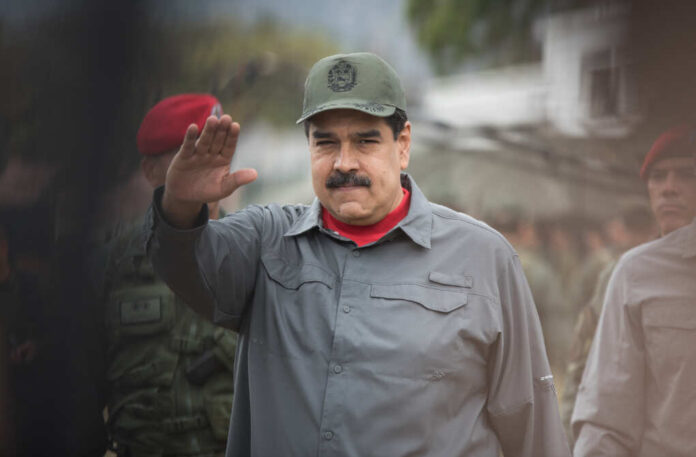
A U.S.-led capture of Nicolás Maduro, hailed as one of the greatest military operations in modern history, is reshaping the balance of power in our own hemisphere and far beyond.
Story Snapshot
- U.S. forces removed Venezuelan strongman Nicolás Maduro after months of CIA‑driven targeting and strikes authorized by President Trump.
- Former CIA officials say the mission disrupted a narco‑terror network tied to human trafficking, cocaine flows, and terrorist groups.
- Acting president Delcy Rodríguez now runs a fragile interim regime that Washington views as deeply compromised.
- The operation sends a blunt deterrent message to China, Russia, Iran, and their proxies operating in the Western Hemisphere.
How Trump’s Green Light Led to Maduro’s Capture
In early January 2026, U.S. forces finally put handcuffs on Venezuelan ruler Nicolás Maduro after years of socialist misrule, economic collapse, and open hostility toward the United States. The mission capped months of stepped‑up CIA covert action that President Trump had publicly authorized in late 2025, including at least one drone strike on a dock described as a key drug‑loading point. That rare presidential confirmation signaled a break from passive hand‑wringing and a return to decisive action against hostile regimes.
https://www.youtube.com/watch?v=z2_P5DN94S0
Behind the scenes, CIA officers spent months building what professionals call a “pattern‑of‑life” picture around Maduro, mapping his security habits, convoys, schedules, and safe houses. Former CIA station chief Rick de la Torre explains that such targeting requires painstaking surveillance to find the one moment when a dictator is vulnerable but civilians are not. That granular intelligence fed directly into the military assault plan, allowing U.S. forces to seize a sitting head of state with minimal collateral damage.
From Socialist Regime to Criminal Enterprise
For many conservatives, Maduro’s downfall confirms what they have said for years: Venezuela stopped being a normal state and morphed into a criminal cartel with a flag. As far back as 2020, the U.S. Department of Justice indicted Maduro and senior officials on narco‑terrorism and drug trafficking charges, accusing them of partnering with Colombian armed groups to flood America with cocaine. That law‑enforcement framework provided the legal backbone for treating Maduro less like a president and more like a kingpin who finally ran out of time.
Former CIA officers now describe Maduro as the apex of a network that mixed socialism, organized crime, and anti‑American extremism. They link his circle to human trafficking routes, cocaine shipments aimed squarely at U.S. streets, and support or safe haven for groups such as Hamas and Hezbollah. On top of that, Caracas functioned as a welcome mat for hostile intelligence services from Cuba, Russia, China, and Iran. For American readers worried about porous borders and rising fentanyl deaths, this regime looked less like a distant problem and more like a direct threat to their families.
Cuban Handlers, Failed Russian Weapons, and a Shaken Axis
De la Torre and other veterans say Cuban intelligence played an outsized role in keeping Maduro in power, trading repression for a cut of Venezuelan oil and influence across the region. That tight Havana‑Caracas axis trained security forces, crushed dissent, and helped export leftist ideology around Latin America. Yet when U.S. forces finally moved, those same Cuban‑backed structures proved unable to stop a well‑planned American strike built on superior intelligence and coordination.
The operation also embarrassed Russia and China, whose weapon systems in Venezuelan service reportedly failed when put to the test. For years, those regimes marketed their hardware as cheaper alternatives to U.S. gear while courting anti‑American leaders like Maduro. Watching their technology falter in real combat undermines that sales pitch and forces Moscow and Beijing to reassess how far they can push inside the Western Hemisphere. According to de la Torre, adversaries now must “recalculate” plans, including any designs on Taiwan or further adventurism near U.S. shores.
A Fragile Transition Under a Compromised Acting President
Maduro’s removal did not instantly turn Venezuela into a Jeffersonian democracy, and serious observers are honest about that. Power formally passed to Vice President Delcy Rodríguez, now acting president, even though former CIA officers openly call her “just as guilty” as Maduro. Washington tolerates her temporarily to avoid an outright vacuum, but American planners and Venezuelan exiles alike see this as a stopgap. The regime’s security services, courts, and patronage networks remain largely intact and deeply corrupt.
Exiled opposition leaders, representing roughly one‑third of Venezuelans who have fled the country, now face the challenge of turning celebration into structure. They must organize around credible elections, constitutional reform, and rebuilding institutions shattered by socialism and cronyism. Former CIA covert operator Mike Baker warns that toppling a dictator can unleash chaos before liberty takes root, with rival factions and criminal groups jockeying for spoils. That caution should resonate with conservatives wary of nation‑building fantasies and endless foreign entanglements.
What This Means for American Security and Conservative Priorities
For Americans exhausted by years of open borders, cartel violence, and timid foreign policy, the Maduro operation underscores how robust intelligence and unapologetic use of force can defend the homeland. Targeting a narco‑terror regime at the source aligns with core conservative principles: protect citizens, secure borders, and refuse to let hostile powers turn our backyard into their forward operating base. By pairing DOJ indictments, CIA tradecraft, and military precision, the United States treated Venezuelan criminality as both a law‑enforcement and national‑security problem.
EXIT OR ELSE: The Trump admin delivered a stern ultimatum to Nicolás Maduro to leave Venezuela immediately, before Trump announced the country's airspace would be closed, according to a report.
The warning was reportedly delivered in a phone call with Caracas and offered… pic.twitter.com/tdC3GMvFQT
— Fox News (@FoxNews) December 1, 2025
At the same time, this case is a reminder that any projection of power must remain grounded in constitutional oversight and clarity of mission. Conservatives who value limited government and distrust sprawling security bureaucracies will rightly demand transparency about objectives, legal authorities, and exit strategies. The Venezuela operation offers a possible template for confronting “criminalized states” that threaten American communities, but it also raises long‑term questions about precedent. Vigilant citizens will need to insist that future presidents use such tools to protect, not erode, the liberties and rule of law that make these victories worth fighting for.
Sources:
‘One of the greatest military operations ever,’ former CIA chief says of Maduro capture
CIA Operations in Venezuela Are Now Public