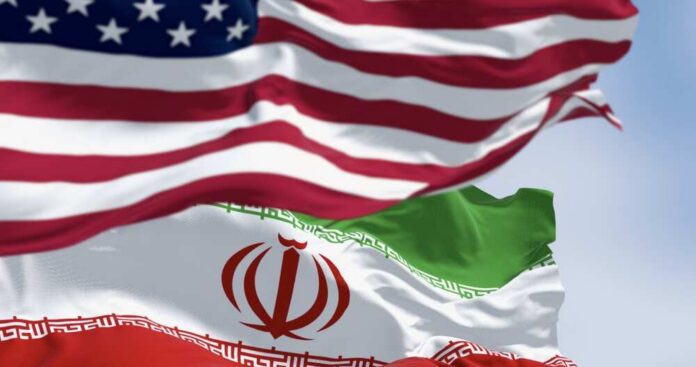
Tehran is loudly claiming the United States has agreed to lift key oil sanctions, but so far the only “evidence” is Iran’s word and a nervous oil market reacting before facts are nailed down.
Story Snapshot
- Iranian officials say Washington agreed to lift oil, shipping, and insurance sanctions imposed under President Trump.
- About 1,040 Trump‑era sanctions are allegedly on the chopping block, tied to nuclear talks and a long‑term “freeze.”
- No official confirmation from the Trump administration has surfaced, raising doubts about Tehran’s narrative.
- Confusing sanctions signals risk empowering Iran’s regime while American families still feel energy and inflation pain.
Iran Claims Sanctions Relief Victory While Talks Continue
Iran’s presidential chief of staff Mahmoud Vaezi told state-linked media that an agreement has been reached to remove all insurance, oil, and shipping sanctions imposed by former President Donald Trump, and that about 1,040 Trump‑era sanctions will be lifted as part of negotiations to revive a nuclear deal framework.[1][3] Iranian outlets present this as a major breakthrough, insisting the United States has already reconciled itself to sweeping relief that would reopen Iran’s energy exports and maritime trade to global markets.[1][3]
Vaezi’s comments were echoed across regional media and social platforms, where the line that Washington “has agreed to lift” these sanctions quickly became the headline.[1][2][3] Reports describe the claim as tied to ongoing talks over Tehran’s nuclear program and a proposed long‑term “freeze,” with Iranian officials saying any American return to commitments would be followed by verification on their side.[1][3] That framing paints sanctions relief as essentially settled, even though the underlying deal text, annexes, or waiver documents have not been made public.
No Matching U.S. Confirmation, Only Tehran’s Version Of Events
On the American side, there is still no primary-source confirmation of any final agreement to lift Iran’s oil sanctions in the sweeping way Tehran describes.[1][2][3] The available record shows public remarks only from Iranian officials and republished reporting; there is no signed instrument, Treasury waiver, or Federal Register notice implementing massive relief on oil, shipping, or insurance.[1][3][5] Negotiations between the United States and Iran that began in 2025 were explicitly framed as ongoing and conditional, not as a completed sanctions giveaway.[4][5]
This is not the first time rhetoric has run ahead of reality in Iran diplomacy. Analysts note that Iran and Western governments have previously used public claims of “agreement” to shape markets or domestic politics while legal details were still unsettled. The original 2015 Joint Comprehensive Plan of Action nuclear deal offered Iran targeted relief, but the United States retained many non‑nuclear sanctions and later exited the agreement entirely in 2018. That history makes Tehran’s latest statements sound more like negotiating theater or pressure tactics than ironclad proof that sanctions are truly being dismantled.
Temporary Waivers, Market Jitters, And The Risk To U.S. Leverage
Separate from Iran’s claims, the United States has been using temporary measures and limited waivers to manage global oil prices during today’s conflict and Strait of Hormuz tensions.[1][2][3] Treasury actions easing sanctions on certain shipments, or allowing stranded Iranian-origin oil loaded before specific dates to reach buyers, are explicitly time‑bound tools meant to stabilize supply and buy diplomatic breathing room.[2][3][4] Policy analysts warn that such relief, combined with high prices, can still send badly needed revenue to hostile regimes and weaken long‑term U.S. leverage.[1][3][5]
BIG: The U.S. has reportedly agreed in a new negotiation draft to temporarily waive Iran’s oil sanctions during talks.
Iran wants all sanctions fully lifted, while the U.S. is only offering temporary OFAC waivers until a final agreement is reached.
Source: Tasnim
— BRICS+TODAY (@Afrijustice4all) May 18, 2026
For conservative Americans who remember paying the price for past globalist energy experiments, this moment feels familiar. Every signal that Washington might loosen the screws on Iran’s oil sector raises questions about whether the regime will use that cash to fund war, terror proxies, and anti‑American operations instead of feeding its people.[2][5] While President Trump’s team insists that core sanctions architecture remains in place, poorly explained waivers and mixed messaging risk undermining the pressure campaign that conservatives believe is essential to restrain Tehran.
Why Clear, Tough Sanctions Policy Still Matters For American Families
Energy and foreign policy are now colliding in a way that hits wallets at home. Years of mismanagement under previous administrations left America overexposed to foreign supply shocks and dependent on unstable producers, which helped drive painful spikes in gasoline and heating costs. Conservative voters want a policy that is simple and firm: unleash domestic production, keep strategic adversaries like Iran under maximum pressure, and do not trade away leverage for paper promises of “nuclear freezes” that may never hold.[5]
The unanswered question is whether Tehran’s latest boast reflects any real shift in U.S. policy, or just another information operation timed to rattle markets and test Washington’s resolve.[1][2][3] Until there is clear documentary evidence from the American side—a signed agreement, a public waiver order, or a detailed sanctions rollback map—conservatives are right to treat Iran’s declarations with deep skepticism. Maintaining constitutional oversight, resisting secret diplomacy, and insisting on transparent, enforceable red lines remain critical if the United States is to protect both its security and its citizens’ economic freedom.
Sources:
[1] Web – Iran says US reconciled to lift oil, shipping sanctions
[2] YouTube – Iran says U.S. has agreed to lift oil sanctions
[3] Web – Iran: US has agreed to lift insurance, oil and shipping sanctions …
[4] Web – 2025–2026 Iran–United States negotiations – Wikipedia
[5] Web – US announces new sanctions on Iranian oil network amid nuclear …