
While American families juggle soaring bills at home, a U.S.-driven fuel squeeze is helping push Cuba into darkness, raising hard questions about who really benefits from Washington’s foreign policy.
Story Snapshot
- Cuba’s fuel collapse has triggered nationwide blackouts, hospital delays, and water shortages affecting millions.
- Cuban leaders blame a United States “fuel blockade,” while others point to years of internal mismanagement.
- New United Nations warnings highlight severe humanitarian fallout that goes far beyond Havana’s politics.
- The crisis exposes how ordinary people, not elites, pay the price when governments weaponize energy and sanctions.
Cuba’s Energy System Buckles Under Fuel Shortages
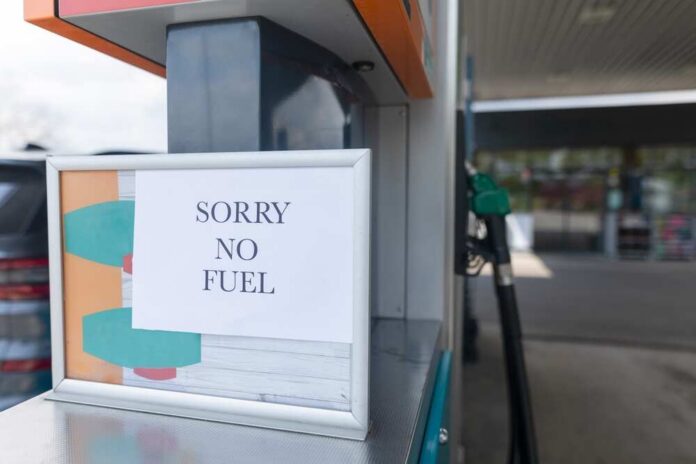
United Nations officials now describe Cuba’s humanitarian situation as at a “critical tipping point” after months without enough fuel to power the island’s fragile grid and basic services.[1] Cuba’s own energy minister has acknowledged that the country effectively ran out of diesel and fuel oil, leaving power plants without the fuel needed to keep electricity flowing.[2] Large parts of the country have endured rolling blackouts, with some neighborhoods experiencing more than twenty hours a day without power as outages spread across roughly two thirds of the island.[2]
The fuel crisis has hit daily life on multiple fronts at once, turning an already tough economic situation into a full-blown emergency. Reports from Havana and other cities describe streets plunged into darkness, refrigerated food spoiling, and public transportation grinding to a halt.[2] Airlines have been warned that Cuba cannot reliably supply jet fuel, causing flight cancellations and travel chaos for residents and tourists alike.[2] As the grid falters, frustrated citizens have taken to the streets in rare public protests against the worsening conditions.[2]
From Sanctions to Blackouts: Competing Explanations
Cuban leaders argue that a United States “fuel blockade” is at the heart of the collapse, blaming long-standing sanctions and newer pressure that disrupted shipments from traditional suppliers such as Venezuela and Mexico.[1] News coverage describes shipments falling after Washington threatened tariffs on countries supplying oil to Cuba, and one Firstpost segment says the energy minister declared the country had “absolutely none” of its usual fuel stocks.[2] Havana’s president has framed the situation as “financial and energy persecution” by the United States government.
Other evidence, including statements from Cuban officials themselves, shows the picture is more complicated than a single external villain. Public comments by Cuba’s prime minister have cited deteriorating infrastructure, poor maintenance, rising demand, and fuel shortages as overlapping causes of the outages. The country’s largest thermoelectric plant, Antonio Guiteras, has suffered repeated breakdowns since 2024, triggering nationwide blackouts when it fails. This pattern supports critics who argue that years of underinvestment and mismanagement left the grid so fragile that any disruption in fuel supplies would quickly snowball into a nationwide crisis.
Humanitarian Fallout: Hospitals, Water, and Everyday Survival
The United Nations reports that Cuba’s energy shock has paralyzed essential services, pushing the emergency well beyond inconvenient power cuts.[1] Hospitals are facing a backlog of more than ninety six thousand pending surgeries, including eleven thousand procedures for children, because operating rooms and medical equipment cannot function reliably without electricity.[1] The national immunization program has been delayed for thousands of infants, raising long-term public health concerns that have nothing to do with ideology and everything to do with power and fuel.
Water access has also deteriorated sharply as pumps and trucking fleets run short of diesel.[1] Roughly one million people now depend on water delivered by truck, yet the lack of fuel means many of those trucks cannot operate regularly.[1] In response, the United Nations has launched an updated action plan to support about two million people across eight provinces, including installing solar power for irrigation systems, hospitals, and schools, and reinforcing water pumping infrastructure to reduce dependence on the unstable national grid.[1] Despite these efforts, a funding gap of about sixty eight million dollars remains.[1]
Power Politics, Elites, and What It Means for Americans
For many Americans watching from both the right and the left, Cuba’s crisis feels uncomfortably familiar: ordinary people trapped between failing local governance and great-power games played by distant elites. United States sanctions policy toward Cuba has been shaped for decades by political calculations in Washington, often with little transparency about who bears the costs on the ground. At the same time, Cuba’s ruling class controls information and infrastructure, making it hard to know how much fuel actually reaches communities versus state and party priorities.
🇨🇺 Cuba receives new humanitarian aid shipments as the country faces worsening blackouts, fuel shortages, and food insecurity amid a deepening economic crisis.
🔗 https://t.co/bqHY2EeBRj#Cuba #HumanitarianAid #LatinAmerica #WorldNews #BreakingNews pic.twitter.com/xfW9QmLyhl
— Latam Chronicle (@LatamChronicle) May 19, 2026
The deeper lesson for American readers is not that one side in this standoff is “good” and the other “bad,” but that concentrated power on both ends tends to leave regular people in the dark—sometimes literally. When the United States government tightens sanctions without clear oversight, and when Havana runs an opaque, centrally controlled energy system, citizens in both countries are left guessing about the real tradeoffs. Cuba’s blackouts are a warning sign: when accountability breaks down, energy, water, and basic dignity become bargaining chips, not guaranteed rights.
Sources:
[1] YouTube – CIA Chief in Havana As Energy Crisis Triggers Blackouts & Protests
[2] YouTube – Cuba says it has run out of oil as blackouts, protests spread across …