The Iranian government’s crackdown on protests threatens to escalate into a full-scale crisis as the death toll rises and economic grievances fuel demands for regime change.
Story Highlights
- Protests in Iran have spread to over 20 cities amid economic and political grievances.
- At least 20 people have died, and nearly 1,000 have been arrested in the government’s harsh response.
- The demonstrations, initially sparked by economic issues, have evolved into calls for political change.
- Security forces are using tear gas and live ammunition to suppress the protests.
Protests Erupt Amid Economic Hardships
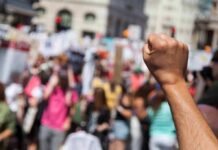
Iran has been gripped by intense protests since late December 2025, initially sparked by merchant strikes in Tehran’s commercial districts. Economic grievances quickly escalated into demands for political change, with demonstrations spreading to major cities across the country. The protests have been marked by chants calling for regime change and have drawn participants from a wide range of social groups, including merchants, students, and women’s rights activists.
The Iranian government’s response has been severe, deploying security forces to suppress the demonstrations. Protesters have been met with tear gas and live ammunition, leading to at least 20 deaths and nearly 1,000 arrests. The crackdown has been particularly harsh in Tehran’s Grand Bazaar and other urban commercial hubs, where the unrest began.
The massive anti-regime protests in Iran have now spread to more than 50 cities.
The regime’s security forces are stretched thin and can’t be everywhere at the same time pic.twitter.com/CRk4HNmuJO
— Visegrád 24 (@visegrad24) January 1, 2026
Government’s Harsh Tactics and Public Outcry
Despite President Pezeshkian’s promises to meet with protesters and acknowledge their constitutional right to peaceful protest, the government’s actions tell a different story. Security forces, including the Islamic Revolutionary Guard Corps (IRGC) and police, have been enforcing order with an iron fist. The government’s decision to close down businesses under the guise of “cold weather and energy constraints” is widely seen as a tactic to suppress dissent.
The protests have grown in both scope and violence, with participants chanting slogans such as “Death to Khamenei” and “Neither Gaza nor Lebanon, my life for Iran.” The U.S. State Department has voiced concerns over the Iranian government’s intimidation tactics and the increasing violence against demonstrators.
Potential for Long-Term Instability
The situation in Iran poses both short-term and long-term challenges. In the immediate term, the strikes and shutdowns are paralyzing the economy, exacerbating the existing economic crisis. In the long term, the protests could destabilize the Iranian regime if the grievances continue to evolve from economic to political in nature. The current unrest echoes past protests, such as the 2019 fuel price hikes and the 2022 women’s rights demonstrations, but with a broader socio-political dimension.
The Iranian government faces significant pressure both domestically and internationally, and its response to the protests could determine the country’s future stability. For now, the protests continue to rage across more than 20 cities, with no sign of abating.
https://youtu.be/GOZZLptONMY?si=m3-_hsdxeWdNgPk9
Sources:
2025–2026 Iranian protests – Wikipedia
2026 Iranian Protests – Britannica
Protests spread in Iran as death toll reaches 20 with nearly 1,000 arrested – AA
Iran Update January 2, 2026 – ISW