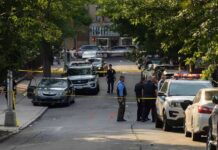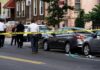
A Bank of America vice president was killed in a broad-daylight stabbing in Times Square that police called random and unprovoked, underscoring fears about public safety and mental health failures in America’s biggest city.
Story Snapshot
- Police identified the woman killed as Bank of America vice president Erin Piacenti, 32.
- Officers say the suspect, identified as Pamela Cisneros, 49, stabbed two people before advancing on police with knives.
- NYPD leaders said officers tried de-escalation and used Tasers before fatally shooting the suspect.
- Reports describe the attack as random and unprovoked in a crowded tourist hub at rush hour.
What Police Say Happened in Times Square
New York City police said a woman armed with knives stabbed two people near West 41st and Seventh Avenue around 4:24 to 4:30 p.m. on Monday, when the area was packed with commuters and tourists. The first victim, identified in reporting as Erin Piacenti, 32, died after the attack. A 68-year-old man was also stabbed and hospitalized. Officials described the violence as random and unprovoked. The location and timing matched across multiple outlets, signaling a consistent account of the core facts.
Officers confronted the suspect in the street amid heavy foot traffic. Police leaders said they ordered her to drop the knives and attempted to use Tasers to stop her. When she advanced toward officers, police fired and fatally shot her. Reports identified the suspect as Pamela Cisneros, 49, of Queens. New York Police Department Commissioner Jessica Tisch said the woman had a documented mental health history, and that officers worked to de-escalate before the shooting.
Victims and Identification Confirmed by Employer
Reporting named the woman who died as Erin Piacenti and said she worked as a vice president at Bank of America. The bank issued a statement expressing shock and sadness at the loss of their colleague, which added weight to the public identification of the victim. Outlets also reported the second victim as a 68-year-old man who survived and was treated at a hospital. Some reports differed on his exact condition but agreed he was stable after treatment.
Times Square is one of the most surveilled and policed areas in the city, yet this attack still happened in daylight. That reality feeds a concern shared by people across the political spectrum: the system is failing to stop dangerous breakdowns before they reach the street. Police framed the attack as random, and no evidence in published reports tied the victims to the suspect. Authorities also said terrorism was not suspected, focusing the case on mental health and street safety.
How Officers Are Trained to Judge Knife Threats
Courts and police training materials treat close-range knife attacks as an immediate threat that can justify deadly force under the Fourth Amendment’s reasonableness standard. Cases like Kisela v. Hughes show how courts often side with officers when a person with a knife refuses commands and poses a near-term risk to others. Expert commentary stresses that distance, advancing behavior, and crowd risk drive these split-second choices, not the mere fact a knife is present.
A Bank of America vice president was one of the two victims killed in a stabbing at Times Square on Monday afternoon. https://t.co/EM45U26nik
— FORTUNE (@FortuneMagazine) September 1, 2026
Guidance used by police groups explains that less-lethal tools, such as Tasers, are valid attempts to avoid gunfire but can fail, especially with moving suspects or heavy clothing. When a suspect with a knife continues to advance, officers may escalate to deadly force to stop an immediate danger to bystanders or themselves. That lens helps explain why New York City officers first tried commands and Tasers, then fired when the suspect advanced in a crowded zone.
Why This Resonates Beyond New York
This case hits several national pressure points at once. Urban residents want safe streets and faster help for people in crisis. Police need clear rules that let them protect the public while avoiding unnecessary harm. Families and workers want to know they can walk to the train after work without fear. Both conservatives and liberals see a system that talks about solutions, yet still misses early warnings and leaves frontline officers and civilians to face the worst outcomes.
Leaders across levels of government have promised better mental health care for years. Many cities expanded crisis hotlines and outreach teams, but results remain uneven. When breakdowns go untreated, everyday people pay the price. The Times Square attack took the life of a 32-year-old professional on a normal day. It also left a 68-year-old man wounded. That is why debates over funding, treatment access, and street enforcement matter far beyond politics. They shape whether daily life feels safe or fragile.
What to Watch Next
New York City police will continue the criminal investigation and the standard review of the officer-involved shooting. Expect questions about the exact sequence of Tasers and gunfire, supported by body-worn camera footage and forensic records. Reporters will also seek more detail on the suspect’s mental health history and prior system contacts, within privacy rules. Those records can show whether warning signs were seen, flagged, and acted upon—or missed as the system moved too slowly.
Times Square draws huge crowds and global attention. A public, fact-based release of video and reports can help the city explain what happened and why. It can also help the country weigh the balance between civil liberties, mental health care, and street safety. People want fewer slogans and more working systems. That means real treatment before crisis, visible order on busy streets, and clear accountability when the worst happens.
Sources:
thegatewaypundit.com, abc7ny.com, fortune.com, usnews.com, foxnews.com, supreme.justia.com, case-law.vlex.com