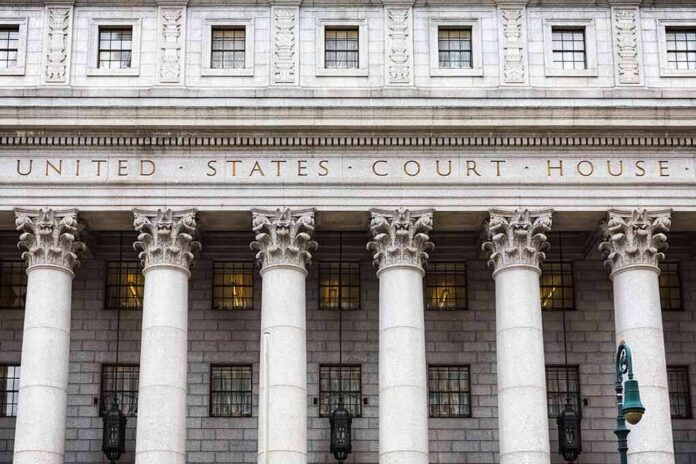
With less than an hour to go, a federal court froze Christa Pike’s execution to review key legal questions that could not be undone later.
Story Snapshot
- A split Sixth Circuit paused Pike’s execution to weigh fully briefed arguments before an irreversible punishment.
- Judges are deciding if Pike’s filing reopens an old case or counts as a tightly limited second habeas petition.
- Reports say the court wants clarity on whether Pike’s childhood abuse claims were fully considered at sentencing.
- Tennessee can seek fast review to restart the execution, so the stay may be temporary.
What The Court Did And Why It Matters
The United States Court of Appeals for the Sixth Circuit issued a short stay of execution for Christa Pike on September 30, about an hour before the scheduled lethal injection. The order said the “interests of justice” and the finality of execution required time to analyze fully briefed arguments before acting on the merits. Axios reported the same language and timing. The relief is narrow and temporary. It keeps the state from carrying out an irreversible punishment while judges resolve a threshold dispute.
WVLT reported the vote was 2–1, showing disagreement inside the panel and signaling that the issues raised were close calls. According to that report, Judges Karen Moore and Jane Stranch formed the majority, while Judge Richard Griffin dissented. A divided panel is common in capital cases under time pressure. It indicates that at least two judges saw enough substance to pause the clock so the court can decide the proper legal path.
The Procedural Question Driving The Pause
People reported the main dispute is procedural: whether Pike’s latest filing should be treated as a motion to reopen earlier federal habeas proceedings or as a second habeas petition, which faces strict limits under federal law. That choice often decides whether a court can even hear a claim. The panel said it needed time to sort that out before a final act by the state. Axios confirmed the court framed the stay as short and tied to resolving the parties’ arguments.
Several outlets said the judges also want to review whether allegations that Pike was raped and abused as a child were fully considered at sentencing. CNN and the Associated Press each reported that this question is part of the court’s concern during the pause. The available reports do not include the full sentencing record or the full appellate order. That limits outside readers from judging how much weight the court put on those facts beyond needing time to review.
Where This Case Fits In The Bigger Pattern
Capital cases often come down to procedure in the final hours. Courts must balance fairness and finality, and the law limits repeat petitions. The Sixth Circuit has handled similar fights over whether a late filing is properly brought and what standard governs stays in that posture. A published Sixth Circuit decision in another Tennessee death case explains how courts weigh stay factors and gatekeeping rules before reaching any constitutional claim. Pike’s pause mirrors that triage: decide the door, then the room.
Pike’s lawyers had already asked the Supreme Court for a stay, citing Eighth and Fourteenth Amendment issues and broader method-of-execution claims. The filing shows this fight reached the nation’s highest court, even as lower courts continued to manage the timing and posture of review. Reports also noted that the Supreme Court previously declined to halt the execution, which can shape public views on finality. But the Sixth Circuit’s intervention shows lower courts can still act when a narrow, unresolved procedural question remains.
What Comes Next For Tennessee And For The Public
Tennessee can ask the full Sixth Circuit to reconsider or ask the Supreme Court to vacate the stay, according to local reporting on the state’s options. If the panel sends the case back as a reopened proceeding, the district court would take the next steps. If the panel deems it a second habeas petition, stricter rules would likely bar many claims. Either path affects timing, not just outcome. The stay’s short wording suggests quick movement in days, not months.
🚨 JUST IN: Christa Pike’s execution was halted by a federal appeals court — roughly one hour before she was scheduled to be executed in Tennessee.
The Sixth Circuit issued the temporary stay as legal challenges over her case remain pending.
Pike had been scheduled to die at 10… pic.twitter.com/bGgSuB7hiN
— Real Narrative News (@RealNarrativeHQ) September 30, 2026
For many Americans, this case reflects a deeper worry: the system often waits until the last hour to confront hard questions. Conservatives and liberals alike see delay, confusion, and opaque decisions. Families of victims want closure. Prisoners raise claims about due process and punishment. When courts must choose between a closed door and a final act, pauses like this show why trust is strained. Transparent rulings and full records can ease that strain more than late surprises ever will.
Sources:
nbcnews.com, usatoday.com, people.com, axios.com, kcrg.com, wate.com